
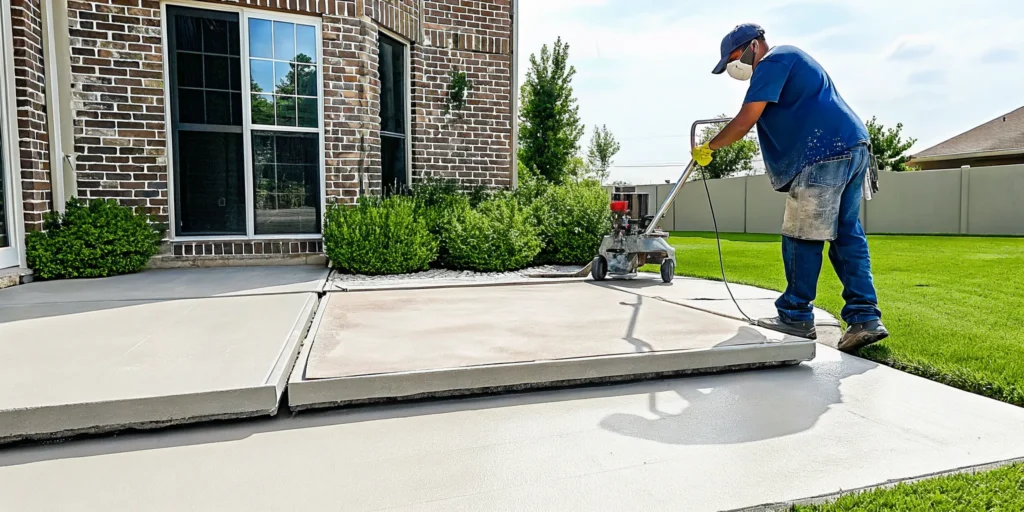
When your patio starts to crack and sink, your mind might jump straight to the cost and chaos of a full demolition and replacement. But what if you could fix it in a few hours, for a fraction of the price? That’s the power of modern concrete leveling. Using a high-density polyurethane foam, we can lift your sunken slab back into place without heavy equipment or a messy construction site. This advanced method provides a durable, long-lasting solution that’s perfect for our local soil conditions. It’s the new standard for patio concrete leveling Dallas TX, and this guide will walk you through why it’s the best choice for your home.
Key Takeaways
- Focus on the Soil, Not Just the Slab: Sinking patios in Dallas are usually caused by unstable clay soil. Polyurethane foam injection addresses this root cause by lifting the concrete and stabilizing the ground underneath, offering a lasting fix without the cost of a full replacement.
- Prioritize Safety and Protect Your Foundation: An uneven patio is more than an eyesore; it’s a trip hazard and can direct water toward your home’s foundation. Leveling your patio restores safety, improves curb appeal, and prevents small issues from turning into expensive structural damage.
- Vet Your Contractor Thoroughly: The success of your repair depends on the professional you hire. Look for a licensed and insured company that uses modern poly foam, offers a strong warranty, and has a proven track record of positive customer reviews in the Dallas area.
What Is Patio Concrete Leveling?
When you notice your patio has started to sink, crack, or become uneven, your first thought might be a long, expensive demolition and replacement project. Luckily, there’s a much better way. Patio concrete leveling is a modern repair method designed to lift and restore your existing concrete slab back to its original position, without the mess and cost of a total tear-out. It’s a targeted solution that addresses the problem at its source: the unstable soil underneath.
The most effective and popular method for this is polyurethane foam injection, sometimes called polyjacking. The process is straightforward and minimally invasive. Our team drills a few small, dime-sized holes into the sunken sections of your patio. We then inject a high-density, structural-grade polyurethane foam into these holes. This foam expands beneath the slab, filling any voids or empty spaces in the soil and gently lifting the concrete back into place. It’s a precise, controlled process that allows us to achieve a perfectly level surface. This type of concrete repair is an ideal fix for the common soil-related issues we see across the Dallas area, providing a stable, long-lasting foundation for your outdoor living space.
Why It’s a Smart Move for Dallas Homeowners
Opting for concrete leveling isn’t just a quick fix; it’s a strategic investment in your home. For starters, it’s significantly more affordable than tearing out and pouring a new patio. The process is also incredibly fast. Most jobs are completed in just a few hours, and you can walk on your patio the very same day. There’s no waiting around for concrete to cure.
Beyond the convenience, leveling eliminates dangerous trip hazards, making your patio safer for kids, family, and guests. A level, crack-free patio also improves your home’s curb appeal and can even increase its resale value. It’s a simple, effective way to restore both the function and beauty of your outdoor space. If you’re curious about what it would take to fix your patio, you can always get a free estimate to understand the scope and cost.
What Makes Dallas Patios Sink and Shift?
If you’ve noticed your patio starting to slope or crack, you’re not alone. It’s a common sight for homeowners in the Dallas area. While it’s easy to blame the concrete slab itself, the real problem is almost always happening in the soil underneath. Your patio is heavy, and it needs a solid, stable base to rest on. When that base is compromised, the concrete will sink, shift, and crack under its own weight.
Several factors contribute to this instability, many of which are specific to our North Texas environment. From the unique properties of our soil to our dramatic weather patterns, the ground beneath your home is in a constant state of flux. Understanding what causes these issues is the first step toward finding a lasting solution. Let’s look at the four main reasons why your Dallas patio might be sinking.
Expansive Clay Soil
Much of the Dallas-Fort Worth area is built on expansive clay soil. Think of this soil like a sponge: it swells up dramatically when it absorbs water during rainy periods and shrinks just as much when it dries out during our hot, dry summers. This constant cycle of expansion and contraction puts immense pressure on your concrete patio, causing it to heave and settle unevenly over time. Additionally, when a home is built, the soil around the foundation is often disturbed. If this backfill soil isn’t compacted properly, it will slowly settle over the years, creating voids beneath the slab that lead to sinking and cracking.
Erosion and Poor Drainage
Our region is known for intense rainstorms that can dump a large amount of water in a short time. If your property doesn’t have proper drainage, that water can become a destructive force. Water flowing from downspouts or across your yard can wash away the soil supporting your patio slab, a process called erosion. Over time, this leaves behind empty pockets under the concrete. Without the ground to support it, the heavy slab will eventually crack and fall into the void. This is why effective concrete repair often involves addressing the root cause, which is frequently poor water management around the home.
Underground Plumbing Leaks
A hidden but common cause of sinking concrete is a leak in the plumbing lines that run beneath your patio. Even a small, slow leak from a water or sewer pipe can go undetected for years while it continuously saturates the soil. This turns the stable, compacted ground into a soft, muddy mess that can no longer support the weight of the concrete above it. The result is a section of your patio that seems to be sinking for no apparent reason. If you notice one specific area dropping faster than others, a hidden plumbing leak could be the culprit.
Temperature Swings and Heavy Loads
The Texas climate, with its hot summers and occasional freezes, also plays a role. When water in the soil freezes, it expands, pushing the patio slab upward. When it thaws, the soil settles back down, often unevenly. This freeze-thaw cycle can destabilize the ground over time. Furthermore, placing a heavy, concentrated load on your patio, like a large hot tub or an outdoor kitchen island, can accelerate sinking. If the soil is already weak from moisture or erosion, this added weight can be the final straw that causes the slab to fail, sometimes impacting your home’s overall foundation repair needs.
Spot the Signs: Does Your Patio Need Leveling?
Your patio should be a place for relaxing and making memories, not a source of worry. But over time, the shifting soil common in the Dallas area can cause concrete slabs to sink and settle. Ignoring the early warnings can lead to bigger, more expensive problems down the road. Fortunately, your patio will give you some clear signals when it needs help. Paying attention to these signs allows you to address the issue before it gets worse. Here’s what to look for.
Visible Cracks and Gaps
Small hairline cracks can be a normal part of concrete aging, but large, widening cracks are a red flag. In Dallas, it’s common for patios to become uneven, cracked, or saggy. When you see cracks that are growing, or gaps opening up between the patio and your home’s foundation, it’s a sign the soil underneath can no longer support the weight of the concrete. These aren’t just cosmetic issues; they indicate instability that will likely worsen. Addressing these problems with professional concrete repair is the best way to stop the damage from spreading and restore your patio’s integrity.
Tripping Hazards and Uneven Surfaces
One of the most immediate dangers of a sinking patio is the creation of tripping hazards. When one concrete slab sinks lower than its neighbor, it creates an uneven ledge that can easily catch a foot, leading to falls and injuries. This is a serious liability concern, especially if you have children, elderly family members, or host guests. Sinking concrete doesn’t just create trip hazards; it also detracts from your home’s appearance and can lower its property value. Leveling these uneven surfaces not only makes your patio safe for everyone but also restores its clean, uniform look.
Water Pooling Near Your Foundation
After it rains, does water puddle on your patio or drain back toward your house? This is a major warning sign. Proper drainage should direct water away from your home, but a sunken patio can do the opposite. Concrete often sinks because of soil problems, and heavy rain can wash away the soil, leaving the slab without support. When water pools, it can seep into the ground along your home’s perimeter, oversaturating the soil and potentially creating serious issues. This excess moisture can damage your home’s foundation, leading to a much more complex and costly repair.
Comparing Your Patio Leveling Options
When you realize your patio needs leveling, the next question is, “What’s the best way to fix it?” You have a few different paths you can take, each with its own pros and cons. Understanding these options will help you have a more productive conversation with a professional and choose the right solution for your home. Let’s walk through the most common methods for patio repair so you can see how they stack up.
Mudjacking
You may have heard of mudjacking, as it’s one of the more traditional methods for lifting concrete. The process involves pumping a heavy slurry, usually a mix of soil, sand, and cement, into large holes drilled into your patio. This mixture fills the void underneath and forces the slab back up. While it can be effective, the sheer weight of the material can add more stress to the ground. If your patio sank because of weak or shifting soil, adding more weight on top might not be the best long-term fix and could lead to more settling down the road.
Poly Foam Injection (Polyurethane Foam)
A more modern approach is polyurethane foam injection, sometimes called polyjacking. This technique uses a high-density, structural-grade polymer foam that’s injected through small, dime-sized holes in the concrete. The foam expands, filling every gap and gently lifting the slab back to its original position. This method is incredibly lightweight, so it won’t burden the soil underneath. The entire process is also fast and clean; most concrete repair jobs are finished in just a few hours, and you can use your patio the very same day. It’s a durable, waterproof, and long-lasting solution for Dallas homeowners.
Full Concrete Replacement
Sometimes, a patio is too far gone for a simple lift. If your concrete is severely cracked, crumbling, or broken into many small pieces, a full replacement might be your only option. This involves tearing out all the old, damaged concrete and pouring a brand new slab. As you can imagine, this is the most expensive and disruptive choice, taking significant time and labor. However, when a repair just won’t cut it, starting fresh is the only way to guarantee a safe and stable surface for years to come. You can often see examples of this kind of extensive damage in a contractor’s portfolio of our work.
Which Method Is Right for Your Dallas Patio?
So, how do you choose? The best method really depends on the condition of your concrete and what’s causing it to sink in the first place. While mudjacking has been around for a while, poly foam injection often provides a more durable and less stressful solution for the underlying soil. Full replacement is the last resort for concrete that’s beyond saving. The most important step is getting a professional assessment. An expert can diagnose the root cause of the problem and recommend a solution that truly fixes it. To find out what’s best for your home, you can contact us for a free, no-obligation estimate.
The Case for Poly Foam Injection in Dallas
When it comes to leveling your patio, poly foam injection stands out as a modern, reliable, and incredibly efficient solution. Unlike traditional mudjacking, which uses a heavy slurry, this method uses a high-density polyurethane foam to lift and support sunken concrete. It’s a powerful technique that our team uses for concrete repair because it addresses the root cause of the problem without adding significant weight to the already unstable soil beneath your patio. For Dallas homeowners dealing with the challenges of expansive clay soil, poly foam offers a durable, long-term fix that is also surprisingly non-disruptive. It’s a smart choice that combines cutting-edge technology with practical benefits, giving you a stable, beautiful patio without the headache of a major construction project.
A Step-by-Step Look at the Process
One of the best things about poly foam injection is how straightforward and clean the process is. First, our crew drills a few small, dime-sized holes into the sunken sections of your concrete patio. These holes are strategically placed to ensure the most effective lift. Next, we inject the two-part polyurethane foam into the holes. As the components mix below the surface, the foam expands, filling every void and gently raising the concrete slab back to its original, level position. Once the patio is perfectly aligned, we patch the small holes with cement. The patch is color-matched as closely as possible, making the injection points nearly invisible once everything is done.
Lightweight, Durable, and Water-Resistant
The material itself is what makes poly foam injection such a game-changer, especially in the Dallas area. The polyurethane foam is incredibly strong but also extremely lightweight. This is a huge advantage because it won’t add extra weight to the soil, which prevents the patio from sinking again in the future. The cured foam is also waterproof and chemically stable, so it won’t wash away or break down over time due to erosion or moisture in the ground. This creates a solid, water-resistant barrier under your patio, protecting the soil from the moisture changes that cause slabs to shift in the first place. It’s a durable solution designed to last for years.
Fast-Curing, Minimally Invasive, and Eco-Friendly
Homeowners often worry about their yard and landscaping getting destroyed during a repair project, but poly foam injection is a minimally invasive process. Because we only need to drill a few small holes, your surrounding garden beds, lawn, and other landscape features remain undisturbed. There’s no heavy equipment tearing up your property. The foam itself is also environmentally safe and won’t leach harmful chemicals into the ground. You can see examples of our clean and efficient process in photos of our work. The entire job is typically completed in just a few hours, making it one of the most convenient repair options available.
Use Your Patio the Same Day
Perhaps the most exciting benefit for any homeowner is how quickly you can get back to enjoying your space. The polyurethane foam cures and hardens within minutes of being injected. This means that most patio leveling jobs take only a few hours from start to finish. By the time our crew packs up and leaves, your patio is ready for you to use again. You can put your furniture back, fire up the grill, and enjoy your newly leveled surface on the very same day. There’s no waiting period for concrete to cure or for a messy site to be cleaned up, just immediate results and peace of mind.
Is Patio Concrete Leveling a Worthwhile Investment?
When you see a sinking or cracked patio, it’s easy to think of it as just a cosmetic issue you can put off. But is that really the case? The truth is, patio concrete leveling is more than just a quick fix; it’s an investment in your home’s safety, value, and structural health. While there’s an upfront cost, ignoring the problem can lead to much bigger, more expensive issues down the line. When you weigh the long-term benefits against the initial expense, you’ll see that taking action sooner rather than later is one of the smartest moves you can make as a homeowner. Let’s look at why leveling your patio is a decision that pays off in more ways than one.
Safety, Liability, and Peace of Mind
An uneven patio is more than just an eyesore; it’s a genuine safety risk. Those cracks and uneven slabs are trip hazards waiting to happen, especially for children playing in the yard or older relatives visiting your home. Leveling the concrete removes these dangers, making your outdoor space safer for everyone you care about. Beyond the immediate safety of your family, there’s also the question of liability. If a guest trips and injures themselves on your property, you could be held responsible. Addressing these hazards with professional concrete repair gives you valuable peace of mind, knowing your patio is a safe and welcoming place for all.
Curb Appeal and Property Value
Your patio is a key part of your home’s overall curb appeal. A cracked, sinking surface can make your entire property look neglected and can be a major red flag for potential buyers. Sinking concrete can suggest underlying problems, which might scare buyers away or lead to lowball offers. On the other hand, a smooth, level patio creates an inviting outdoor living area that enhances your home’s beauty. Investing in leveling can directly contribute to your home’s resale value. It’s a tangible improvement that shows you’ve maintained your property, and you can see examples of the difference it makes in our work.
Protecting Your Foundation from Water Damage
This is perhaps the most critical reason to level your patio. When a concrete slab sinks and slopes toward your house, it acts like a funnel, directing rainwater straight to your foundation. This constant moisture can erode the soil, create immense pressure, and lead to water seeping into your crawl space or basement. Over time, this can cause serious structural damage and the need for expensive foundation repair. By leveling the patio, you ensure proper drainage away from your home, protecting your property’s most important structural element. Think of it as preventative care for your entire house.
How Much Does Patio Concrete Leveling Cost in Dallas?
When you’re looking at fixing your uneven patio, one of the first questions you probably have is about the cost. In the Dallas area, homeowners can generally expect patio concrete leveling to cost between $900 and $3,300. Of course, that’s a pretty wide range, and that’s because no two patios are exactly alike. The final price depends on the specifics of your situation, from the size of the patio to the severity of the sinking.
Think of this range as a starting point. The only way to get a firm number is to have a professional come out and assess the damage firsthand. They can measure the area, determine the extent of the sinking, and give you a precise quote for the work. While it’s an expense, it’s also an investment in your home’s safety, appearance, and overall structural health. An uneven patio isn’t just an eyesore; it’s a tripping hazard and can lead to bigger problems if left unaddressed. Many companies understand that this can be an unexpected cost, which is why it’s worth asking about available financing options to make the project more manageable for your budget. Getting your patio fixed right protects your property and gives you peace of mind, which is always a worthwhile investment.
Factors That Influence Price
The final price tag for your project depends on a few key things that a professional will evaluate during an estimate. First is the size and complexity of the job. A small, sunken corner of your patio will naturally cost less to lift than a large, sprawling area with multiple sunken slabs. The current condition of your concrete also plays a big role. If your slab has significant cracks or has sunk several inches, it will require more material and time to lift than a slab with minor settling. Finally, the accessibility of your patio can affect the cost. If the area is difficult to reach with equipment, it may require more labor to get the job done.
Leveling vs. Replacement: A Cost Comparison
It’s easy to look at a badly cracked or sunken patio and think you need to rip everything out and start over. But in most cases, a full replacement is an expensive and disruptive last resort. Professional concrete leveling is a much more cost-effective solution, often saving you up to 70% compared to the cost of demolition and repouring a new slab. For a standard-sized patio, choosing to level it could save you thousands of dollars. Beyond the significant cost savings, choosing a professional concrete repair is also a smarter move for your schedule. The process is much faster and cleaner, meaning you can get back to enjoying your patio in a matter of hours, not days.
Debunking 5 Common Concrete Leveling Myths
When it comes to sunken or cracked concrete, a lot of misinformation can make it hard to know the right next step. These myths can lead you down a path of wasted time, money, and effort. Let’s clear the air and tackle five of the most common misconceptions about concrete leveling so you can make a confident, informed decision for your Dallas home. Understanding the truth behind the process helps you see why professional repair is often the smartest, most effective solution for restoring your patio, driveway, or sidewalk.
Myth 1: DIY Fixes Are Good Enough
It’s tempting to think a quick trip to the hardware store is all you need to fix that uneven patio slab. While the DIY spirit is great for many home projects, concrete leveling isn’t one of them. Patching compounds and self-leveling mixes only cover up the surface problem; they don’t address the unstable soil underneath that caused the concrete to sink in the first place. Professional concrete repair uses specialized equipment and materials to stabilize the ground and lift the slab back into place. These temporary fixes often fail quickly, leaving you right back where you started.
Myth 2: Mudjacking Is Always the Best Option
For a long time, mudjacking was the standard for lifting concrete. The process involves pumping a heavy slurry of mud, sand, and cement under the slab. However, modern technology offers a far superior alternative. Polyurethane foam injection is a lightweight, durable, and less invasive method. Unlike the heavy mudjacking slurry, which can add more stress to already weak soil, the expanding polymer foam is incredibly strong yet light. It provides a more precise lift and a permanent solution without the extra weight or mess of older techniques.
Myth 3: All Damaged Concrete Needs Replacing
Seeing a large crack or a sunken section of your driveway can make you think a full replacement is your only choice. The good news is that this is rarely the case. Most of the time, the concrete slab itself is still intact; it has just sunk because the soil beneath it has eroded or compacted. As long as the concrete isn’t shattered into small pieces (typically smaller than three feet by three feet), it can almost always be lifted and stabilized. Leveling saves you from the high cost, long timeline, and major disruption of a complete tear-out and replacement.
Myth 4: The Process Is Messy and Disruptive
Many homeowners picture a huge, messy construction zone when they think of concrete repair. With polyurethane foam injection, the reality is much different. The process is surprisingly clean and efficient. Our team drills a few small, dime-sized holes into the concrete slab to inject the foam. There’s no heavy equipment driving on your lawn and no piles of mud or concrete to deal with. The foam cures quickly, and in most cases, you can use your patio, driveway, or walkway the very same day.
Myth 5: The Cheapest Contractor Is the Safest Bet
Everyone loves a good deal, but when it comes to your home’s structural integrity, the lowest bid can be a major red flag. An unusually low price often points to an inexperienced contractor, subpar materials, or a lack of proper licensing and insurance. A botched job won’t just fail to fix the problem; it can make it worse, costing you much more to correct later on. Instead of focusing only on price, look for an experienced team with a proven track record and strong warranties. A quality repair is an investment in your home’s safety and value.
How to Choose the Right Concrete Leveling Contractor in Dallas
You’ve done your research and decided that poly foam injection is the right call for your sinking patio. That’s a great first step. But the success of your project hinges on one more crucial decision: choosing the right contractor. The Dallas area has plenty of options, but not all are created equal. Taking a little time to vet your choices will ensure your patio is repaired correctly and that the fix lasts for years to come. Here’s what to look for to find a reliable, professional team for your concrete leveling project.
Check for Licensing, Insurance, and Experience
Before you even look at a quote, your first step should be to confirm the contractor is properly licensed and insured. This is non-negotiable. It protects you from liability if something goes wrong on your property and shows the company meets professional standards. Concrete leveling isn’t a simple DIY job; it requires specialized equipment and a deep understanding of how to work with Dallas’s tricky soil. An experienced team will know how to handle these local challenges. Don’t be shy about asking for proof of their credentials. A reputable company will have this information ready and will be proud to share their team’s experience and qualifications.
Ask About Warranties, Products, and Process
Once you’ve confirmed a contractor is legitimate, it’s time to dig into the specifics of their service. A key indicator of a company’s quality is the warranty they offer. A strong warranty shows they stand behind their work and the materials they use. Ask what kind of products they use for their concrete repair and why they’ve chosen them. They should be able to clearly explain their step-by-step process, from the initial assessment to the final cleanup. A contractor who is transparent and confident in their methods will happily answer all your questions, giving you peace of mind that you know exactly what you’re paying for.
Read Reviews and Spot Red Flags
What past customers have to say can be incredibly revealing. Go beyond the testimonials on a company’s website and look at third-party review sites. Pay attention to how the company responds to both positive and negative feedback. It’s also a great idea to look through a gallery of their completed projects to see the quality of their work for yourself. As you do your research, keep an eye out for red flags. Be wary of any contractor who uses high-pressure sales tactics, gives vague or evasive answers, or provides a quote that seems too good to be true. A lowball offer can often mean cut corners or subpar materials.
Why Dallas Homeowners Trust Solid Base Foundations
When you notice your patio is cracked and uneven, you want a solution that’s reliable, fast, and built to last. That’s why homeowners across the Dallas area turn to us. At Solid Base Foundations, we combine local expertise with proven, state-of-the-art methods to restore your patio and give you peace of mind. We understand the unique challenges of Dallas soil and have the right tools for the job.
Our approach to concrete repair focuses on a long-term fix, not a temporary patch. We use an advanced polyurethane foam injection process that lifts and stabilizes your concrete from below. This material is incredibly strong yet lightweight, so it won’t add extra stress to the soil and cause future sinking. The best part? The process is quick and clean. Most patio leveling jobs are finished in just a few hours, and you can use your space again the very same day. No waiting around for concrete to cure and no major disruption to your life.
Choosing to level your patio is also a smart financial decision. This method typically costs a fraction of what you’d spend on a full tear-out and replacement, saving you significant money. More importantly, it’s an investment in your home’s safety and value. A level patio eliminates tripping hazards and prevents water from pooling near your home, which can lead to costly foundation repair down the road. Our team of skilled professionals is dedicated to providing solutions that protect your property. You can see the quality and care we bring to every project by looking at our work for other Dallas homeowners.
Related Articles
- PolyLevel – Solid Base
- Concrete Repair – Solid Base
- How to Fill Large Cracks in Concrete Like a Pro
- Polyurethane Slab Jacking: A Homeowner’s Guide
- A Homeowner’s Guide to Foundation Repair Services
Frequently Asked Questions
How long will my leveled patio stay fixed? Think of poly foam leveling as a permanent solution. The polyurethane foam we use is a waterproof, stable material that doesn’t break down or wash away over time. Because it addresses the real problem, which is the weak soil, by creating a solid base, the lift is designed to last for the life of the concrete itself. You won’t have to worry about the same spot sinking again.
Will the repair process make a mess of my yard? Not at all. One of the best parts of poly foam injection is how clean and contained the process is. We don’t need to bring in heavy, destructive equipment that would tear up your lawn. Our work is done using small, dime-sized holes drilled directly into the patio slab, so your surrounding flower beds, grass, and landscaping will remain completely undisturbed.
Is the polyurethane foam safe for my family, pets, and garden? Yes, it is completely safe. Once the foam is injected and cures (which only takes a few minutes), it becomes an inert, stable solid. It will not leach any harmful chemicals into the surrounding soil. You can feel confident knowing the material used to fix your patio is environmentally friendly and poses no risk to your children, pets, or garden plants.
Can I just wait to fix a small crack or a slightly uneven spot? I would strongly advise against waiting. A small crack or a minor slope is usually the first sign that the soil underneath your patio is failing. If you ignore it, water can get into the ground, causing more erosion and making the problem much worse. What starts as a simple lift can turn into a more complex and expensive repair, or even lead to water damage near your home’s foundation.
Will the patched holes be really noticeable on my patio? We take great care to make the repair sites blend in. The injection holes are quite small to begin with, about the size of a dime. After we lift the concrete, we patch these holes with a cement mixture that is carefully color-matched to your existing patio. While it may not be a perfect 100% match due to weathering, the patches are typically very difficult to spot once the job is done.