
That musty smell drifting up from under your home or a floor that feels a little bouncy underfoot can set any homeowner on edge. If you live in a pier and beam home around Dallas-Fort Worth, you may have asked whether crawl space encapsulation is the right fix. These signs often point to trapped moisture beneath your floor, and for homes with wooden supports. That moisture is worth taking seriously before it turns into bigger, costlier problems.
Crawl space encapsulation means sealing the ground and lower walls beneath a pier and beam home with a thick vapor barrier so ground moisture and humidity cannot reach the wooden floor supports. It protects wooden joists and beams from rot, cuts musty odors and mold risk, and helps keep the soil moisture steady so your foundation does not settle unevenly. For many North Texas pier and beam homes, encapsulation is a smart preventive step, but active sinking or failed piers may still need a structural repair.
Schedule a free crawl space inspection in Dallas-Fort Worth if you notice a persistent musty smell, sagging floors, or visible mold under your house. A free estimate and an experienced look costs you nothing and tells you whether encapsulation is the right move for your home.
You may be wondering what encapsulation actually does under your home and whether it is worth the investment. Understanding the moisture basics, how vapor barriers work, and what the warning signs look like will help you decide. Let us start by defining exactly what crawl space encapsulation involves.
What Is Crawl Space Encapsulation for Pier and Beam Homes?
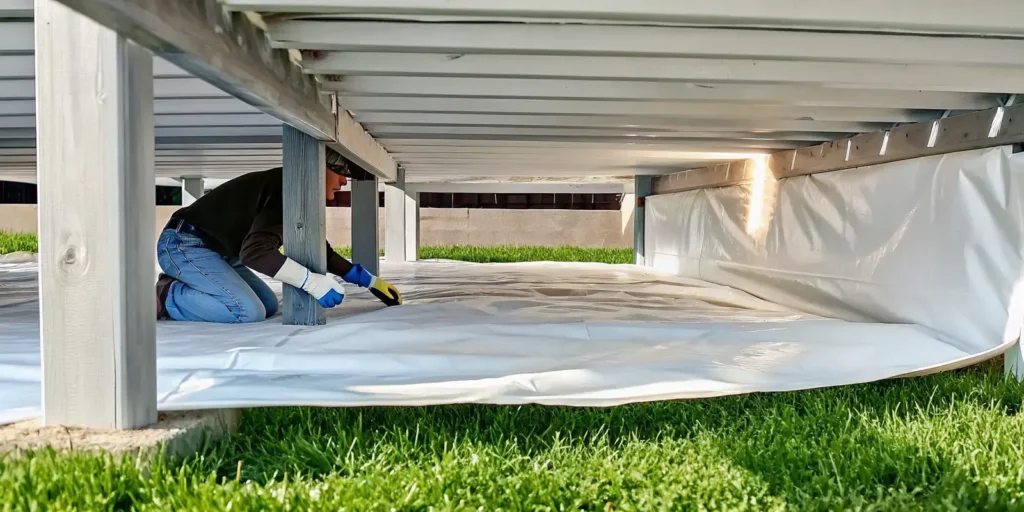
Crawl space encapsulation is the process of sealing a crawl space so ground moisture and outside humidity cannot enter the area beneath your home. For a pier and beam home, that means laying a thick polyethylene vapor barrier across the entire ground surface. It also means sealing the seams and often extending the barrier up the lower walls and around each wood support post or pier. Once the space is sealed, the foundation vents can be closed so the crawl space becomes a controlled, dry environment instead of an open dirt pit.
The goal is straightforward: moisture and humidity are the enemies of the wooden joists, beams, and support posts that carry the weight of your home. When those components stay dry, they resist rot, mold, and decay much longer. A properly encapsulated crawl space also improves air quality inside the home, because less musty, damp air rises up through the floor into your living space.
Encapsulation often includes more than just a vapor barrier. Sealing the crawl space means covering the ground, wrapping or sealing around plumbing penetrations and support columns. And sometimes adding a dehumidifier to pull excess moisture out of the air. The result is a cleaner, drier space that protects the structure at its most vulnerable point.
Why This Matters for Wooden Supports
Pier and beam homes in the Dallas area are supported by wooden beams and joists resting on concrete or steel piers. These wooden components are load-bearing. When moisture is allowed to sit underneath them, the wood can begin to rot, soften, and lose strength. Over time, that weakens the very structure holding your floors up, which is why your crawl space can develop a sagging or bouncy feeling.
Keeping the ground dry with a vapor barrier is the most direct way to protect these wooden supports. Rather than repairing rot after it has already damaged your floor system, encapsulation prevents the moisture from ever reaching the wood in the first place. That is why managing crawl space moisture is vital to protecting your home’s wooden floor supports from decay and avoiding structural sinking.
Encapsulation is not just about keeping the space dry, it is about protecting the integrity of your home’s primary structure. For any pier and beam homeowner worried about the long-term health of their house, it is one of the most effective preventive steps you can take.
Why North Texas Pier and Beam Homes Need Moisture Control
North Texas is not like most of the country when it comes to soil. Much of the Dallas-Fort Worth area sits on expansive blackland prairie clay, a soil that acts like a sponge. When it absorbs water, it swells and pushes upward. When it dries out during a hot summer, it shrinks and leaves voids in the ground. In fact, expansive soils cause an estimated nine billion dollars in structural damage every year across the United States. And that constant shrink-and-swell is the primary driver of foundation movement in our region.
This regional geology matters because it does double damage to a pier and beam home. On the outside, the moving clay puts stress on your foundation. Underneath, uncontrolled moisture feeds the wood rot that threatens your floor system. For older Dallas homes built on piers and beams, both problems go hand in hand, which is why crawl space moisture control is so important here.
Wood Rot and the Risk of Sinking
When moisture is trapped under a pier and beam house, it creates a perfect environment for wood rot. The wooden joists and support posts that hold your floor can soften and lose their strength, which often shows up as a sagging or bouncy floor. If you have ever noticed a soft spot in your hallway or felt like you were walking slightly uphill, this may be what is happening beneath you.
Sagging floors can also happen when the support piers shift or when the soil under them swells and shrinks unevenly. Rotting beams and shifting piers are both moisture-related problems. Keeping the crawl space dry with encapsulation addresses the rotting-wood side of the equation and helps keep the soil moisture stable on the other.
Humidity and Air Quality Under Your Home
High humidity in a crawl space does more than threaten the wood. It raises the moisture level of the air under your floor, and that damp air gradually works its way up through your home. It is this trapped moisture that produces that musty, earthy smell, encourages mold and mildew, and can even affect indoor air quality for your family.
For pier and beam homeowners in the Dallas area, the combination of expansive clay and high humidity makes moisture control a genuine structural concern, not an optional luxury. If you would like to understand the repair side of these problems better, our guide to pier and beam foundation repair walks through the warning signs and what professional repair involves.
Vapor Barriers vs Full Crawl Space Encapsulation
A vapor barrier and full crawl space encapsulation are related but not the same thing. A vapor barrier is one component of encapsulation, typically a thick polyethylene sheet laid over the dirt to block ground moisture. Encapsulation is the more complete process that seals the entire crawl space, not just the earthen floor.
Understanding the difference matters if you are trying to protect a pier and beam home. A vapor barrier alone keeps a lot of ground moisture from rising, but it leaves the lower walls, seams, and support posts unwrapped. Full encapsulation takes the extra step of sealing seams, extending the barrier up the walls, and wrapping around piers and columns. This is important because moisture can sneak in through cracks and around support posts if those areas are not sealed.
| Feature | Ground Vapor Barrier | Full Encapsulation |
|---|---|---|
| Covers the ground | Yes | Yes |
| Seals wall seams and edges | Limited | Yes, fully sealed |
| Wraps support piers and columns | No | Yes |
| Controls humidity throughout the space | Partial | Comprehensive |
| Protects wooden joists and beams | Moderate | Strongest |
| Best fit | Milder climates, quick moisture help | High-humidity areas like North Texas |
In a high-humidity climate like North Texas, full encapsation provides superior moisture protection compared to a vapor barrier alone. Because pier and beam homes have exposed wooden structure throughout the crawl space, closing every gap matters. A well-installed encapsulation system seals the space so foundation vents can be closed and the crawl space stays dry year-round. Regardless of how wet the outside clay soil becomes.
Whether you choose a vapor barrier or a full system, the underlying goal is the same, to protect the wooden supports that carry your home. The more completely you seal the crawl space, the better protected those supports will be.
Signs Your Crawl Space Needs Encapsulation
Your home usually gives you clear clues when trapped crawl space moisture is doing damage. Learning to recognize these signs early can save you from expensive floor system repairs down the road. Here are the most common indicators that a pier and beam home’s crawl space needs encapsulation.
A Persistent Musty Smell
A musty, earthy odor that you cannot seem to eliminate is often the first clue. This smell comes from moisture trapped under your home, where damp air has nowhere to go. Over time, that trapped moisture encourages mold and mildew, and the smell works its way up through the floor into your living space. If the odor returns no matter how much you clean, the source is likely your crawl space.
Visible Mold, Mildew, or Condensation
Go near your crawl space access and look for signs of moisture. Dark spots on wooden beams, a fuzzy layer of mold on the underside of the floor, water droplets on pipes, and damp insulation are all red flags. Standing water or puddles under the house are an even clearer sign that moisture control is needed. Cracked or broken foundation vents that let rain splash in can make the problem worse.
Sagging or Bouncy Floors
When moisture rots the wooden joists and support posts, floors start to feel soft, sag, or bounce underfoot. A floor that dips in the middle or squeaks loudly is a warning that the supports beneath are no longer doing their job. This is the most serious sign, because it means structural damage may already be underway.
High Humidity and Moisture on Glass
If you notice condensation on the inside of your windows, high crawl space humidity may be the cause. Excess moisture under the home raises the humidity downstairs and can seep upward. This is especially common in the humid North Texas climate during warmer months.
If any of these signs sound familiar, it is worth having an experienced professional look beneath your home. Managing the moisture that feeds expansive clay movement is one of the most effective ways to prevent foundation damage from expansive clay soil, and improving under-home drainage is a natural first step. A free crawl space inspection can confirm what you are seeing and tell you whether encapsulation is the right solution.
Is Crawl Space Encapsulation Worth It for Your Home?
For pier and beam homes in the Dallas-Fort Worth area, crawl space encapsulation is usually worth it when moisture is already causing problems. Or when you want to protect wooden supports before damage begins. The answer depends on your specific situation, but for homes with exposed wooden structure and local expansive clay soil, the case for encapsulation is strong.
Encapsulation provides clear value when it prevents expensive damage. The wooden joists, beams, and support posts under your home are structural. Letting moisture rot them can lead to sagging floors, mold, and eventually costly floor system repairs. Sealing the crawl space with a vapor barrier costs far less than repairing rotted joists or replacing a damaged floor. And it can also lower humidity, reduce musty odors, and improve air quality indoors.
When Encapsulation Helps
Encapsulation makes the most sense when you see moisture-related warning signs, such as a musty smell, condensation, or mold under the house. It is also worthwhile if you are buying an older pier and beam home, doing a renovation, or simply want to protect your investment. In the humid North Texas climate, keeping the crawl space dry is one of the smartest preventive moves a homeowner can make.
When Encapsulation Is Not Enough
It is important to be honest about encapsulation’s limits. Encapsulation prevents moisture damage, but it does not lift a home that is already sinking because of failed piers or severely compacted soil. If you have significant sagging floors, walls that have shifted, or signs that the piers themselves have moved, you may need a structural foundation repair in addition to moisture control.
The best approach is to get a professional evaluation. A free, no-obligation inspection tells you whether your issue is moisture that encapsulation can solve, structural movement that needs repair, or both. This way you invest in the right solution rather than guessing.
Can You Encapsulate a Crawl Space Yourself?
Yes, some homeowners take on crawl space encapsulation as a DIY project. A basic vapor barrier installation is within reach for a handy homeowner, but a complete, professional-quality seal takes care and attention to detail. Here is an overview of the main steps so you know what a proper encapsulation involves.
- Clean and level the crawl space. Remove debris, old insulation, and standing water. The floor should be as even and clear as possible so the barrier lies flat and does not get punctured.
- Install the vapor barrier across the ground. Lay a thick polyethylene sheet over the entire floor, overlapping the sheets by several inches. A heavier mil thickness handles foot traffic and resists tears better.
- Seal every seam. Tape each overlap with the right seam tape and press it down firmly. Gaps at the seams let moisture right back through, so this step is critical.
- Wrap support piers and columns. Extend the barrier up and around each pier or support post, sealing it tightly so moisture cannot creep up the wood contacts.
- Seal the lower walls and edges. Run the barrier up the interior walls and seal it at the top edge for full encapsulation. If you attach it mechanically, make sure not to damage the barrier.
A DIY vapor barrier can help, but there is a real risk of a frustrating, incomplete seal. Moisture finds its way through every unsealed seam, gap, and post base. Getting the seams airtight, wrapping columns properly, and managing drainage are tasks where experience matters. If the encapsulation is not done thoroughly, it can leave you with the same moisture problems and a false sense of security.
For a pier and beam home, where the wooden structure’s health depends on a complete seal, many homeowners prefer professional installation. A trained technician will evaluate the drainage, choose the right barrier, and confirm every seam and penetration is sealed. Either way, schedule a free inspection first so you know what your crawl space actually needs.
Get a free crawl space inspection before you decide
Frequently Asked Questions About Crawl Space Encapsulation
Is it worth encapsulating a crawl space?
For pier and beam homes in North Texas, encapsulation is usually worth it when moisture is causing musty odors, mold, wood rot, or high humidity. It protects the wooden joists and support posts that carry your home, helps keep the clay soil moisture steady, and can lower your heating and cooling load.
How much does it cost to encapsulate a crawl space?
Cost varies with the square footage of your crawl space, the type of barrier, and whether you add a dehumidifier or drainage work. Because every home is different, the best way to get an accurate figure for your property is to request a free no-obligation estimate from a local professional.
Will homeowners insurance cover crawl space encapsulation?
Generally, no. Encapsulation is usually treated as preventive maintenance or a home improvement rather than a covered repair, so most homeowners insurance policies do not pay for it. A professional can confirm what applies to your situation during your inspection.
Can I encapsulate my own crawl space?
You can lay a vapor barrier yourself as a DIY project, but a complete, professional-quality seal takes care. Sealing every seam, wrapping support piers, and managing drainage are places where moisture can slip through, which is why many homeowners prefer professional installation.
Does encapsulation prevent foundation sinking?
Encapsulation helps prevent moisture-related problems like wood rot and uneven soil swelling that contribute to movement. If your home is already sinking from failed piers or severely compacted soil, you may also need a structural foundation repair. A free inspection will tell you which applies.
Protect Your Pier and Beam Home With Crawl Space Encapsulation
Your home’s wooden supports deserve better than a damp, musty crawl space. If you have noticed moisture, mold, or sagging floors beneath your pier and beam home, addressing the crawl space now can protect your structure for years to come. The professionals at Solid Base Foundations have been helping Dallas-Fort Worth homeowners manage soil moisture and keep their homes structurally sound since 2008.
Request a free crawl space inspection today and get an honest assessment of whether encapsulation is right for your home. A no-obligation estimate costs you nothing and gives you a clear plan.
Call (940) 365-4221 to speak with our experienced team, or reach us online to schedule your free estimate. Protect the supports that hold everything up, and enjoy a drier, cleaner home for years to come.