
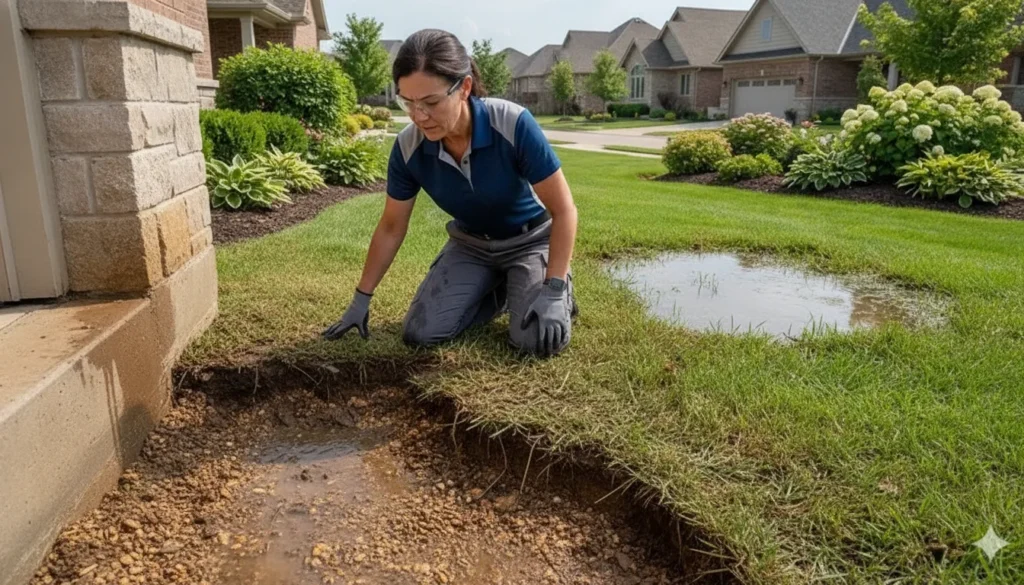
When rainwater washes soil away from your foundation. The change can look minor at first: a shallow channel beside the wall, exposed concrete, or a gap beneath the slab. In North Texas, those details deserve attention because expansive clay soil already responds to shifting moisture by shrinking and swelling.
Soil erosion around foundation areas occurs when water or wind removes supporting soil, often after heavy runoff, poor drainage, or vegetation removal. It matters because erosion can create voids beneath a slab and contribute to foundation movement, especially as North Texas clay cycles between wet and dry conditions.
Protecting your home starts with understanding how water reaches the perimeter, where displaced soil goes, and which warning signs indicate lost support. The first step is identifying the everyday drainage and landscaping conditions that allow erosion to begin.
What Causes Soil Erosion Around Foundation
When soil begins washing or blowing away beside your home, the change can seem minor at first. Over time, however, erosion can reduce the support around a slab, expose the foundation wall, and create pathways for more water to collect. In North Texas, expansive clay makes the situation more complicated because the soil already shrinks and swells as moisture conditions change. Soil erosion around the foundation can work alongside those moisture fluctuations to contribute to foundation movement.
Rainfall and surface runoff
Rain starts the process in two ways. Individual raindrops strike unprotected soil and detach particles from the surface. Flowing water then carries those particles downhill, especially where the landscape slopes toward or around the home. The University of Missouri Extension identifies raindrop impact as a major cause of soil-particle detachment and notes that runoff transports the loosened material. Heavy storms can therefore remove soil in thin layers before you notice a pronounced channel or depression.
Poor site drainage increases that risk. Low areas near the foundation can hold water, while an uneven grade can direct runoff toward the house instead of away from it. Repeated wetting may soften the soil surface, and each subsequent storm has an easier path to move it. Check for muddy channels, exposed roots, shallow trenches, or areas where water remains after the rest of the yard has dried.
Gutter and downspout problems
Roof runoff can concentrate a large volume of water in one small area when gutters overflow, downspouts discharge beside the foundation, or extensions become disconnected. That concentrated flow can scour the soil and leave a visible gap between the ground and the foundation wall. University of Maryland Extension recommends redirecting downspout water away from the foundation to prevent concentrated erosion. Direct downspout runoff at least five feet away from the foundation to reduce localized saturation and limit erosion. Inspect connections after severe weather, and be sure the outlet is not blocked or pointed toward a low spot.
Wind and loss of vegetation
Wind can lift and redistribute dry, loose soil, particularly after prolonged heat or construction activity has stripped away the surface cover. Vegetation normally helps hold soil in place with its roots and softens the impact of rainfall. Removing grass, ground cover, or established plantings leaves bare soil more vulnerable to erosion and can increase runoff volume and speed, according to University of Missouri Extension.
- Clear bare areas should receive suitable ground cover before the next season of heavy storms.
- Keep landscape work from creating a slope that sends water toward the foundation.
- Use low-water-demand plants near the home so landscaping supports more stable moisture conditions in expansive clay.
If erosion has created a gap, exposed part of the foundation, or coincided with sticking doors, cracked drywall, or uneven floors, arrange a professional evaluation. A foundation repair inspection can distinguish surface drainage issues from movement that has affected the home’s support.
Soil Erosion Around Foundation and North Texas Clay
When soil washes away from your foundation, the problem is more than an untidy perimeter. In North Texas, erosion interacts with expansive clay soil, creating conditions that can shift the support beneath your home. This regional clay shrinks as it dries and swells when it absorbs moisture. The repeated cycle can already stress a slab, and erosion can remove soil that the structure depends on.
High-plasticity clay has a particularly strong capacity to swell. The academic review from Missouri University of Science and Technology identifies high-plasticity soils as those with a liquid limit above 50 percent and a plasticity index above 30. And notes that these soils typically have high inherent swelling capacity. Seasonal moisture changes can reach from roughly 3 to 40 feet below the surface. So the movement is not always limited to the thin layer you can see around the foundation. Learn more about expansive clay soil around your foundation and why it matters across the Dallas-Fort Worth area.
How erosion creates a support problem
Water flowing along the foundation perimeter can carry soil away in stages. Once enough material leaves, erosion can create a void beneath a slab. That gap means part of the foundation no longer has the same soil support as the surrounding areas. The unsupported section may settle under the home’s weight, while adjacent areas remain higher. Soil erosion can therefore contribute to foundation movement alongside the shrink and swell caused by changing moisture conditions.
Look closely at the perimeter after heavy rain or drainage problems. A visible gap between the soil and the foundation wall is an early warning sign that erosion or soil movement may be underway. Also check for low spots where water collects, exposed sections of the slab edge, or channels carved into the soil. Directing downspout runoff at least five feet away from the foundation can help prevent localized saturation and reduce concentrated flow near the slab.
Settlement signs inside your home
Erosion beneath or beside the foundation may eventually show up indoors. Watch for doors that begin sticking in their frames, diagonal or recurring cracks in drywall, and floors that feel uneven or slope where they previously felt level. These signs do not identify one cause by themselves, but they deserve attention when they appear alongside perimeter gaps or visible soil loss. Review the common causes of soil-related foundation settlement to put these symptoms in context.
Do not wait for a large cavity or dramatic interior damage before investigating. A perimeter inspection can distinguish ordinary surface changes from a developing support issue and identify whether drainage, moisture balance, or stabilization should come next. In North Texas clay. Addressing the water path and the soil movement together is essential because filling a washed-out area without correcting the cause may leave the foundation exposed to the same cycle again.
How to Prevent Soil Erosion Around Foundation
Preventing erosion starts with controlling where water travels and how long it remains near your home. That matters in North Texas, where expansive clay soil responds to moisture changes by shrinking and swelling. A practical maintenance routine can reduce runoff, protect the soil that supports your foundation, and help you spot changes before they become more serious.
-
Shape the landscape to drain away from the house
Walk the perimeter after a heavy rain and look for low areas where water collects beside the foundation. The ground should form a consistent slope away from the home rather than directing runoff toward the slab or foundation wall. Proper grading reduces the amount of water infiltrating soil next to the foundation, which is a core prevention measure for erosion and moisture-related movement. If soil has settled, add compatible fill in controlled layers and maintain clearance below siding, weep holes, and other exterior materials. For more foundation-protection measures, review this guide to preventative maintenance to reduce soil erosion.
-
Move gutter runoff at least five feet away
Keep gutters clear and check that each downspout discharges into a securely connected extension. Direct runoff at least 5 feet away from the foundation instead of allowing it to pour onto bare soil at the base of the wall. Concentrated discharge can saturate one small area, wash soil downhill, and create an uneven moisture pattern in the clay. After storms, confirm that extensions have not shifted, disconnected, or become buried. Where the property requires it, route water toward a stable drainage area without sending it onto a neighboring lot or toward a walkway.
-
Protect exposed soil with appropriate planting
Bare soil is easier for raindrops and flowing water to detach and carry away. Establish grass or suitable groundcover on exposed areas, especially on slopes and beneath roof runoff. Choose drought-resistant, non-invasive plants near the foundation to limit excessive water demand and support a more stable soil environment. Large trees and shrubs planted too close to the home can draw substantial moisture from clay and contribute to localized shrinkage. If an established tree cannot be removed, a root barrier may help limit its moisture-depleting effect. Keep vegetation maintained so roots stabilize the surface without blocking drainage paths.
-
Keep soil moisture as consistent as possible
Alternating between saturated soil and very dry soil can intensify shrink-swell cycles in expansive clay. During prolonged dry weather, use a controlled watering routine that maintains reasonably consistent moisture around the perimeter without creating standing water. Avoid abrupt, heavy watering beside the foundation, and correct leaks from hose bibs, irrigation lines, or outdoor plumbing promptly. The right approach depends on the soil and foundation design, so monitor the ground rather than following a rigid schedule.
-
Inspect the perimeter routinely
Make a perimeter check part of seasonal home maintenance. Look for new cracks, pooled water, washed-out channels, exposed roots, or a visible gap between the soil and foundation wall. Inside the home, note sticking doors, diagonal drywall cracks, or uneven floors, which can accompany settlement. Photograph changes and check the same areas after major storms. Early attention gives you a clearer opportunity to correct drainage or landscaping problems before erosion removes support beneath the slab.
Grading, Drainage, and Landscaping That Stop Erosion
Effective prevention starts by controlling where water travels and how long it remains beside your home. In North Texas, that matters because expansive clay responds to changing moisture levels by shrinking and swelling. A landscape that sends repeated runoff toward the foundation can worsen soil erosion around foundation areas and create uneven support over time.
Shape the soil to move water away
Grade the soil so it slopes away from the structure rather than holding water against the foundation wall. A practical target is about 1 inch of fall per foot for the first several feet away from the home. With a smooth, continuous surface instead of low spots. Proper grading reduces water infiltration near the footing and gives runoff a clear path away from the house.
A common DIY mistake is simply adding a mound of loose dirt along the foundation. Uncompacted fill can settle, wash away during the next heavy rain, or redirect water toward another vulnerable area. If you add soil, match the existing grade, compact it appropriately, and check the slope again after rainfall. Avoid covering weep holes, siding, brick ledges, or other parts of the structure that must remain exposed.
Capture roof runoff before it reaches the soil
Gutters should collect roof water, and downspouts should discharge it at least 5 feet from the foundation. Use secure extensions or splash blocks that empty onto a stable area where water can continue away from the home. Inspect gutters for clogs, sagging sections, disconnected joints, and overflow marks, especially before storm season. A short extension that ends beside the footing can concentrate enough water to saturate or erode the surrounding soil.
Where surface grading cannot safely carry water away, a professionally designed drainage system may be more appropriate. Depending on the property, that could include channel drains, catch basins, or a buried conveyance system. The right solution should discharge water to a suitable location without sending it toward a neighboring property, walkway, or another part of the foundation. Uncontrolled stormwater runoff erodes exposed soil and carries it off-site, which the U.S. Environmental Protection Agency treats as a source of sediment carried by runoff that must be managed.
| Approach. | What it does. | Best use. |
|---|---|---|
| Grading. | Creates a consistent slope that carries surface water away from the home. | Best for homes with settled soil or a flat grade beside the foundation. |
| Gutter and downspout extensions. | Directs concentrated roof runoff away from the foundation wall. | Best for homes where roof water pools and washes out soil along the perimeter. |
| Drainage system. | Collects and conveys water where surface grading cannot. | Best for low-lying lots or stubborn pooling near the footing. |
Choose plants that protect, rather than stress, the soil
Healthy grass and suitable groundcover shield bare soil from raindrop impact and help slow surface runoff. Choose drought-resistant, low-water-demand plants near the foundation so landscaping supports more stable soil moisture instead of creating frequent wet-and-dry swings. Keep beds from becoming a place where irrigation collects against the wall.
- Use dense grass or compatible groundcover on exposed slopes to reduce washout.
- Keep irrigation directed at the plants, not the foundation or slab edge.
- Place large trees and shrubs at a responsible distance because their roots can draw substantial moisture from nearby clay.
- When an established tree cannot be moved, consider a professionally installed root barrier to limit its moisture-depleting effect.
Routine checks complete the prevention plan. After heavy rain, look for rills, exposed footing, pooling water, or a growing gap between soil and foundation. If concrete movement or cracking is also present, review soil movement and foundation stability and arrange an evaluation before surface repairs conceal a deeper drainage problem.
When Soil Erosion Has Already Damaged Your Foundation
Seeing soil wash away from your home can be unsettling, especially when the change appears beside a wall, slab, or walkway you have always considered stable. A visible gap between the soil and foundation wall can signal that erosion or soil movement is already affecting the support around your home. In North Texas, expansive clay adds another layer of risk because repeated moisture changes can make the soil shrink, swell, and shift.
Look beyond the eroded area itself. Settlement caused by soil loss may show up as interior doors that stick. Diagonal cracks in drywall, or floors that feel uneven or slope from one room to another. Pooling water near the foundation is also important to note because it can continue washing soil away or create changing moisture conditions around the footing. These signs do not confirm the cause on their own, but seeing several together is a reason to arrange a professional inspection rather than relying on surface repairs.
How erosion affects foundation support
Erosion beneath a slab can create voids where soil once supported the weight of the home. As that support disappears, part of the foundation may settle relative to the surrounding structure. Filling the visible soil gap may improve the appearance of the property without restoring the deeper support that the foundation requires. An inspection can help distinguish surface erosion from settlement, concrete voids, drainage problems, or movement related to North Texas clay.
Document what you see before the inspection. Take photographs of the gap, pooling water, cracks, and any changes in doors or floors. Note when the symptoms appeared and whether they became more noticeable after heavy rain or a dry period. This information gives the technician useful context without requiring you to diagnose the problem yourself.
Repair options depend on the type of damage
When soil-related settlement has affected the structure, a deep pier system can stabilize the foundation by transferring support to more stable soil layers. Pier systems are commonly used when the repair requires deep stabilization rather than a shallow fill at the surface. The appropriate design depends on the foundation type, the location of movement, and the conditions beneath the home.
When erosion has created voids beneath concrete or an underpinning area, void-filling polyurethane injections may restore contact and help stabilize or level the affected concrete. This approach addresses a different condition from deep piers, so the two repair methods should not be treated as interchangeable. A professional evaluation identifies whether the priority is structural stabilization, void filling, drainage correction, or a combination of solutions.
You can request a free foundation inspection from Solid Base Foundations to discuss the warning signs at your property. An experienced professional can assess the affected area, explain the repair path, and help you respond before continued water movement causes additional disruption.
Frequently Asked Questions
What is soil erosion around a foundation?
Soil erosion around a foundation occurs when water or wind removes soil from beside or beneath the structure. Bare soil, concentrated roof runoff, poor grading, and heavy rain can carry soil away. In North Texas, erosion can combine with expansive clay that shrinks and swells as moisture changes, increasing the risk of uneven support.
How much soil erosion around a foundation is normal?
A small amount of surface soil movement after a storm can happen, but a recurring channel, exposed footing, widening gap, or depression beside the foundation deserves attention. There is no reliable visual threshold that confirms a home is safe. Consider documenting the area and arranging an inspection before erosion creates a void or contributes to settlement.
What are the warning signs of soil erosion around a foundation?
Look for soil pulling away from the foundation wall, exposed concrete, pooling water, washout channels, voids beneath a slab edge, or a noticeable drop in the surrounding grade. Inside the home, sticking doors, cracked drywall, and uneven floors can indicate movement, although those signs can have several causes.
Can I fix soil erosion around my foundation myself?
You can address minor surface erosion by restoring drainage, replacing bare ground with suitable landscaping, and correcting localized grading. Be careful not to bury foundation walls or direct water toward the home. If erosion has created a void, exposed structural components, or caused interior movement, a professional should determine whether stabilization or void filling is appropriate.
How do I stop soil erosion around my foundation?
Keep gutters clear, extend downspouts at least 5 feet away from the foundation, and maintain a consistent slope away from the home. Preserve groundcover where practical and monitor areas near trees, which can change soil moisture. Routine perimeter checks after major storms help you catch washout before it becomes a structural concern.
Ready to Schedule a Free Foundation Inspection?
If soil erosion has changed the grade around your home or exposed a gap along the foundation. An inspection can help clarify whether drainage adjustments are enough or whether movement has occurred. Solid Base Foundations serves North Texas homeowners with practical guidance based on your property’s conditions. Schedule a free foundation inspection and call (940) 365-4221 to discuss the next step with the team.