
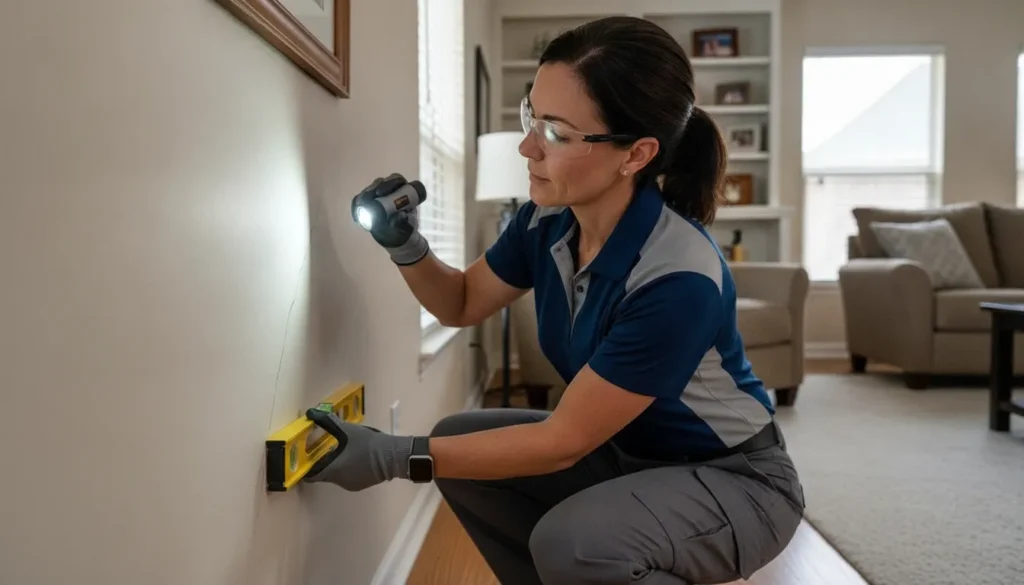
Finding a new crack in your wall can make a routine home repair feel much more serious. In North Texas, that concern deserves a thoughtful look because expansive clay soil shrinks and swells as moisture conditions change. Contributing to ordinary settling and, in some homes, structural foundation movement. The goal is not to assume every line in your drywall signals a foundation failure. It is to recognize the details that tell you when a cosmetic patch may be enough and when an inspection can protect your home from a problem that keeps returning.
Thin, isolated, vertical hairline cracks in drywall often reflect minor settling and may respond to patching and repainting. Wider cracks, diagonal or stair-step patterns, cracks that spread or reopen after repair, and related signs such as sticking doors or sloping floors deserve closer attention. If you plan to repair cracks in walls, first consider whether the pattern is changing or appears in several areas. A professional foundation inspection can identify whether movement, drainage, or another issue sits behind the damage.
Once you look beyond the surface, the crack’s direction, location, width, and relationship to doors, windows, floors, or exterior masonry become useful clues. That closer review helps separate a manageable cosmetic issue from a pattern that calls for expert guidance, which is why the warning signs matter.
Why Cracks in Your Walls Deserve a Closer Look
Seeing a crack spread across a wall can make you wonder whether your home is shifting beneath you. In North Texas, that concern deserves a calm, careful look, but it does not automatically signal an emergency. Most homes settle to some degree, and minor movement can leave small cosmetic marks in drywall or plaster.
The important question is not simply whether a crack exists. It is whether the crack shows a pattern or change that points beyond the finish material. A stable, isolated hairline crack may call for a straightforward patch and repaint. A crack that grows, returns, or appears alongside other signs of movement deserves a closer diagnosis before another cosmetic repair.
Schedule a free foundation inspection in North Texas and call (940) 365-4221.
Start by reading the crack itself
Look at the crack’s direction, width, location, and history. Cosmetic hairline cracks are often thin, vertical, and isolated, especially around door or window openings. Minor settling can create these marks without indicating a foundation problem. If the crack has stayed the same since you first noticed it, the surrounding wall remains flat. And no doors or windows have changed, patching may be a reasonable next step. A flexible patching compound can fill a cosmetic drywall or plaster crack, after which you can feather the edges and repaint the area. See the referenced drywall repair guidance for the basic cosmetic process.
Take a dated photograph before repairing the surface. You can also mark the crack’s endpoints lightly with a pencil and record its approximate width. This simple record helps you tell the difference between a mark that remains stable and one that changes with time. Avoid relying on a fresh coat of paint as proof that the movement has stopped. A repaired crack that reappears can indicate ongoing settlement and warrants professional evaluation.
North Texas soil makes context matter
In the Dallas-Fort Worth area, expansive clay soil changes volume as its moisture level rises and falls. That seasonal shrinking and swelling can contribute to normal settling, but it can also drive foundation movement. When the foundation shifts, stress may transfer upward into drywall, plaster, brick, or other wall finishes. The wall crack becomes a visible symptom, not necessarily the original source of the problem. Solid Base Foundations explains the North Texas clay-soil connection in its regional foundation guidance.
That is why the safest approach to repair cracks in walls combines observation with context. Patching a thin, stable, isolated mark is different from covering a crack that is widening or returning. If the crack changes, appears in several areas, or comes with sticking doors, jammed windows, or uneven floors, consider a foundation inspection. Finding the cause first lets you address the movement rather than repeatedly repairing the visible finish.
Cosmetic Cracks vs. Structural Wall Cracks
Not every crack signals a serious foundation problem, but the pattern, width, location, and progression can tell you whether a simple surface repair makes sense. Start by looking at the crack in good light, then note its direction and whether related changes appear elsewhere in the room.
What cosmetic wall cracks usually look like
Cosmetic cracks are commonly hairline-thin, vertical, and isolated. You may see them around door or window openings, where minor settling places limited stress on drywall or plaster. A single crack that remains stable and does not affect how doors, windows, or floors function often points to a surface-level issue rather than active structural movement.
For a stable cosmetic crack, clean away loose material, apply a flexible patching compound, feather the edges, and repaint. Mesh tape can also help reduce re-cracking from minor movement. Keep a dated photo or mark the crack discreetly so you can compare its size later. If it stays unchanged, monitoring may be reasonable. If it widens, grows, or returns after patching, the repair has likely covered an ongoing movement issue rather than resolved it.
Signs a wall crack may be structural
Structural cracks deserve closer attention when they are wider than 1/8 inch, run diagonally across an interior wall, or follow a stair-step path along brick or block mortar. A crack that extends through multiple surfaces, changes noticeably, or appears alongside several other cracks also warrants an evaluation.
Look beyond the crack itself. Sticking doors, jammed windows, or floors that feel sloped can indicate that movement affects more than the wall finish. These symptoms do not prove a foundation failure on their own, but they raise the importance of assessing the entire home instead of treating one visible line.
North Texas homes face a regional complication: expansive clay soil can shrink and swell as moisture conditions change. Movement in that soil can transfer stress through the slab and into the walls above. That is why a diagonal drywall crack or stair-step masonry crack may reflect movement below the finished surface, even when the foundation itself is out of sight.
Patching a structural crack can improve its appearance temporarily, but it does not correct the source. If the crack continues to change or returns after repair, a foundation inspection can determine whether settlement or another movement pattern is involved. A professional evaluation helps you choose an appropriate response, rather than repeatedly repairing the symptom and waiting for it to reappear. For broader context, you can also identify different foundation crack types found in Dallas-area homes.
Crack Patterns That Point to Foundation Movement
A wall crack deserves closer attention when its direction, location, or changes over time suggest that the structure is moving beneath it. In North Texas, expansive clay soil can shrink during dry periods and swell after moisture returns. That repeated change can shift the slab and transmit stress into the walls above the foundation.
Stair-step cracks along brick or block
Look closely at exterior brick or concrete block, especially around corners and openings. A crack that follows the mortar joints in a stair-step pattern can indicate that part of the foundation has settled or shifted. The crack may move diagonally through one mortar joint, turn, and continue through the next, creating a visible staircase across the wall.
This pattern differs from a small, isolated surface blemish because it follows the masonry’s load-bearing lines. A crack that appears wider than a hairline, extends across several courses, or shows movement over time deserves a professional evaluation. Photograph the area from the same angle and check it periodically so you can see whether the pattern changes.
Diagonal cracks across interior walls
Interior drywall cracks can also reveal movement below the finished surfaces. Pay attention to diagonal lines that run across a wall rather than short, vertical cracks around a doorway or window. Diagonal cracks may form when uneven movement places stress on the wall framing and drywall. They can become more meaningful when they extend from a corner, grow toward an opening, or appear in more than one room.
The pattern alone does not prove that foundation repair is required. It does, however, provide a reason to inspect the surrounding areas instead of covering the crack immediately. If you are learning how to identify symptoms of structural foundation problems, compare the crack with nearby trim, ceilings, floors, and exterior masonry.
Cracks accompanied by movement inside the home
A crack becomes more concerning when other parts of the house no longer operate normally. Doors may stick in frames, windows may jam, or floors may feel sloped underfoot. These symptoms can occur when foundation movement changes the alignment of walls and openings. One symptom by itself has several possible causes, but a diagonal or stair-step crack combined with sticking doors, jammed windows, or sloping floors creates a stronger pattern.
Timing matters as well. A crack that widens, lengthens, or returns after patching points to ongoing movement rather than a settled cosmetic defect. Keep notes on when you first notice it, mark its visible endpoints, and take monthly photos in consistent lighting. If the crack continues to change, arrange a professional foundation inspection. Patching may improve the appearance, but it will not address the underlying cause when expansive clay movement continues beneath the home.
Repairing Cracks in Walls Yourself vs. Calling a Foundation Expert
Choosing how to repair cracks in walls starts with identifying what caused them. A stable, hairline crack that appears once in an isolated section of drywall often reflects minor settling. In that situation, a careful patch may restore the finish without requiring structural work. North Texas homes, however, sit on expansive clay soil that shrinks and swells as moisture levels change. If that movement affects the foundation, a cosmetic repair can cover the evidence without stopping the movement underneath.
For a minor drywall crack, clean away loose material, apply mesh tape over the crack, and cover it with a flexible patching compound. Feather the edges, allow the compound to cure, then repaint. Mesh tape and flexible compound can reduce re-cracking caused by minor movement, but they are not designed to stabilize a shifting foundation. Watch the repaired area afterward. A crack that widens, grows, or returns deserves more than another coat of compound.
| Criterion | DIY patch | Professional foundation repair |
|---|---|---|
| Best for | Stable, thin, isolated drywall cracks with no related changes elsewhere in the home. | Cracks tied to settlement, including diagonal interior cracks, stair-step brick cracks, or cracks that keep returning. |
| Tools and method | Surface cleaner, mesh tape, flexible patching compound, sanding block, and paint. | Inspection and movement assessment, followed by an appropriate engineered repair. Structural wall cracks may require professional epoxy or polyurethane injection. |
| Risk if wrong | The patch may re-crack, and repeated cosmetic work can delay recognition of an underlying problem. | A qualified evaluation helps connect the wall symptom to the foundation condition instead of treating the visible crack alone. |
| When to call | Monitor after patching. Reconsider the DIY approach if the crack changes or returns. | Call when the crack is wider, diagonal, stair-step, recurring, or accompanied by sticking doors, jammed windows, or sloping floors. |
Professional repair matters because the correct method depends on the source and behavior of the crack. Patching alone hides a crack connected to foundation movement, and the visible damage usually returns until the underlying cause receives attention. A foundation inspection can determine whether the movement relates to soil conditions, drainage, settlement, or another issue. When injection is appropriate, professionals apply epoxy or polyurethane to repair the structural crack. They can also recommend engineered or patented solutions that address the foundation damage rather than simply improving the wall’s appearance.
If you are unsure whether a crack is cosmetic, compare its pattern with other symptoms and track whether it changes. A professional can help you identify the difference between a finish that needs maintenance and movement that calls for foundation repair.
How to Keep Small Cracks From Becoming Foundation Repairs
Small wall cracks can feel unsettling, especially when you are unsure whether they reflect ordinary settling or a larger problem. In North Texas, moisture management gives you one of the most practical ways to protect your home. Expansive clay soil shrinks and swells as its moisture level changes, and repeated movement can place stress on the foundation and walls above it. A few consistent maintenance habits, followed by simple annual monitoring, can help you spot changes before they become harder to understand.
- Keep gutters and downspouts clear. Clean your gutters regularly so rainwater can move freely instead of overflowing beside the house. Check that each downspout carries water away from the foundation rather than releasing it directly at the slab. The University of Minnesota Extension identifies inadequate gutters and downspouts as a common source of moisture problems around foundations. Review practical drainage guidance if you are assessing your current setup.
- Slope the ground away from the house. Walk the perimeter after rain and look for areas where water pools or flows toward the foundation. The soil surface should fall away from the house for several inches so runoff moves outward. Failing to slope the ground away from the foundation is another common cause of moisture and foundation problems. Many homes remain structurally sound but lack adequate drainage design, so this check can reveal a maintenance concern without assuming that every crack signals structural damage.
- Keep moisture conditions as consistent as possible. North Texas clay does not respond well to repeated extremes. Long dry periods can cause the soil to shrink, while heavy rainfall can make it swell. Avoid directing irrigation toward the foundation, repair plumbing or drainage leaks promptly, and keep water distribution around the home reasonably even. The goal is not to eliminate every change in soil moisture. It is to reduce avoidable swings that may contribute to movement.
- Monitor cracks once a year. Photograph each crack from the same angle, note its location, and measure both its approximate width and length. Record whether it remains isolated, extends into a new area, or appears alongside sticking doors, jammed windows, or sloping floors. Stable hairline cracks can often be monitored, but a written record gives you a clearer comparison than memory alone. Consider checking again after periods of drought or unusually heavy rain.
- Arrange a professional evaluation when a crack changes. A crack that widens, grows longer, or reappears after you patch it may indicate ongoing settlement. Patching can improve the appearance, but it does not identify or correct movement below the wall. If the same crack returns, or if several warning signs develop together, schedule a foundation inspection. An evaluation can help determine whether the issue is cosmetic, drainage-related, or connected to foundation movement before you decide how to repair cracks in walls.
These steps cannot prevent every foundation issue, but they can limit preventable moisture stress and give you useful evidence when a crack changes. Consistent drainage and careful records make it easier to respond with the right level of attention.
Schedule your free foundation inspection in North Texas today
Frequently Asked Questions
How can you tell whether a wall crack is structural?
Look at the crack’s direction, width, and progression. A diagonal interior crack, a stair-step crack through brick or mortar, or a crack wider than 1/8 inch deserves closer attention. Sticking doors, jammed windows, or sloping floors add to the concern. A thin, vertical crack that remains isolated and stable is more often cosmetic, but only an inspection can confirm the cause.
Do stable hairline drywall cracks require professional repair?
Not always. A hairline crack that appears once and stays unchanged can often be cleaned, filled with flexible patching compound, feathered, and repainted. Mark the ends and check it periodically. If it widens, grows, or returns after patching, arrange a foundation evaluation instead of repeatedly covering the surface.
What should you use to fill a small wall crack?
For a cosmetic drywall crack, use a flexible, paintable joint compound or lightweight filler. Mesh tape can help limit re-cracking when minor movement continues. These materials are not a solution for a crack caused by foundation movement. Structural cracks may require professionally applied epoxy or polyurethane injection after the underlying movement has been evaluated.
Why do wall cracks keep coming back after repainting?
Repeated cracking usually means movement continues beneath the finish. In North Texas, expansive clay soil can shrink and swell as moisture changes, contributing to settlement and foundation movement. Patching improves the appearance, but a foundation inspection helps identify whether drainage, soil movement, or another condition is driving the recurrence.
Schedule a Free Foundation Inspection
Wall cracks can be unsettling, especially when North Texas soil shifts with changing moisture. A professional inspection can help you understand whether a crack is cosmetic or connected to foundation movement, so you can choose the right next step with confidence.
Schedule your free foundation inspection and estimate with Solid Base Foundations at (940) 365-4221