
Foundation Cracks: Types Dallas Homeowners Should Know
Foundation cracks can be harmless surface marks, or they can be the first visible clue that a Dallas home is moving with the soil beneath it. The hard part is that two cracks may look similar at a glance while pointing to very different concerns. Homeowners need a practical way to compare crack direction, width, location, and nearby symptoms before deciding whether to monitor the area or schedule an inspection.
Concerned about foundation cracks at your home? Request a free, no-obligation foundation repair estimate from Solid Base Foundations or call 940-365-4221.
This guide explains the foundation crack types Dallas homeowners most often notice: vertical, stair-step, horizontal, hairline, and widening cracks. It also covers which patterns are commonly cosmetic, which deserve faster attention, and why North Texas clay soil changes the way cracks should be evaluated.
Why Foundation Cracks Are Common in Dallas
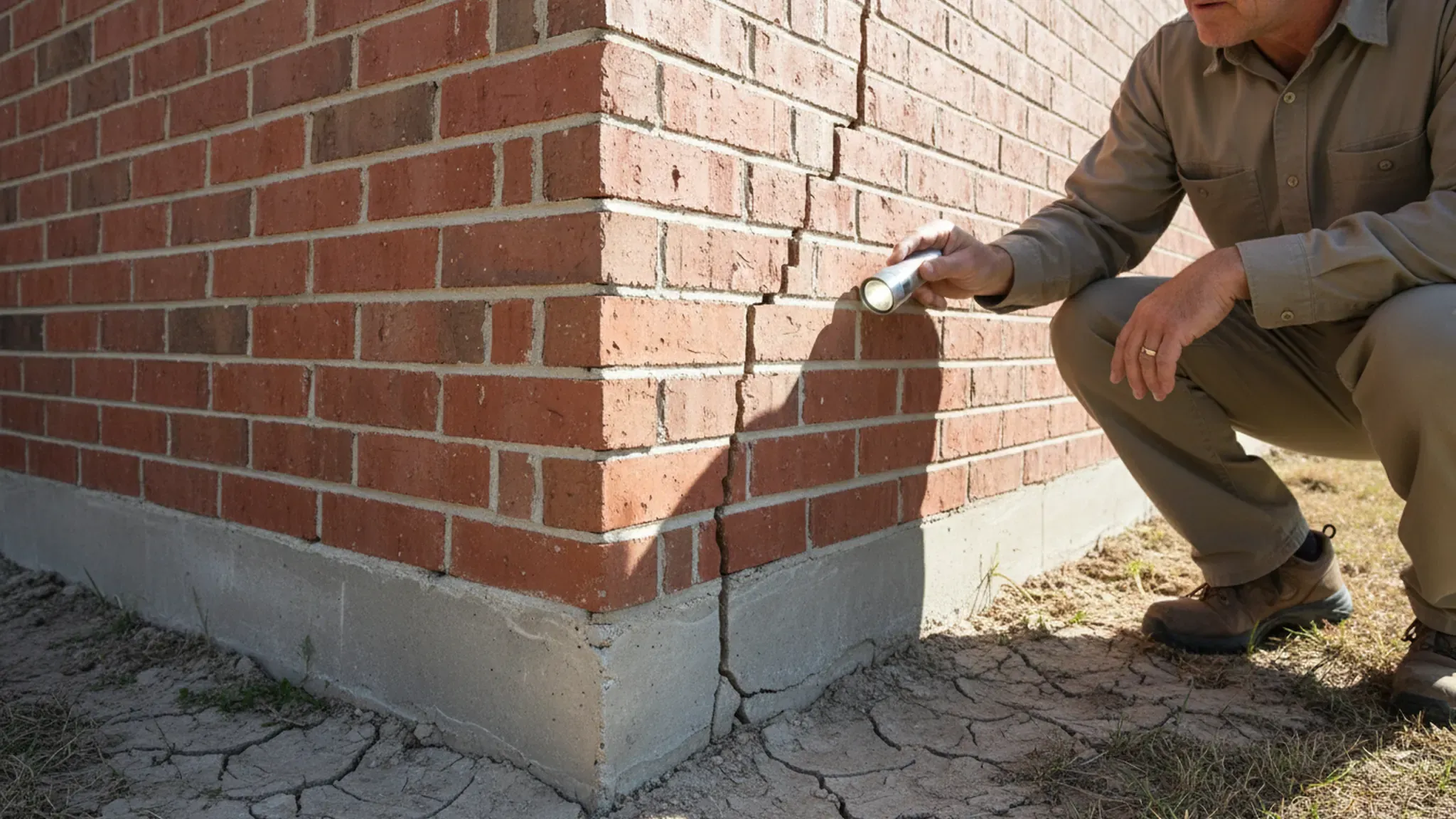
North Texas homes sit on expansive clay soil. That clay absorbs moisture after rain, swells, then shrinks during dry stretches. Repeated expansion and contraction can change the support under a slab or around a foundation wall. Over time, uneven soil movement may show up as cracks in concrete, brick mortar, drywall, flooring, or the foundation itself.
A visible crack does not automatically mean the structure is failing. Concrete naturally shrinks as it cures, and small surface cracks can form without threatening the home. Still, Dallas homeowners should pay closer attention when cracks appear alongside doors that stick, windows that no longer latch, sloping floors, gaps around trim, separated brickwork, or recurring interior drywall cracks.
Solid Base Foundations has spent more than 18 years helping Greater Dallas homeowners assess foundation movement. The best first step is not guessing from one symptom. It is comparing the crack to the home’s broader pattern of movement and, when warranted, having a specialist inspect the site.
Quick Foundation Crack Severity Guide
| Crack type | What it often looks like | Typical concern level | What to do next |
|---|---|---|---|
| Hairline | Very thin, shallow line in concrete | Often lower if stable and isolated | Photograph, measure, and monitor |
| Vertical | Runs mostly up and down | Ranges from minor shrinkage to settlement concern | Check width, change over time, moisture, and nearby symptoms |
| Stair-step | Zigzag crack following brick or block mortar joints | More concerning when paired with separation or sticking openings | Schedule an inspection if growing or accompanied by movement signs |
| Horizontal | Long side-to-side crack in a wall or foundation area | Higher concern because lateral pressure may be involved | Seek professional evaluation promptly |
| Widening | Any crack that grows longer, wider, or uneven | Higher concern regardless of direction | Document the change and schedule an inspection |
Hairline Foundation Cracks: Often Cosmetic, Still Worth Tracking
Hairline foundation cracks are thin lines that can be difficult to feel with a fingernail. They often form as concrete dries, cures, or responds to routine temperature and moisture changes. A narrow, isolated hairline crack that stays the same over time is generally less alarming than a crack that keeps spreading or has visible displacement from one side to the other.
Homeowners should still track hairline cracks rather than dismiss them outright. Take a straight, well-lit photo. Note the date, location, and approximate length. If the line gets wider, extends into brickwork or flooring, leaks water, or appears near new interior symptoms, it is no longer just a cosmetic observation.
When a hairline crack deserves attention
- It widens after heavy rain or a long dry spell.
- It appears with sticking doors, cracked drywall, or gaps near windows.
- Water, insects, or soil washout appear around the crack.
- Multiple new cracks form in the same part of the home.
Vertical Foundation Cracks: Common, but Context Matters
Vertical foundation cracks run mostly up and down. Some stem from shrinkage or routine concrete movement, especially if they are narrow and do not change. Others may be related to settlement, soil movement, or localized stress. Direction alone does not settle the question. Width, shape, moisture, and nearby damage matter.
A vertical crack becomes more concerning when one end is visibly wider than the other, when the surfaces on either side are no longer flush, or when the crack continues through adjacent masonry or interior finishes. Homeowners should also look above and beside the crack. A vertical line near an exterior wall paired with interior drywall cracking, a sloping floor, or a window that suddenly binds deserves a closer look.
If signs point beyond a surface blemish, Solid Base can evaluate whether the concern is tied to broader settlement and discuss appropriate foundation repair options in Dallas and surrounding communities.
Stair-Step Cracks: A Brick and Mortar Warning Pattern
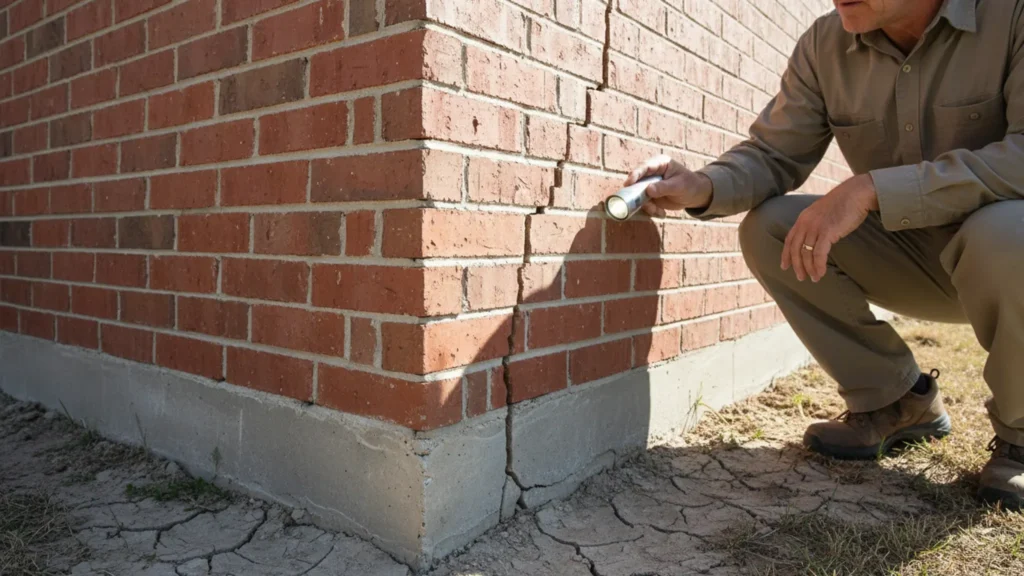
Stair-step cracks travel diagonally through brick or block mortar joints, creating a stepped pattern. Dallas homeowners often spot them on exterior brick veneer, garage walls, or masonry near doors and windows. Because the crack follows mortar lines, it can look neat, but that does not make it harmless.
Stair-step cracking can reflect uneven movement beneath one part of the structure. It deserves more attention when bricks separate, the mortar gap widens, window or door frames shift, or the crack is paired with interior wall damage. North Texas clay can create uneven lift and settlement across a slab, so the crack pattern should be considered alongside grading, drainage, and seasonal soil changes.
Location also matters. A stair-step crack near a corner, around a large opening, or above a foundation area that has pulled away from trim may indicate stress concentrated in that zone. If a homeowner in Collin County has this pattern along with door or window issues, a local page such as Solid Base’s Plano foundation repair resource can help explain the area-specific inspection process.
Mid-article check: If a stair-step, horizontal, or widening crack is paired with sticking openings or uneven floors, schedule a free estimate instead of waiting for the next season to see what happens.
Horizontal Foundation Cracks: Treat These as Higher Priority
Horizontal foundation cracks run side to side. In wall systems, they can be associated with lateral pressure from soil and moisture. That pressure can build when water is not draining away from the home or when saturated soil pushes against below-grade or retaining portions of a structure. While every house needs its own diagnosis, horizontal cracking is generally a faster call for professional evaluation than a stable, isolated hairline crack.
Watch for wall bowing, inward movement, moisture intrusion, or a horizontal crack that continues for several feet. A homeowner should not simply patch over the line and assume the underlying cause is solved. Sealing a crack can address the opening, but it does not correct ongoing pressure or settlement if those are present.
Solid Base operates through the Foundation Supportworks dealer network and uses engineered solutions when stabilization is needed. If piers are appropriate for settlement-related repair, the company’s pier systems are backed by a 25-year manufacturer warranty. The right solution depends on the actual cause, which is why inspection comes before a repair recommendation.
Widening Foundation Cracks: Change Over Time Is the Key Signal
A widening crack matters because it shows active change. It may begin as a thin vertical line, a mortar crack, or a floor crack. If a later photo shows that the gap is longer, wider, branching, or uneven from one side to the other, the crack has shifted from a static mark to a movement indicator.
Dallas homeowners can create a simple monitoring record:
- Photograph the crack straight on with good light.
- Place a ruler or measuring tape nearby for scale.
- Record the date, room or exterior wall, and weather context if relevant.
- Recheck after a few weeks, after major rain, or during prolonged drought.
- Schedule an inspection if the crack changes or new symptoms appear elsewhere.
This process is especially useful for cracks that do not look dramatic on day one. A clear timeline helps homeowners explain what changed and gives an inspector better context during the visit.
Are Foundation Cracks Cosmetic or Structural?
The most useful answer is not based on one measurement alone. Cosmetic cracks are more likely to be narrow, isolated, stable, and free of other movement signs. Structural concern rises when cracks show progression, displacement, repeating patterns, or companion symptoms elsewhere in the home.
| More likely cosmetic | More likely to warrant inspection |
|---|---|
| Thin hairline line that has not changed | Crack that widens, lengthens, or branches |
| No water intrusion or soil loss | Moisture entry, washout, or recurring seepage |
| No related symptoms in doors, windows, or floors | Sticking doors, uneven floors, or drywall cracking |
| Isolated surface crack | Horizontal, stair-step, or displaced cracking |
If cost uncertainty is the reason for delaying a call, Solid Base also explains what affects pricing in its guide to the cost to fix cracks in a foundation. A free estimate is still the more reliable way to understand a specific property than trying to price a crack from photos alone.
What Dallas Homeowners Should Check Around a Crack
A foundation crack is one clue. The surrounding property often supplies the rest of the story. Before an inspection, look for signs that point to drainage, settlement, or related flatwork movement.
- Doors and windows: Do they drag, stick, or show new gaps at the corners?
- Interior walls: Are there diagonal drywall cracks above openings or recurring nail pops?
- Floors: Do they slope, feel uneven, or show separation from baseboards?
- Exterior brick: Are mortar joints separating, especially near corners?
- Drainage: Does water collect beside the house after storms?
- Concrete flatwork: Have sidewalks, patios, or driveway sections settled toward the home?
Sunken concrete near the house can worsen drainage patterns. Solid Base’s PolyLevel concrete lifting service is designed for settled slabs and cures in about 15 minutes, which can be helpful when the issue involves uneven flatwork rather than structural foundation stabilization. An inspection clarifies which category the problem falls into.
When Should You Schedule a Foundation Inspection?
Schedule an inspection when the crack is horizontal, stair-step, widening, offset, leaking, or paired with other signs of movement. Homeowners should also request a professional opinion when several smaller symptoms appear together. One subtle crack may not be urgent. A crack plus sticking doors, interior drywall damage, and poor drainage tells a different story.
Solid Base Foundations serves homeowners across Greater Dallas, Denton, Collin, and nearby North Texas communities. Homeowners north of Dallas can review its Denton foundation repair service page, while those comparing the company background can visit About Solid Base Foundations.
Bottom line: If you cannot tell whether foundation cracks are cosmetic or structural, do not rely on guesswork. Call 940-365-4221 or request a free no-obligation estimate so the home can be evaluated in person.
Foundation Cracks FAQ
What type of foundation crack is most concerning?
Horizontal cracks, widening cracks, cracks with visible displacement, and stair-step cracks paired with doors, windows, or floor problems generally deserve faster professional attention. The full pattern matters more than a single visual cue.
Are vertical foundation cracks always serious?
No. Some vertical cracks are tied to shrinkage or stable concrete movement. They become more concerning when they widen, show uneven edges, leak, or appear alongside other signs of settlement.
Can Dallas clay soil cause foundation cracks?
Yes. Expansive North Texas clay swells when wet and shrinks when dry. That cycle can change support around a slab or foundation wall and contribute to cracking, especially when drainage is poor or soil moisture swings sharply.
Should I repair a foundation crack myself?
A surface seal may address a minor opening, but it does not diagnose the cause of a crack. If the pattern suggests movement, homeowners should get an inspection before deciding on repair. The goal is to solve the cause, not only hide the line.
How do I monitor a crack before calling a professional?
Take dated photos from the same angle, include a ruler for scale, record the location, and compare width and length over time. If the crack grows or other symptoms appear, schedule an inspection.
Get Clarity Before a Small Crack Becomes a Bigger Question
Foundation cracks are easier to respond to when homeowners know what to watch: direction, width, change over time, nearby movement, and the effects of Dallas clay soil. A stable hairline crack may only need monitoring. A horizontal, stair-step, or widening crack may justify a prompt inspection. When the signs are mixed, an on-site evaluation is the clearest next step.
Solid Base Foundations provides homeowner-friendly inspections, repair guidance, and long-term structural solutions across the Greater Dallas area. If a crack at your home has you second-guessing what it means, request a free estimate and get a professional answer based on the property in front of you.