
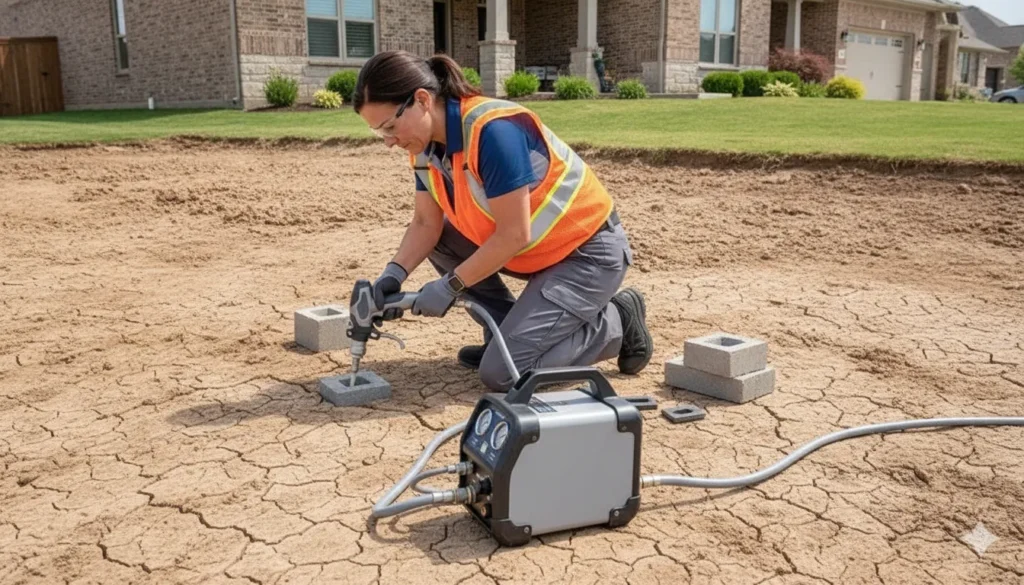
A small crack or uneven slab can make every day at home feel uncertain, especially when North Texas clay soil expands and contracts with changing moisture. The repair schedule, however, is usually more manageable than homeowners expect. The key is matching the repair method to the movement, access conditions, and scope identified during a professional inspection.
So, how long does foundation repair take? Most projects finish in one day to a few days. PolyLevel concrete leveling often wraps up the same day and cures in about 15 minutes, while pier installation typically takes one to three days. Larger or more complex repairs may take longer.
The inspection and estimate establish a realistic plan before work begins, including which areas require stabilization and how crews will reach them. From there, the repair type largely determines the pace, so it helps to compare the timelines for leveling, pier installation, and other common solutions.
Get a free foundation repair estimate and call (940) 365-4221
How Long Does Foundation Repair Take by Repair Type?
The repair method has a direct effect on how quickly your property returns to normal. A small, localized correction may take less than a day, while structural stabilization involves more preparation and installation. In North Texas, expansive clay soil can shrink and swell as moisture levels change. So the right solution depends on how that movement has affected your foundation, not simply on the visible crack or uneven area.
The ranges below provide a practical starting point. Your actual schedule may change with the size of the repair, access to the work area, soil conditions, and the technology selected after inspection.
| Repair type | Typical time | What to expect |
|---|---|---|
| PolyLevel concrete leveling | Often completed the same day | The material cures in about 15 minutes, allowing immediate use of the repaired area. |
| Pier installation | Typically 1 to 3 days | A structural stabilization project that provides permanent support and includes a 25-year manufacturer warranty on pier systems. |
| Crack injection or spot repair | Often less than one day | Localized work can move quickly when the affected area is accessible and does not require broader stabilization. |
PolyLevel concrete leveling: often a same-day repair
PolyLevel is designed for targeted concrete leveling with minimal disruption. Once injected beneath the affected slab, the material cures in approximately 15 minutes. That quick cure time is why many PolyLevel projects finish the same day and why the surface can generally return to use promptly. Learn more about PolyLevel concrete leveling and where this method fits.
Piers: more installation time for structural support
Pier installation typically takes one to three days because the crew must place and secure a system intended to stabilize the structure over the long term. The longer schedule reflects the scope of the work, not a delay in the process. For homes affected by substantial movement in expansive clay, permanent support can be more appropriate than a surface-level correction.
Crack injection and spot fixes
Crack injection or another localized repair often takes less than a day when the issue is limited and the work area is straightforward to reach. A fast repair does not automatically mean a minor concern, however. An inspection helps determine whether the crack is isolated or part of a larger pattern that calls for stabilization.
The Foundation Repair Process, Step by Step
A clear repair timeline starts with a clear diagnosis. In North Texas, expansive clay soil can shrink and swell as moisture conditions change, so visible cracks or uneven floors do not tell the whole story by themselves. A proper inspection identifies the movement pattern, the underlying failure mechanism, and the repair method suited to the property. That information is what turns a broad estimate into a realistic project schedule.
-
Inspection and a detailed quote
The process begins with a professional, typically free inspection of the foundation and surrounding conditions. An experienced specialist reviews symptoms, checks relevant structural areas, considers soil behavior, and determines whether the project calls for concrete leveling, pier installation, or another approach. The resulting quote should explain the recommended work and its scope, rather than offer a timeline detached from the actual problem. Structural assessment is recognized as the basis for planning rehabilitation work, including in the ASCE standards reference on building condition assessment. You can also review the foundation repair estimate process to see what this stage typically includes.
-
Scheduling the crew
Once the scope is approved, the team coordinates a start date, confirms site access, and reviews any practical preparations. The schedule reflects the selected technology and the size and complexity of the repair. A smaller concrete-leveling project may be completed in a day, while pier installation commonly takes one to three days. Those are useful planning ranges, not guarantees. Accessibility, weather, soil moisture, and the number of repair points can all affect the final schedule.
-
Day-of setup and equipment placement
On repair day, the crew protects the work area, establishes safe access, and positions the equipment needed for the planned installation. The setup may involve carefully placing injection equipment or a drill rig so the crew can reach the work zone without creating unnecessary disruption. Restricted access can add preparation time, particularly around landscaping, narrow side yards, patios, or other obstructions.
-
Installation or leveling
The crew then performs the engineered repair. PolyLevel concrete leveling uses controlled injections to raise and support sunken slabs, while pier systems transfer structural loads to more stable supporting strata. The method, depth, number of locations, and observed response determine how quickly this stage progresses. PolyLevel material cures in about 15 minutes, allowing prompt use of the area. While a pier project generally requires more time because it involves structural stabilization rather than surface leveling.
-
Backfill and cleanup
After the repair is complete, the crew fills excavated areas, removes equipment, and cleans the work zone. The team reviews the completed work and any site-specific follow-up with you before leaving. While many modern repairs are minimally disruptive, the final restoration can vary with the access route and the extent of excavation. That is why the initial diagnostic inspection remains the essential first step when estimating how long foundation repair will take.
What Factors Influence Your Foundation Repair Timeline?
It is understandable to want a clear schedule when your home shows signs of foundation movement. The most accurate answer depends on what is moving, why it is moving, and how the repair team can safely reach the affected area. A focused repair may be completed quickly, while a broader structural project requires more preparation and installation time.
The scope and severity of the repair
The size of the affected area is one of the first timeline variables. Concrete leveling with PolyLevel may often be completed in a single day, while pier installation typically takes one to three days. A project involving several areas, significant settlement, or multiple repair methods may take longer because each part must be addressed and checked carefully. That is why an inspection should guide the schedule rather than relying on a general industry estimate.
For homeowners comparing symptoms, identifying foundation issues can also help clarify whether a visible crack points to a structural concern or another problem that requires a different type of evaluation.
North Texas soil movement
North Texas homes sit on expansive clay soil, which shrinks and swells as moisture levels change. Those movements can place pressure on the foundation and contribute to settlement or uneven support. The severity and pattern of that soil movement influence both the repair design and the time required to complete it. A solution designed to address the underlying structural conditions is more useful than a rushed fix that overlooks the forces affecting the home.
Access for equipment and the crew’s schedule
Restricted access can add time to a project. Narrow side yards, landscaping, fences, patios, utilities, or limited clearance may make it more difficult to position equipment and remove materials. The crew may need to use a different approach or complete additional preparation before the repair can begin. Sharing access details during the inspection helps the team plan realistically.
Scheduling availability matters as well. Material availability, crew calendars, and the size of the planned repair all affect the start date. Once the scope and access conditions are understood, the contractor can provide a more useful project window.
Weather and soil moisture
Weather does not always change the repair method, but it can affect site conditions and timing. Rain can make soil and work areas less stable, while changing moisture levels can influence expansive clay behavior. A short weather delay may be the responsible choice if it allows the team to work safely and accurately. In practice, the timeline reflects the repair scope, the property, and current conditions together, not a single calendar number.
Can You Live in a House During Foundation Repair?
For many homeowners, the prospect of foundation work raises an immediate practical question: where will daily life happen while the crew is on site? In most cases, you can remain in your home during foundation repair. Modern repair methods are designed to limit disruption, and much of the work takes place outside the living area.
Exterior pier installation, for example, typically involves carefully planned access around the foundation rather than extended demolition inside the home. Concrete leveling with PolyLevel is also minimally invasive. Crews inject the material through small openings, lift the affected slab, and restore the area without the prolonged interruption associated with more invasive approaches. Surface-level concrete repairs can often be completed in less than 24 hours.
What should you expect during the work?
Your repair plan may require the crew to enter part of the home. Interior access can help technicians inspect movement, reach a repair location, or confirm that the structure responds as planned. The team should explain those access points before work begins, so you can prepare rooms, protect belongings, and maintain a clear path. Noise, equipment movement, and activity near the work area are reasonable expectations, even when the project remains manageable.
PolyLevel offers a particularly quick return to normal use. The material cures in about 15 minutes, allowing the treated area to be used soon after installation. That rapid cure time helps explain why many PolyLevel projects finish the same day and why homeowners often do not have to relocate during the repair.
When might staying home be less practical?
Living in place may be less comfortable during a larger structural project. A repair involving extensive interior access, or work that affects a bedroom, entryway, utility area, or other essential space. Site conditions and the scope of the repair influence the schedule. North Texas expansive clay soil can contribute to movement as moisture levels change. So the appropriate solution depends on the home’s specific structural needs rather than a one-size-fits-all timeline.
Before the project starts, ask which areas the crew will use, how long access will be restricted, and what cleanup to expect each day. A clear plan lets you make practical arrangements without assuming that foundation repair requires moving out.
When Is the Best Time of Year for Foundation Repair in North Texas?
There is no single season when foundation repair must be scheduled in North Texas. Pier installation is possible year-round, and a qualified contractor can plan the work around the condition of the structure, the site, and the soil. The most reliable starting point is a professional inspection, not a date on the calendar.
That distinction matters in the Dallas area because expansive clay soil responds to moisture. It can shrink as conditions dry and swell after absorbing water, creating movement that affects the foundation. Weather and soil moisture can influence site conditions and scheduling, but they do not automatically make repair impossible. Instead, the inspection helps determine what has moved, why it moved, and which repair approach is appropriate.
How seasonal moisture affects scheduling
Periods of heavy rain can leave work areas wet or make access more difficult. Extended dry weather can also change the soil’s volume and reveal movement that was less apparent earlier. These conditions may affect preparation, equipment access, or the timing of specific installation steps. They are reasons for careful planning, not reasons to postpone a known structural concern indefinitely.
Pier systems address structural stabilization at the foundation, so the project schedule depends primarily on the repair scope and the property’s conditions. Restricted access, the number and location of piers, and the severity of movement can all influence the time required. A professional assessment provides a more useful timeline than a general seasonal rule.
When should you schedule an inspection?
Consider arranging an inspection when you notice recurring cracks, doors that stick, sloping floors, or other changes that concern you. An inspection can also be valuable during a property transaction, when a clear repair plan helps inform decisions. For context, see this foundation repair timeline for home sales.
Once the cause and scope are understood, your contractor can recommend a practical start date and explain how weather, moisture, and access may affect the work. Scheduling during a convenient period is helpful, but addressing the underlying problem with an engineered solution is the priority.
How to Prepare for Your Foundation Repair Day
A repair appointment can feel disruptive when you are managing a household, but thoughtful preparation keeps the day orderly. Most modern foundation work is planned around efficient access and limited interruption. A few simple steps also give the crew room to work safely and help you know what to expect once the structural work is complete.
- Clear the access path. Move vehicles, patio furniture, toys, planters, hoses, and other yard items away from the work area before the crew arrives. If the project involves a tight side yard or access near a driveway, clear a continuous path from the street or parking area to the foundation. Restricted access can complicate equipment placement, so an open route helps the team begin promptly and protect your belongings.
- Secure pets and valuables. Keep dogs, cats, and other pets indoors or in a separate, secure area while equipment and crew members move around the property. Close windows or doors near active work if dust or noise concerns you. Remove fragile decorations and valuables from shelves or rooms adjacent to the repair zone. This is a practical precaution that keeps pets calm and reduces the chance of accidental damage.
- Plan your daily routine. Arrange meals, work calls, school pickups, and parking with the repair area in mind. Many repairs are minimally intrusive, and surface concrete projects often finish in less than 24 hours. PolyLevel projects may be completed the same day, with the material curing in about 15 minutes, while pier installation typically takes one to three days. Your exact schedule depends on the repair scope and site conditions, so confirm access needs and expected working hours with your project team.
- Expect modest cleanup afterward. Foundation repair can involve drilling, lifting, excavation, or other work that leaves a small amount of soil or construction residue near the access points. The crew should address routine cleanup before leaving, but the yard or interior may not look exactly as it did beforehand. A quick walkthrough helps confirm that the work area, pathways, and personal items are in good order.
- Plan for post-repair touch-ups. Structural movement can leave cosmetic gaps at trim, baseboards, flooring transitions, or drywall even after the foundation has been stabilized. These finish adjustments are separate from the structural repair and may be best completed after the work is finished. Review our guide to post-repair structural adjustments so you can plan the next stage without confusing cosmetic finishing with a structural defect.
When pier systems are the right solution, the goal is lasting structural support rather than a temporary correction. Pier work is permanent and includes a 25-year manufacturer warranty, giving you a clear record of the system’s long-term backing. Keep your repair documentation and warranty information with your home records after the appointment.
Ready to plan your timeline? Get a free foundation repair estimate and call (940) 365-4221
Frequently Asked Questions
Can you live in a house during foundation repair?
In many cases, yes. Much of the work occurs outside and modern methods are designed to minimize disruption. Your crew may need clear access to parts of the property, and larger pier projects can create temporary noise or limited-access areas. Your contractor should explain any room, driveway, or yard restrictions before work begins.
What is the best time of year for foundation repair?
There is no single best season for every North Texas property. Repairs can be scheduled throughout the year, but expansive clay soil responds to changing moisture conditions, and wet weather can affect access or scheduling. A professional assessment is more useful than waiting for a particular month, especially when movement or cracking is getting worse.
Is it worth fixing foundation issues?
Addressing a verified structural problem is generally more practical than allowing movement to continue. North Texas expansive clay can shrink and swell as moisture changes, so treating the underlying support issue matters. The right solution depends on the failure mechanism, site conditions, and accessibility. A qualified inspection can clarify whether stabilization, concrete leveling, or another repair is appropriate.
How long does it take to repair a foundation crack?
A straightforward crack repair may be completed in less than a day, but the timeline depends on whether the crack is cosmetic or reflects structural movement. An inspection should come first so the repair addresses the cause rather than only the visible symptom. If soil movement or settlement is involved, the project may require a broader stabilization plan.
How long do foundation piers take to install?
Pier installation projects typically take one to three days, according to Solid Base Foundations’ service guidance. The final schedule depends on the number and location of piers, soil conditions, equipment access, and weather. Pier systems provide long-term structural support, and qualifying systems may include a 25-year manufacturer warranty.
Ready to Get Your Foundation Repair Estimate?
A clear inspection and estimate can help you understand which repair approach fits your North Texas home and what the timeline may involve. Get started by contacting the Solid Base Foundations team for a free estimate.
Get a free foundation repair estimate and call (940) 365-4221