
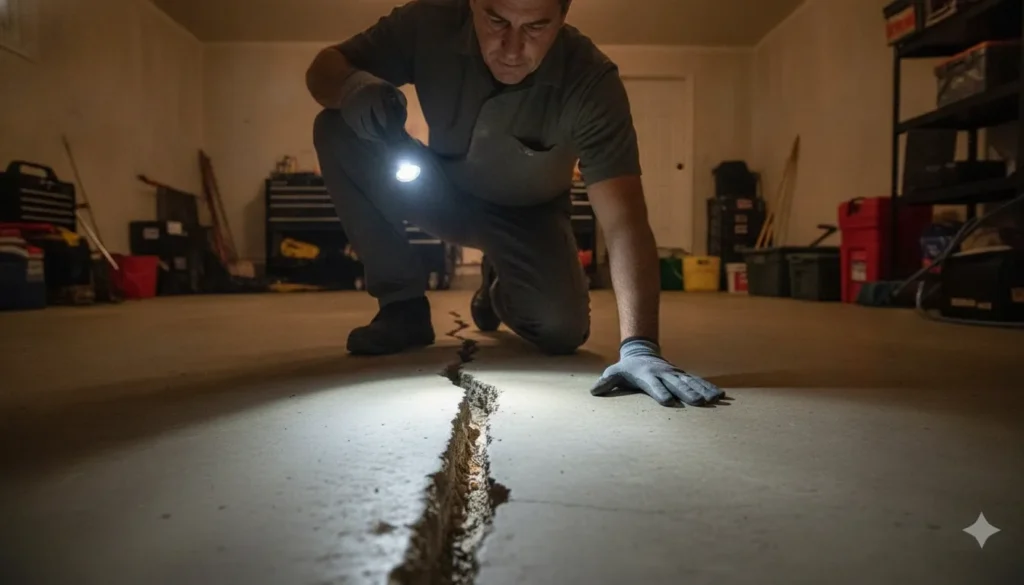
A thin line across your garage slab can be unsettling, especially when North Texas soil is known for moving. Not every crack signals a failing foundation, but its width, direction, height difference. And change over time can reveal whether the concrete is simply curing or responding to movement below.
Most cracks in garage floor surfaces are cosmetic when they remain narrow, flat, and stable. A widening crack, visible height offset, sinking slab, or related cracks in walls and floors deserves a professional assessment. PolyLevel may suit a settled garage slab with voids beneath it, while foundation piers are considered when settlement extends into the home’s structural foundation.
Request a free foundation inspection today and confirm whether your garage floor needs repair. Call (940) 365-4221 or schedule online.
That distinction matters because a typical garage slab may float independently from the foundation, while expansive blackland prairie clay can shrink and swell beneath either structure. Understanding how moisture and soil movement affect concrete is the first step toward choosing a measured response.
Why Do Garage Floors Crack in North Texas Homes?
Concrete is strong, but it is not completely rigid. A garage slab can develop cracks as it cures, responds to temperature changes, or adjusts to movement in the soil beneath it. In many cases, the crack is cosmetic. The pattern, width, and movement over time provide more useful information than the mere fact that a crack exists.
Curing shrinkage can leave hairline cracks
Fresh concrete contains water. As the slab cures and that moisture leaves, the concrete shrinks slightly. That natural change can create narrow, hairline cracks, particularly when the slab dries unevenly or curing conditions vary. Cracks under approximately 1/8 inch are often associated with curing shrinkage, especially when they remain thin, stable, and level.
Control joints are placed in garage slabs to guide this movement, but they cannot eliminate every crack. A crack that follows a joint or remains unchanged over time may be less concerning than one that widens. Develops a vertical offset, or appears alongside other signs of movement.
Temperature changes put concrete under stress
North Texas garages experience substantial temperature swings. A slab may heat rapidly during a summer afternoon, then cool at night or during a cold front. Concrete expands and contracts with those changes. Repeated cycles can stress weak points around joints, corners, plumbing penetrations, and areas where the slab thickness or support changes.
These thermal stresses often produce fine cracks without indicating a problem with the house foundation. Seasonal changes can also make an existing crack appear more visible as the concrete shifts slightly. Monitoring its width and shape helps distinguish ordinary movement from an escalating condition.
Soil movement can shift the slab from below
North Texas homes sit over expansive clay associated with the Blackland Prairie. This soil shrinks as it loses moisture and swells when it absorbs water. Extended dry weather, heavy rainfall, poor drainage, or uneven moisture around the garage can create changes in support beneath the concrete. As the soil moves, the slab may settle, lift, or crack.
Most garage floors are floating slabs. They are separate from the house foundation, so a crack in the garage does not automatically mean the foundation has failed. However, soil movement can affect both systems, and a garage slab that has a noticeable slope, height difference, or recurring movement deserves a closer look. For broader context, review this guide to why concrete cracks and how site conditions influence concrete performance.
An inspection can determine whether the issue is limited to the slab or connected to deeper settlement. That distinction matters because filling a surface crack will not correct a void or unstable soil beneath it.
How to Tell If the Cracks in Your Garage Floor Are Cosmetic or Structural
Seeing a crack in your garage floor can make you wonder whether the entire foundation is shifting. In many cases, a narrow line results from normal concrete shrinkage as the slab cures. A crack that widens, changes elevation, or follows a distinct pattern deserves closer attention. The appearance alone cannot confirm the cause, but it can help you decide whether to monitor the area or arrange an evaluation.
Start with width, movement, and shape. Hairline cracks under approximately 1/8 inch are commonly associated with shrinkage, especially when they remain unchanged. Cracks near or beyond 1/8 inch may require repair, particularly if they continue to grow. Remember that most garage slabs are floating slabs, meaning they are separate from the home’s foundation. A garage-floor crack is not automatically evidence of a foundation problem, although movement beneath the slab can still create a serious leveling or safety concern.
| Sign | More consistent with a cosmetic crack | More concerning for structural movement |
|---|---|---|
| Width | Thin or hairline, usually under approximately 1/8 inch. | Near or over 1/8 inch, especially if the opening continues to expand. |
| Change over time | Static after the concrete cures, with no noticeable change in length or width. | Grows, reopens after filling, or changes noticeably between inspections. |
| Surface level | Edges remain at the same height, with no sharp ridge or depression. | One side sits higher than the other, creating height offset, lippage, or a trip hazard. |
| Pattern | Short, irregular shrinkage lines without a broader movement pattern. | Diagonal, stair-step, or interconnected cracking that suggests directional movement. |
These signs are clues, not a diagnosis. A garage slab can settle because soil or fill beneath it loses support. While movement that extends into walls or the home may point to a deeper foundation concern. In North Texas, expansive clay soil can also change volume as moisture conditions change, placing movement pressure on concrete and surrounding structures.
If the crack is widening, has visible offset, allows water into the garage. Or creates a significant trip hazard, document its location and monitor it rather than covering it immediately. Photograph it with a ruler for scale, note the date, and look for related changes such as sticking doors or nearby wall cracks. When the pattern suggests settlement, a professional inspection can separate a surface repair from a problem requiring stabilization. For related guidance, see repairing cracks in your concrete floor.
When Should You Worry About Cracks in Your Garage Floor?
Many garage-floor cracks are harmless results of concrete curing, temperature changes, or minor movement. A crack deserves closer attention when it is wide, changing, offset, or accompanied by other signs that the slab or surrounding structure is moving. The crack itself is useful evidence, but the pattern and changes around it often tell you more than its appearance alone.
Width and movement matter
Measure the widest point rather than judging the crack from across the room. A crack wider than 1/8 inch is a reasonable threshold for scheduling a professional inspection, particularly if it appears deep or continues through the slab. A narrow crack that remains unchanged may be cosmetic. If the opening grows longer or wider over several weeks or months, however, the movement behind it warrants investigation.
Also look across the crack for a vertical height difference, sometimes called lippage. If one side of the slab sits higher than the other, the concrete is no longer simply split along one plane. That offset can indicate settlement, soil movement, or a void beneath part of the slab. A corner or one side of the garage floor that is visibly sinking is another important warning sign. Especially when vehicles, shelving, or other loads make the change easier to notice.
Patterns and nearby symptoms can reveal more
Pay attention to the direction of the crack. Diagonal cracks and stair-step patterns deserve professional review because they can reflect movement that is traveling through the slab, nearby masonry, or the foundation system. A single straight shrinkage crack does not carry the same significance as a pattern that branches, shifts, or connects with cracks in the walls.
Check the garage and adjacent rooms for related changes. Doors that suddenly stick or become difficult to close, new gaps around windows or doors. And cracks appearing in nearby walls can all support the case for an inspection. These symptoms do not prove that the home has foundation damage, but together they provide useful context that a technician can evaluate.
Water intrusion through a garage-floor crack is also a reason to act rather than simply seal the surface. Moisture can point to drainage or soil-pressure concerns and may contribute to ongoing deterioration. Document when water appears, whether it follows rain, and which areas of the slab become damp.
Take dated photos, record measurements, and avoid assuming that every crack signals a major repair. Most do not. When cracks in your garage floor widen, show height offset, follow a diagonal or stair-step path, allow water through, or occur alongside sticking doors. Gaps, or a sinking section, a professional inspection can separate normal slab behavior from movement that deserves a repair plan.
How Expansive Clay Soil Drives Garage Slab Movement
For Dallas-area homeowners, the soil beneath a garage often explains why a concrete slab begins to move. North Texas sits in the blackland prairie, where expansive clay responds strongly to changes in moisture. The soil can shrink during dry conditions, then swell after substantial rain. That repeating cycle places stress on the slab above it and can turn a small surface defect into a larger concern.
What happens during a dry spell?
When a dry spell pulls moisture from the clay, the soil contracts. As the supporting soil loses volume, sections of a floating garage slab may settle or drop into the resulting low areas. This movement can produce cracks in the garage floor, uneven transitions near the driveway, or a visible gap where the slab meets the garage walls. The pattern may be gradual, so the change is easy to miss until a crack widens or one side of the floor sits lower than the other.
Concrete does not flex easily when its support changes. A slab may crack as it follows the uneven soil beneath it, even when the surrounding house foundation remains stable. That is one reason a garage-floor crack deserves context rather than an automatic diagnosis. The location, width, height difference, and signs of ongoing movement all matter.
Why wet weather can push the slab upward
Heavy rain and prolonged wet seasons reverse the process. Expansive clay absorbs water and swells, creating upward pressure against the garage slab. If the soil takes on moisture unevenly, one area can rise more than another. The result may be heaving, new cracks, or a slab that no longer meets adjacent concrete cleanly.
Repeated shrinking and swelling is more than a one-time settling event. Each cycle can alter the support under a different portion of the slab. That moisture-driven movement is a distinctly important part of evaluating the impact of expansive clay soil on Texas foundations. National advice that focuses only on concrete curing or generic settlement can miss the regional soil behavior driving the problem.
Some cracks remain cosmetic, while others reflect continuing movement below the slab. Watch for changes after weather shifts, vertical offsets across a crack, or related signs around the garage and house. A professional evaluation can distinguish surface cracking from movement that calls for stabilization, without relying on the appearance of the crack alone.
When Foundation Repair or PolyLevel Is Warranted
Not every crack calls for structural foundation work. A professional first determines whether the garage slab has settled into a void. Whether the concrete has simply shrunk, or whether movement extends beyond the slab and involves the home’s foundation. That distinction matters because the right repair should address the cause, not only cover the visible damage.
When settlement has left open space beneath a garage slab, PolyLevel can fill those voids and restore support with minimal disruption. Solid Base Foundations uses a 2-lb polyurethane foam that is injected through non-invasive 5/8-inch holes. The material expands beneath the slab, stabilizes the concrete, and can lift it back toward a more level position. It cures in approximately 15 minutes, allowing the repaired area to return to service much sooner than many traditional methods.
As the slab is lifted and supported, some cracks may close or become less pronounced. PolyLevel is especially appropriate when the main problem is a sunken or uneven garage floor. Gaps beneath the slab, rocking concrete, or settlement that does not show evidence of movement in the house itself. You can learn more about using polyurethane foam for concrete repair and how the process works.
Why PolyLevel is preferred over traditional mudjacking
Traditional mudjacking pumps a heavy cement-based mixture beneath the slab. That added weight can place more stress on weak or compressible soil, and the larger access holes may leave more visible patching. PolyLevel uses lightweight polyurethane foam instead. Its smaller injection points reduce surface disruption, while the expanding foam reaches voids that a thicker slurry may not fill as consistently. For settled garage concrete, that combination makes PolyLevel a more precise and less invasive alternative to traditional mudjacking.
When piers may be the better solution
A garage slab can move independently from the home’s deeper foundation, but not every case stops there. If the inspection finds substantial elevation changes, progressive movement, related wall or floor cracks, sticking doors. Or other signs of structural settlement, lifting the slab alone may not resolve the underlying issue. In that situation, foundation repair may include helical or push piers. These systems transfer structural loads to more stable soil or bearing strata when shallow concrete support is insufficient.
The repair decision should follow measured conditions, not the appearance of one crack. A thorough assessment can determine whether you need garage floor leveling and repair, targeted crack work, PolyLevel, or a deeper foundation stabilization plan.
What a Professional Garage Floor Inspection Covers
Seeing cracks in your garage floor can make you wonder whether the slab is simply aging or signaling a larger problem. A professional inspection replaces guesswork with a clear assessment of how the concrete is performing. What may be moving beneath it, and whether the movement is limited to the garage or connected to the home’s foundation.
The visit begins with an on-site review of the garage, surrounding grade, drainage patterns, and visible concrete conditions. An experienced inspector will note where cracks begin and end, whether they intersect, and whether the slab has separated from nearby walls or other surfaces. They may also ask when the cracks first appeared and whether they have changed after heavy rain, drought, or seasonal temperature shifts. That history helps distinguish a stable surface defect from active movement.
Level and elevation readings across the slab
Visual observations are only one part of the process. The inspector can take level and elevation readings at multiple points across the garage floor to identify low areas, high areas, slope, and height offsets. A slab that has settled unevenly may show a measurable difference from one side of the garage to the other, even when the change is subtle underfoot.
These readings also help explain why a crack formed. A visible line paired with a height offset or a sloping section may indicate that the concrete is shifting rather than merely shrinking as it cured. The findings can guide a focused repair plan instead of treating every crack the same way. For more background on repairing cracks in your concrete garage floor, consider reviewing the related guidance before or after your inspection.
Soil, moisture, and foundation connections
North Texas homes sit on expansive clay soil, which shrinks and swells as moisture conditions change. An inspection considers drainage, standing water, soil moisture, and gaps or voids that may have developed below the slab. These conditions can help explain why a garage floor has settled or why movement returns after a surface patch.
It is important to determine whether the garage slab is moving independently or whether the pattern points toward broader foundation settlement. A floating garage slab can experience its own movement, while nearby wall cracks, changes in elevation, sticking doors, or related interior symptoms may justify a closer foundation review. The goal is not to label every crack as structural. It is to identify the actual movement mechanism and match the response to the condition.
A free estimate and inspection from experienced professionals is a no-risk first step. You receive information about the slab’s condition, the likely source of movement, and the repair options worth considering, without committing to work before you understand the findings.
Get a free garage floor and foundation inspection today. Call (940) 365-4221 to schedule.
Frequently Asked Questions
Are cracks in garage floors a sign of foundation settlement?
Not necessarily. Many hairline cracks result from concrete shrinkage during curing, temperature changes, or minor movement in a floating slab. Concern increases when a crack is wide, grows over time, shows a height offset, or appears with related signs such as wall cracks or sticking doors.
How can you distinguish cosmetic cracks from structural cracks?
Cosmetic cracks are typically thin, stable, and relatively uniform. Structural movement is more likely when the concrete is uneven across the crack, the opening is expanding, or the crack follows a pattern associated with settlement. Tracking changes with dated photographs can help an inspector evaluate whether movement is active.
Can expansive clay soil cause garage floor cracks?
Yes. North Texas expansive clay shrinks as it dries and swells when it takes on moisture. That repeated volume change can move soil beneath a garage slab and contribute to cracking or settlement. A site evaluation can help separate soil-related movement from ordinary curing cracks.
Does PolyLevel help with garage floor cracks caused by settlement?
PolyLevel can be appropriate when a garage slab has settled over a void. The polyurethane foam fills gaps beneath the slab and can stabilize and lift it, which may close some cracking. It is not a universal crack filler, so the underlying movement should be assessed before selecting a repair.
When do garage floor cracks require professional repair?
Consider a professional inspection when cracks are wide, shifting, leaking water, creating a significant trip hazard, or accompanied by movement elsewhere in the home. If the problem extends beyond the slab into structural foundation settlement, a pier system may be warranted rather than slab-leveling alone.
Ready to Schedule Your Inspection?
A professional review can clarify whether your garage floor cracks are cosmetic, related to slab movement, or connected to broader foundation concerns. Solid Base Foundations can help you understand the next practical step without guessing about the cause or repair approach.