
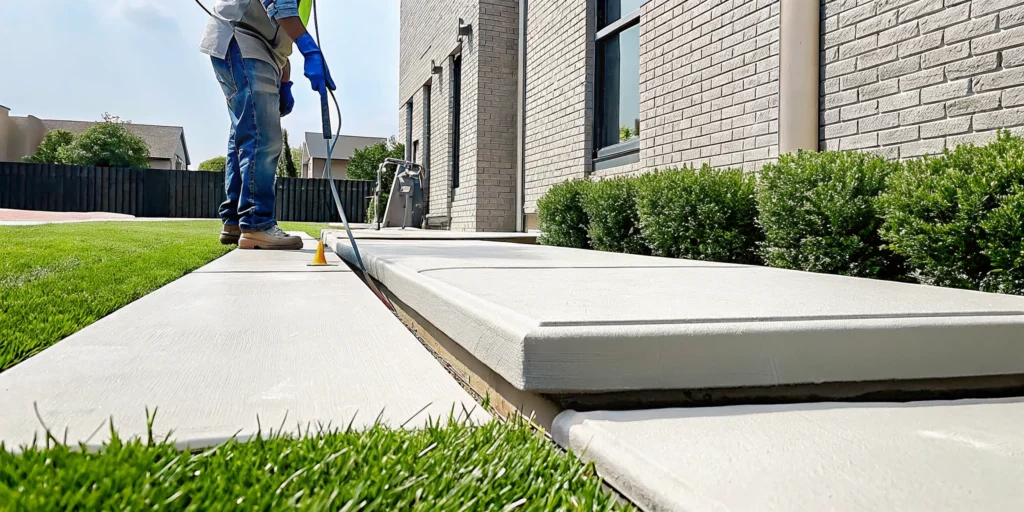
The constant cycle of rain and drought in North Texas puts incredible stress on the clay soil beneath our homes. This movement creates voids under your concrete, causing driveways, sidewalks, and patios to sink and crack. While it’s a common issue, you don’t have to live with the trip hazards. A modern solution, polyurethane foam concrete lifting in Dallas, directly addresses this problem by injecting a structural foam into the voids. This material expands, lifting the slab back to its original position and creating a stable, waterproof base that resists future soil movement. It’s a precise and durable fix for a uniquely Texan problem.
Key Takeaways
- Address the Real Problem: Polyurethane foam lifting is a targeted fix for the issues caused by Dallas’s expansive clay soil. It corrects the instability beneath your concrete by lifting and supporting the existing slab, providing a stable base.
- Save Time, Money, and Hassle: This repair method is significantly more affordable than a full concrete replacement. The process is also fast and clean, with most jobs finished in hours and your concrete ready for use almost immediately.
- Choose a Lasting Solution: Foam lifting is a durable, long-term repair when done correctly. Make sure your concrete is a good candidate (sunk but not shattered) and partner with an experienced company that uses high-quality materials and offers a clear warranty.
What Is Polyurethane Foam Concrete Lifting?
If you’ve noticed your driveway, sidewalk, or patio starting to sink and crack, your first thought might be a long, messy, and expensive replacement project. But there’s a much better way to handle it. Polyurethane foam concrete lifting is an advanced method for fixing uneven concrete surfaces, and it’s a true game-changer for homeowners. Think of it as a cost-effective and durable alternative to tearing everything out and starting from scratch.
Instead of demolition, this technique uses a high-density polyurethane foam to lift and support the existing concrete slab from below. It’s a specialized form of concrete repair that addresses the root of the problem, which is often unstable soil or voids that have formed under the slab. The process is quick, clean, and incredibly effective, restoring your concrete to its original position and making it safe and level again. It’s a lasting solution that saves you time, money, and the headache of a major construction project.
How Does It Lift Your Concrete?
The magic of polyurethane foam lifting lies in its simple but powerful process. First, our team drills a few small, strategically placed holes into the sunken concrete slab. These holes are about the size of a dime, so they are discreet and easily patched later. Next, we inject a two-part polyurethane foam into the holes. As the two liquid components mix beneath the slab, they create a chemical reaction that causes the foam to expand.
This expansion is strong enough to fill any empty spaces and gently lift the heavy concrete slab back to its proper level. We control the process carefully to ensure a precise lift. The foam hardens quickly, creating a solid, waterproof, and stable base that supports the slab for years to come. You can see examples of this precise work in our project gallery. The best part? The concrete is typically ready for use just 15 to 30 minutes after we finish.
What Concrete Problems Can It Fix?
Polyurethane foam lifting is an incredibly versatile solution that works on a wide range of concrete surfaces around your property. It’s the ideal fix for that uneven section of driveway that’s become a trip hazard or the patio that now slopes toward your house, causing water to pool. We use this method to correct problems with sidewalks, garage floors, and pool decks that have settled over time.
This technique is perfect for any situation where a concrete slab has sunk but is otherwise in good condition. It restores support and stability without the disruption of a full replacement. If you have sunken concrete steps, an uneven interior slab, or a cracked warehouse floor, foam lifting can likely fix it. If you’re unsure whether your specific issue is a good fit, the best first step is to contact us for a free assessment.
Why Does Dallas Concrete Shift So Much?
If you’ve lived in the Dallas area for any length of time, you’ve probably noticed it: the cracked driveways, the uneven sidewalks, and the sinking patios that seem to be a part of every neighborhood. It can feel frustrating, but it’s not a sign of poor construction or bad luck. The real reason your concrete is shifting lies directly beneath your feet. Our region is known for its particularly challenging soil, which reacts dramatically to our weather patterns of intense rain followed by long, dry spells.
This constant movement puts incredible stress on rigid concrete slabs, causing them to crack, sink, and settle over time. When the soil shrinks, it creates empty pockets, or voids, underneath the concrete. Without proper support, the heavy slab will sink to fill that space. When the soil expands again, it can push slabs upward, creating uneven surfaces and trip hazards. Understanding this dynamic is the first step to finding a lasting solution. Effective concrete repair in Dallas isn’t just about patching a crack; it’s about addressing the unstable soil that caused the problem in the first place. Let’s look at exactly what’s happening with our soil and how you can spot the warning signs on your own property.
The Problem with Our Expansive Clay Soil
The main culprit behind most concrete issues in North Texas is our expansive clay soil. Think of this soil like a dense sponge. When it rains heavily, the clay absorbs a massive amount of water and swells up, expanding in volume. Then, during our hot, dry summers, the sun bakes the moisture out, causing the clay to shrink and crack. This constant cycle of shrinking and swelling creates significant ground movement.
This movement is what leads to weak spots and voids beneath your concrete slabs. As the soil pulls away, it leaves your driveway, patio, or sidewalk without a stable base, making it vulnerable to sinking and cracking under its own weight. This same soil behavior is also a primary cause of foundation problems, making it crucial to address any signs of settling before they become larger issues that require extensive foundation repair.
Where to Spot Concrete Problems on Your Property
You don’t need to be an expert to identify potential concrete problems. The signs are often easy to spot if you know what to look for. Take a walk around your property and keep an eye out for these common red flags:
- Visible Cracks: Look for cracks spreading across your driveway, patio, pool deck, or sidewalks.
- Uneven Slabs: Do you have a section of your sidewalk that’s higher than the one next to it, creating a trip hazard?
- Water Pooling: Is water collecting in low spots on your concrete where it used to drain properly?
- Gaps: Notice any new gaps between your concrete patio and your home’s foundation?
These are all indicators that the soil beneath has shifted. You can see examples of these issues and how they are resolved by looking at our work on other Dallas-area homes.
Foam Lifting vs. Concrete Replacement: Which Is Better?
When you’re staring at a cracked driveway or a sunken patio, the big question is always: repair or replace? It’s a classic dilemma for homeowners. Tearing out and pouring new concrete seems like the most permanent fix, but it’s also a huge, expensive project. On the other hand, you have polyurethane foam lifting, a modern technique that’s gaining a lot of attention. Let’s break down how these two options compare so you can make the best choice for your home and your budget.
Comparing the Costs
Let’s talk numbers, because that’s often the first thing on a homeowner’s mind. In most cases, polyurethane foam lifting is significantly more budget-friendly than a full replacement. Tearing out old concrete, hauling it away, building forms, and pouring new material is a labor-intensive and costly process. Foam lifting, however, uses your existing slab. Because it requires less labor and materials, you can expect the concrete repair to cost less than half the price of a total replacement. This makes it an accessible option for fixing trip hazards and improving your home’s curb appeal without draining your savings.
Factoring in Time, Mess, and Disruption
If the thought of a construction crew taking over your yard for days makes you anxious, you’ll appreciate the efficiency of foam lifting. A full concrete replacement is a messy, multi-day affair that leaves your property out of commission. Foam lifting is the complete opposite. The process is incredibly fast and clean. Our team can typically complete a job in just a few hours, and the concrete is ready for normal use, like parking your car or walking on it, almost immediately after we finish. There’s no heavy equipment tearing up your lawn and no waiting for concrete to cure.
Which Option Lasts Longer?
It’s natural to wonder if a faster, cheaper fix can really last. When done correctly by experienced professionals, a polyurethane foam lift is a durable, long-term solution. The high-density foam we use is engineered to withstand the elements. It won’t wash away or break down in our expansive Dallas soil, and it’s resistant to water and erosion. You can expect a quality foam lift to last for decades, often 10 to 20 years or even longer. It’s a reliable way to stabilize your concrete for the long haul, and you can see the quality of our work for yourself.
The Foam Lifting Process: A Step-by-Step Look
It might sound complex, but polyurethane foam lifting is a surprisingly straightforward and minimally invasive process. Unlike a full concrete replacement that tears up your property, foam lifting is often done in just a few hours. The goal is to get your concrete level and your life back to normal as quickly as possible. At Solid Base, we’ve refined this process to be efficient and effective, so you know exactly what to expect. Here’s a simple breakdown of how we lift and level your concrete.
Step 1: The Initial Assessment
Everything starts with a clear understanding of the problem. When one of our specialists arrives, their first step is a thorough evaluation of the sunken concrete. We’ll look at your driveway, patio, or sidewalk to see the extent of the settling and identify the underlying cause. This isn’t just a quick glance; we’re mapping out the voids beneath the slab and determining the precise points for injection. This careful assessment is the key to a successful and long-lasting repair, ensuring we lift the slab exactly where it needs it.
Step 2: Injecting the Foam to Lift the Slab
Once we have our plan, the work begins. We drill a few small, dime-sized holes into the surface of the concrete slab. Next, we use specialized equipment to inject a high-density polyurethane foam into the voids below. As the foam expands, it gently and powerfully lifts the concrete back to its original, level position. We monitor the process in real-time, ensuring a precise lift without overcorrecting. It’s a controlled, clean, and highly effective method for concrete repair.
Step 3: Curing and Final Touches
The final step is quick and leaves your property looking great. The polyurethane foam cures and hardens to 90% of its final strength in about 30 minutes, meaning your concrete is ready for normal use almost immediately. You can walk on it right away and even drive on it within the hour. Before we pack up, we patch the small injection holes with a durable cement mixture that blends in with your existing concrete. We clean up the area so it looks like we were never there, except for your newly leveled, safe, and functional concrete surface. You can see examples of our finished projects in our work gallery.
Is Foam Lifting the Right Fix for Your Concrete?
Foam lifting has become a go-to solution for sunken concrete, but it’s important to know if it’s the right choice for your specific situation. While it’s a fantastic fix for many issues, some problems require a different approach. The key is to correctly diagnose what’s happening with your concrete slab. An experienced professional can assess the damage and recommend the best path forward, whether that’s a simple lift or a full replacement. Understanding the signs of a good candidate versus a slab that’s too far gone will help you feel confident in your decision.
Signs Your Concrete Is a Good Candidate
Here in North Texas, our expansive clay soil is constantly shifting, which can cause the ground under your concrete to wash away or compact. When that support disappears, the heavy slab sinks. You’ll notice this as uneven sections of your driveway, a patio that slopes the wrong way, or a new tripping hazard on your walkway. Another telltale sign is water pooling on or around the slab after it rains. If your concrete is still in one solid piece but has just sunk, it’s likely a perfect candidate for polyurethane foam lifting. This modern concrete repair method is a swift and durable solution for raising those sunken surfaces back into place.
When You Might Need a Full Replacement
Foam lifting is an amazing tool, but it can’t fix everything. It works by lifting the existing slab, so if your concrete is severely damaged, it might not be the best option. If your concrete is shattered into multiple pieces, has wide, sprawling cracks, or is crumbling at the edges, the slab has lost its integrity. Injecting foam underneath won’t help because there isn’t a solid piece to lift. In these cases, a full replacement is often the only way to get a safe, stable, and long-lasting surface. This is why it’s so important to get a professional opinion. An expert can tell the difference between a slab that needs a simple lift and one that requires replacement.
How Much Does Foam Concrete Lifting Cost in Dallas?
Let’s get straight to the point: how much will this actually cost? While every project is different, polyurethane foam lifting is almost always more budget-friendly than tearing out and replacing your concrete. For many Dallas homeowners, this repair can be done for less than half the cost of pouring new concrete, making it a smart choice for fixing a sunken driveway, patio, or pool deck without draining your savings.
The reason it’s so cost-effective is that the process is incredibly efficient. It uses your existing concrete slab, simply lifting it back into place. This avoids the hefty expenses of demolition, material disposal, and pouring a brand new slab. The final price tag will depend on the specifics of your property, which we’ll cover next. The key takeaway is that foam lifting offers a powerful, long-lasting fix at a fraction of the cost of starting over. To understand the investment for your home, the best first step is a professional assessment. We can even discuss financing options to make the project fit your budget.
What Factors Influence the Price?
The exact cost for your foam lifting project comes down to a few key variables. First is the size of the area. Lifting a single concrete panel on your walkway will naturally cost less than raising your entire two-car driveway. Second is the extent of the problem. We need to consider how much the slab has sunk and how large the void is underneath it, as this determines the amount of polyurethane foam required to lift and stabilize it. The overall condition of your concrete also plays a part. Because each job is unique, we always start with a thorough inspection to give you a precise, transparent quote with no guesswork involved. You can schedule a free estimate to get an exact price for your property.
The Hidden Costs of Concrete Replacement
When you get a quote for concrete replacement, the price you see is rarely the final price you pay. Tearing out an old slab comes with a whole host of “hidden” costs that people often forget to factor in. You have to pay for the demolition itself, the labor to haul away heavy chunks of broken concrete, and the disposal fees. Then, you have the cost of the new concrete and the labor to pour it. The disruption can also damage your lawn, sprinkler systems, and landscaping, adding even more repair bills to the pile. With a concrete repair using foam, you skip all of that. There’s no demolition, no mess, and minimal impact on your yard, saving you both money and a major headache.
How Long Does a Foam Concrete Lift Last?
Investing in your home means you want solutions that stick around. It’s natural to wonder if foam concrete lifting is just a quick fix or a lasting repair. The great news is that polyurethane foam is an incredibly durable and long-term solution for sunken concrete. Unlike mudjacking, which uses a heavy slurry that can wash away or break down, the high-density foam used for concrete repair is a stable, waterproof material. It doesn’t shrink or change shape once it cures, meaning your concrete slab will stay level for years to come, provided the underlying soil issues are also stable.
Debunking Myths About Foam Durability
You might have heard that foam isn’t a permanent fix, but that’s a common misconception. When high-quality polyurethane foam is applied correctly by experienced professionals, the repair can last for decades. We’re talking 10 to 20 years or even longer. The foam is engineered to be strong and resilient, easily supporting the weight of your concrete slab and any traffic on top of it. The key is the quality of both the material and the installation. A professional team ensures the foam completely fills the void beneath the slab, creating a solid, stable base that you can see in examples of our work.
The Eco-Friendly Advantage of Foam
Choosing foam lifting isn’t just a smart structural decision; it’s also a more environmentally conscious one. The polyurethane foam we use is an inert material, meaning it won’t break down and leach chemicals into your soil or groundwater. The components are made with materials that don’t harm the ozone layer, making it a greener alternative to other methods. Plus, by repairing your existing concrete instead of replacing it, you’re saving a massive slab of concrete from ending up in a landfill. It’s a responsible choice that helps you restore your property without creating unnecessary waste.
What to Look for in a Warranty
A company’s warranty tells you a lot about the confidence they have in their products and workmanship. When you’re getting quotes for concrete lifting, always ask about the warranty. A reputable company will stand behind their repair. For example, some contractors offer a two-year warranty on their work. This protects your investment and gives you peace of mind that the job was done right. At Solid Base, we believe in transparency and are happy to explain our warranty terms when you contact us for a free assessment. It’s your assurance that you’re getting a reliable, long-lasting repair.
How to Choose a Dallas Concrete Lifting Company
Choosing the right company to work on your home’s concrete is a big decision. You’re not just fixing a crack; you’re protecting your property’s value and safety. With so many options in the Dallas area, it can be tough to know who to trust. Focusing on a few key areas, like their experience, pricing, and reputation, will help you find a reliable partner for your project.
Look for Proven Products and Experience
Polyurethane foam lifting is a specialized skill. The company you hire should have a deep understanding of both the material and the technique. Ask potential contractors about the specific type of foam they use. High-density polyurethane is engineered for lifting and supporting heavy concrete slabs, and it’s not the same as the canned foam you find at a hardware store. A reputable company will use commercial-grade polyurethane foam that is strong and dense.
Just as important is the team handling the injection. Look for a company with a portfolio of completed projects and years of hands-on experience. An experienced crew knows how to control the lift precisely, ensuring a level surface without causing new problems. Don’t hesitate to ask to see examples of their work to feel confident in their abilities.
Insist on Transparency and Clear Pricing
A trustworthy concrete lifting company will be upfront about costs. While foam lifting is typically much more affordable than a full concrete replacement, you should still receive a detailed, written estimate before any work begins. This quote should clearly outline the scope of the project and all associated costs, leaving no room for surprise fees later. Be cautious of any company that gives you a vague quote or pressures you to make a quick decision.
Remember that the lowest bid isn’t always the best value. A quality repair using durable materials can last for decades, saving you money on future repairs. Ask about warranties and what they cover. A solid warranty shows that the company stands behind its work. If the cost is a concern, see if the company offers any financing options to make the project more manageable.
Why Dallas Homeowners Trust Solid Base
When you combine proven products, deep experience, and transparent practices, you get a company you can rely on. Dallas homeowners trust Solid Base because we check all those boxes. Our team uses a high-quality polyurethane foam that’s specifically designed for the challenges of our local soil. It’s a water-resistant material, which is essential for providing long-term stability against erosion and moisture changes.
Our skilled professionals have the expertise to handle a wide range of concrete repair issues, from sunken driveways to uneven patios. We believe in clear communication and honest pricing, which is why we provide free, no-obligation estimates. We’re proud to be a part of the Dallas community, and our goal is to provide repair solutions that give you peace of mind and restore the safety and beauty of your home.
Don’t Wait—Get Your Free Concrete Assessment
If you’ve noticed a sunken patio slab or an uneven spot on your driveway, it’s tempting to add it to the “I’ll get to it later” list. But when it comes to concrete, waiting is one of the worst things you can do. Small cracks and slight sinking can quickly turn into bigger, more expensive problems, especially with the shifting clay soil we have here in the Dallas area. What starts as a minor annoyance can become a serious tripping hazard for your family and guests.
The good news is that fixing it is often faster and less disruptive than you might think. Modern polyurethane foam lifting allows professionals to restore your concrete in a matter of hours, not days. The process is clean and precise, meaning you can get back to using your patio or driveway almost immediately, without the mess and cost of a full replacement. Delaying a concrete repair only gives the underlying issue more time to worsen, potentially leading to more extensive damage.
Don’t let a small problem grow into a major headache. The first step is simply to understand what you’re dealing with. We offer a completely free, no-obligation assessment to diagnose the issue and explain your options clearly. A trained expert can evaluate the condition of your concrete and show you exactly how it can be fixed. Contact us to schedule your free assessment today and get the peace of mind that comes with a safe, stable, and secure property.
Related Articles
- PolyLevel – Solid Base
- Polyurethane Slab Jacking: A Homeowner’s Guide
- Concrete Repair – Solid Base
- How to Fill Large Cracks in Concrete Like a Pro
- Ultimate Guide to Foundation Repair Options
Frequently Asked Questions
Is the polyurethane foam you use safe for my family, pets, and lawn? Yes, it is. Once the polyurethane foam cures, which happens very quickly, it becomes a completely inert and stable material. This means it won’t break down or leach any substances into the surrounding soil or groundwater. It’s a safe and environmentally responsible choice for your property.
How long will I have to stay off my concrete after the repair? You can get back to your routine almost immediately. The foam hardens to about 90% of its final strength within 30 minutes. You can walk on the repaired surface as soon as we finish, and you can drive your car on a repaired driveway in about an hour. There’s no long waiting period like you would have with new concrete.
Will the repair be noticeable? What will my concrete look like afterward? Our goal is to make the repair as discreet as possible. We drill very small, dime-sized holes for the injection process. After we lift the slab, we patch these small holes with a cement mixture that is chosen to blend with your existing concrete. While the primary goal is to restore a safe, level surface, we take great care to ensure the final appearance is clean and tidy.
My concrete has some cracks. Can it still be lifted with foam? This is a great question, and the answer is often yes. If your concrete slab has a few cracks but is still in large, stable pieces, it is usually a perfect candidate for foam lifting. The foam will support the entire slab. However, if the concrete is shattered into many small, crumbling pieces, it has lost its structural integrity, and a replacement might be the better option. A professional assessment will give you a definite answer.
Is foam lifting the same thing as mudjacking? No, they are two different methods. Mudjacking is an older technique that pumps a heavy slurry of mud, sand, and cement under the slab. Polyurethane foam lifting is a more modern approach that uses a lightweight, high-density foam. The foam is much stronger, more durable, and waterproof, so it won’t erode over time like mudjacking material can. It’s a lighter, cleaner, and longer-lasting solution.