
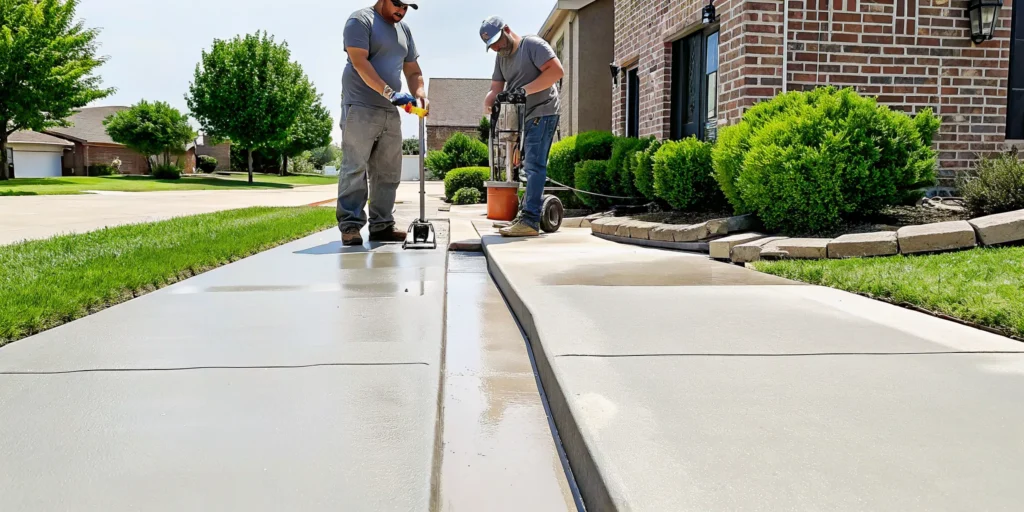
Living in North Texas means dealing with our infamous expansive clay soil. This “black gumbo” soil acts like a sponge, swelling when it’s wet and shrinking when it’s dry, creating a constantly shifting foundation under your concrete. This is the number one reason driveways in our area crack and sink. Because this is such a localized problem, you need a solution that is designed for our specific environment. We’ll explain how this soil affects your property and what repair methods work best to combat it, giving you the knowledge you need to find a permanent sinking driveway repair North Texas homeowners can trust.
Key Takeaways
- Unstable Soil is the Real Culprit: Your sinking driveway is a symptom of a bigger issue, which is the expansive clay soil common in North Texas. This soil swells with water and shrinks when dry, creating an unstable base that causes your concrete to crack and sink.
- Choose a Repair That Addresses the Cause: A lasting fix must account for the unstable soil. Polyjacking is often the best choice because it uses a lightweight, waterproof foam to lift the slab without adding heavy material that can cause future sinking.
- Simple Maintenance Prevents Future Sinking: You can protect your driveway by managing water flow with proper drainage, sealing small cracks before they grow, and keeping soil moisture consistent during dry spells to minimize ground movement.
Why Is Your Driveway Sinking?
Seeing your driveway sink or crack can be unsettling, but it’s a common issue for homeowners here in North Texas. The problem usually isn’t the concrete itself, but the unstable ground beneath it. Understanding what’s causing the sinking is the first step toward a lasting fix. Most of the time, the culprits are a combination of our unique soil, water drainage, and the weight your driveway supports every day. Let’s walk through the main reasons your concrete might be giving you trouble.
North Texas’s Expansive Clay Soil
The biggest reason for sinking driveways in our area is the soil we live on. Much of North Texas is built on expansive clay soil, sometimes called “black gumbo.” Think of this soil like a sponge. When it rains, the clay absorbs water and swells significantly. Then, during our hot, dry spells, it loses that moisture and shrinks, leaving behind empty pockets, or voids, under your concrete. Your heavy driveway slab can’t support itself over these empty spaces, so it cracks and sinks. This constant cycle of swelling and shrinking creates an unstable base that puts your driveway under incredible stress year after year.
Water Damage and Poor Drainage
Water is the main trigger for expansive clay soil, so how it flows around your property matters a lot. If your yard isn’t graded properly or your gutter downspouts empty right next to your driveway, water will pool there every time it rains. This concentrated moisture super-saturates the soil in one spot, causing extreme swelling and, eventually, sinking. Over time, this erosion washes away the soil that supports the concrete slabs, leaving them to settle unevenly. Effective concrete repair often involves addressing these underlying drainage problems to prevent the issue from happening again.
Heavy Loads and a Weak Foundation
Your driveway is designed to hold vehicles, but its strength depends on the base it was built on. If the soil wasn’t properly compacted when your driveway was first poured, it creates a weak foundation from the start. The daily pressure of parking heavy vehicles, like a large SUV or work truck, can compress this loose soil over time. This constant weight, combined with the unstable clay soil underneath, accelerates the sinking process. What might start as a minor dip can quickly become a significant, uneven surface as the weak base gives way under the load.
A Sign of Deeper Foundation Issues?
A sinking driveway isn’t just a cosmetic problem; it can be an early warning sign of more significant issues. The same unstable soil that’s causing your driveway to sink is also sitting directly underneath your house. Because of this, a sinking or cracking driveway can sometimes indicate the beginning of widespread soil movement that could affect your home’s foundation. If you notice your driveway is sinking, it’s a good idea to look for other clues around your property. Addressing the problem early with a professional assessment can help you protect both your driveway and your home from more serious foundation repair needs down the road.
Spot the Warning Signs
Your driveway usually gives you a few hints before a major problem occurs. The trick is knowing what to look for. Catching these issues early can save you a lot of stress and money down the road. Here are the key warning signs that your concrete driveway needs professional attention.
Uneven, Tilted Slabs
Take a walk down your driveway and look at it from a few different angles. Do you notice any sections that are clearly higher or lower than the rest? Sunken spots, especially right in front of your garage, are a classic sign that the soil underneath has shifted or settled. These uneven surfaces are more than just an eyesore; they can be a serious trip hazard for your family and guests. If one part of your driveway looks tilted or sunken, it’s a strong indication that the slab has lost its support and it’s time to consider a professional concrete repair to level the surface.
Cracks That Keep Growing
Not all cracks are created equal. While tiny hairline fractures can be normal as concrete ages, you should pay close attention to cracks that are getting longer or wider over time. A good rule of thumb is the credit card test. If you can fit the edge of a credit card into a crack, it’s a sign of a bigger problem. Also, look for cracks accompanied by a change in height, where one side of the crack is lower than the other. This isn’t just a cosmetic issue; it means the structural integrity of your driveway is compromised and needs immediate attention.
Puddles That Won’t Disappear
After the next time it rains, take a look at your driveway. Do you see persistent puddles that stick around long after the rest of the concrete is dry? These low spots are more than just an annoyance. They show exactly where the driveway has sunk, creating a basin for water to collect. This standing water can seep into the soil and accelerate erosion, making the sinking problem even worse over time. It’s a clear signal that the drainage and slope of your driveway are compromised, a common issue for homeowners in the Dallas area.
Gaps Between Your Driveway and Garage
A gap forming between your driveway and your garage floor is a major red flag. This separation happens when the soil supporting the driveway slab sinks or washes away, causing the concrete to pull away from the house. This gap creates a direct path for water to flow down against your home’s foundation, which can lead to much more severe and expensive structural problems. If you see this happening, it’s a sign that the issue might be more than just your driveway, potentially affecting your home’s foundation as well.
The Hidden Costs of Waiting
I know it’s tempting to put off repairs, but waiting is one of the most expensive mistakes a homeowner can make. If you’re seeing two or more of these signs, the problem is already well underway. Simply sealing the cracks won’t fix the unstable soil underneath. Delaying a real solution allows water to cause more erosion, leading to more significant sinking and cracking. What might be a straightforward repair today could turn into a full, costly replacement tomorrow. Don’t wait for the damage to get worse; get a free estimate to understand your options.
Your Sinking Driveway Repair Options
When you notice your driveway is sinking, it’s easy to feel overwhelmed by the potential fixes. The good news is that you have options, and you don’t always have to resort to a full, costly replacement. The best approach depends on how much your driveway has sunk and the condition of the concrete itself. From modern injection techniques to more traditional methods, understanding your choices is the first step toward restoring your home’s curb appeal and safety.
We’ll walk through the most common solutions for sinking driveways in North Texas. These include polyjacking, an innovative and fast-acting method; mudjacking, a long-standing traditional approach; and full slab replacement for more severe cases. We’ll also cover why a DIY fix usually isn’t the right answer for a sinking slab. Making an informed decision now can save you from bigger headaches and expenses down the road, ensuring you get a solution that lasts.
Polyjacking: The Modern, Fast Solution
Polyjacking is a highly effective and minimally invasive way to lift and level a sinking driveway. This modern technique involves injecting a high-density polyurethane foam into small, drilled holes in the concrete slab. As the foam expands, it fills any voids beneath the slab and gently raises it back to its original position. The process is surprisingly fast, and the foam cures in minutes, meaning you can often use your driveway again on the same day.
Because the polyurethane material is lightweight, it won’t add significant weight to the already unstable soil, which is a major plus for properties in the Dallas area. It’s also waterproof, which helps prevent future erosion under the slab. This makes polyjacking a durable, long-term concrete repair solution that addresses the problem at its source without the mess and downtime of a full replacement.
Mudjacking: The Traditional Method
Mudjacking, sometimes called slabjacking, is the classic method for lifting sunken concrete. It works by pumping a slurry, typically a mixture of cement, sand, and soil, underneath the slab to raise it. For decades, this was the go-to solution for leveling everything from driveways to patios. It can be an effective option, especially for smaller drops of less than two inches, and is often less expensive than other methods.
However, mudjacking has its drawbacks. The material used is very heavy, and adding that extra weight on top of weak or expansive clay soil can sometimes cause the slab to sink again over time. The process also requires larger injection holes than polyjacking and can be messier. While it’s a proven technique, it’s important to weigh the pros and cons, especially considering North Texas’s unique soil conditions.
Full Replacement: A Fresh Start
Sometimes, a repair just isn’t enough. If your driveway slab is severely cracked, crumbling, or has sunk more than a few inches, a full replacement might be the most sensible path forward. This process involves breaking up and removing the old, damaged concrete, properly preparing and compacting the ground beneath it, and pouring a brand-new slab. While this is the most expensive and time-consuming option, it gives you a completely fresh start.
A new driveway, when installed correctly, can last for decades and completely revitalizes your home’s exterior. Proper ground preparation is the key to its longevity, as it addresses the underlying issues that caused the original slab to fail. You can see examples of high-quality concrete work in our project gallery to understand what a professional replacement looks like.
Why DIY Repairs Don’t Last
It can be tempting to try and fix a sinking driveway yourself, especially with so many products available at home improvement stores. While sealing a few hairline cracks with a store-bought filler is a good maintenance step to keep water out, it won’t solve a structural problem. A sinking driveway is a sign of an issue with the soil beneath it, and patching the surface won’t fix that.
Lifting a multi-ton concrete slab requires specialized equipment and professional expertise. Attempting to do this yourself is not only ineffective but can also be dangerous and potentially cause more damage. For any structural sinking, you need a professional assessment to determine the right repair. Don’t hesitate to contact us for a free estimate to ensure the job is done safely and correctly.
Polyjacking vs. Mudjacking: Which Is Better?
When you’re looking at options for lifting your sunken driveway, the two main contenders you’ll hear about are polyjacking and mudjacking. Both are methods of concrete leveling, but they work in very different ways. Think of it like choosing between a modern, high-tech solution and a more traditional, old-school approach. Understanding the key differences in materials, time, durability, and cost will help you decide which repair is the right fit for your home and your budget. Let’s break down what sets them apart so you can make an informed choice.
Materials and Installation
The biggest difference between these two methods is what’s being injected beneath your concrete. Mudjacking uses a slurry, which is a heavy mixture of soil, sand, cement, and water. A crew drills large, golf-ball-sized holes into your concrete slab and pumps this mixture underneath to lift it.
Polyjacking, on the other hand, uses a high-density polyurethane foam. The installation process is much cleaner and less invasive. We drill a few small, dime-sized holes and inject the lightweight foam. It expands in seconds, filling every void and lifting the slab precisely. Because the foam is so light, this modern concrete repair method doesn’t add extra weight or stress to the already unstable soil beneath your driveway, which is a huge plus for our North Texas clay.
Cure Time and Convenience
If you can’t afford to have your driveway out of commission for long, this is where polyjacking really shines. The polyurethane foam cures and hardens in minutes. Most jobs are finished in just a couple of hours, and you can typically walk on the surface immediately and drive on it within the hour. It’s a quick, efficient process that causes minimal disruption to your day.
Mudjacking requires more patience. The cement-based slurry needs time to cure and harden, which can take anywhere from 24 to 72 hours. During this period, you’ll need to keep all vehicles off the driveway to allow the material to set properly, which can be a major inconvenience for a busy household.
Durability and Lifespan
You want a repair that lasts, not a temporary patch. Polyurethane foam is waterproof and chemically inert, meaning it won’t wash away or break down over time. It acts as a permanent support system, compressing and stabilizing the weak soil underneath to prevent future sinking. This makes it an incredibly durable, long-term solution that protects your investment.
The slurry used in mudjacking is not waterproof. Over time, it can erode or wash away, especially if you have drainage issues. It can also shrink as it dries, causing the slab to settle again. While it can be an effective fix, it often doesn’t have the same staying power as polyjacking and may need to be redone down the road.
A Look at the Costs
Let’s talk about the bottom line. Mudjacking is generally the less expensive option upfront, which can be appealing if you’re on a tight budget. However, it’s important to think about the long-term value.
Polyjacking typically costs more initially because the material itself is more advanced. While the upfront investment is higher, its durability and longevity often make it the more cost-effective choice over time, since you likely won’t have to pay for the same repair twice. To help homeowners get the best solution for their property, we offer flexible financing options. This way, you don’t have to compromise on a permanent repair for your home.
What Does Driveway Repair Cost in Dallas?
Figuring out the budget for a driveway repair is a top priority for any homeowner. The final cost depends on the repair method you choose and the extent of the damage you’re dealing with. A few small cracks will cost much less to fix than several large, sunken slabs. To give you a clearer picture, let’s break down the typical costs for the most common driveway repair solutions in the Dallas area, from modern foam injection to a full-scale replacement.
The Price of Polyjacking
Polyjacking is a modern approach to lifting and leveling concrete. This method involves injecting a high-density polyurethane foam beneath the sunken slab, which expands to lift the concrete back into place. While it tends to be more expensive upfront than older methods like mudjacking, it’s often a better long-term investment. The foam is lightweight, so it doesn’t add extra stress to the soil, and it’s waterproof, which helps prevent future erosion. The process is also incredibly fast, and you can usually drive on the surface the same day. Think of it as paying for a durable, lasting concrete repair that protects your property for years to come.
The Price of Mudjacking
Mudjacking, also known as slabjacking, is the traditional method for lifting concrete. It works by pumping a slurry of cement, sand, and other materials under the slab to raise it. It’s generally the cheapest option for lifting concrete, making it an appealing choice if you’re on a tight budget. However, it does have some drawbacks. The material is very heavy, which can put additional strain on the already unstable soil beneath your driveway. The cure time is also longer, and the repair may not last as long as one done with poly-leveling, especially if water issues aren’t resolved. It’s often best suited for smaller, less severe sinking issues.
The Price of a Full Replacement
Sometimes, a driveway is too cracked, crumbled, or unstable for a repair to be effective. In these cases, a full replacement is the only answer. This involves tearing out all the old, damaged concrete and pouring a brand-new driveway. As you can imagine, this is the most expensive and disruptive option, with costs for a standard two-car driveway often running from $4,000 to $8,000 or more. While you get a fresh start, it’s a major project. This is why catching and repairing problems early is so important; it can help you avoid the high cost and hassle of a complete replacement down the road.
Factors That Affect Your Final Quote
The prices for these methods aren’t set in stone. Several key factors will influence the final price on your estimate. The size of the repair area is the most obvious one; lifting a single small slab will cost less than leveling your entire driveway. The extent of the sinking and the amount of material needed also play a big role. Accessibility is another consideration, as hard-to-reach areas may require more time and labor. The best way to understand your specific costs is to get a professional opinion. A thorough inspection will determine the root cause of the problem and the most effective solution for your home, giving you a precise and detailed free estimate.
How to Protect Your Driveway for Good
After you’ve invested in repairing your driveway, the last thing you want is a repeat performance. The good news is that you can take proactive steps to protect your concrete and prevent future sinking or cracking. Most of these strategies are about managing the two biggest culprits in North Texas: expansive clay soil and water. By making a few key maintenance tasks part of your routine, you can extend the life of your driveway and keep it looking great for years to come. It’s all about being vigilant and addressing small issues before they have a chance to become major headaches.
Improve Drainage Around Your Property
Water is the number one enemy of your driveway’s foundation. When rainwater from gutters or runoff collects near the concrete, it causes our North Texas clay soil to swell and shrink dramatically, leading to sinking and cracking. Your first line of defense is to improve the drainage around your property. Make sure your gutters are clean and that downspouts direct water several feet away from your driveway and home’s foundation. If you notice water pooling, you may need to consider re-grading the surrounding landscape so it slopes away from the concrete. Proper drainage is a simple but powerful way to stabilize the soil and protect your investment in concrete repair.
Maintain Consistent Soil Moisture
While it might sound counterintuitive after talking about drainage, keeping the soil moisture consistent is key, especially during our hot, dry Texas summers. When clay soil dries out completely, it shrinks, creating voids underneath your driveway that cause it to sink and crack. An easy way to combat this is by using soaker hoses placed around the edge of your driveway during drought conditions. Running them for a short time every few days helps keep the moisture level in the soil steady. This simple step prevents the extreme cycle of swelling and shrinking that puts so much stress on concrete slabs.
Seal Cracks Before They Worsen
Small cracks in your driveway can seem harmless, but they are open invitations for bigger problems. Water seeps into these cracks, eroding the soil base underneath and weakening the slab. In the winter, that trapped water can freeze and expand, making the cracks even larger. You can prevent this by regularly inspecting your driveway and sealing any small cracks you find. For hairline cracks or those about the size of a quarter, a quality concrete crack filler from a home improvement store can stop water in its tracks. Catching these issues early is a crucial part of driveway maintenance and can save you from looking at more extensive work down the road.
Schedule a Professional Assessment
Preventative maintenance goes a long way, but some issues require an expert eye. If you notice that cracks are growing, slabs are becoming more uneven, or you see any of the other warning signs of a sinking driveway, it’s time to call in a professional. Addressing a small drop or a few problematic cracks is significantly more cost-effective than waiting until the damage is severe. A professional assessment can identify the root cause of the problem and recommend the right solution. Don’t wait for a small issue to become a large, expensive replacement project. Getting a free, no-obligation estimate can give you peace of mind and a clear plan, so contact us to protect your property.
Related Articles
- Concrete Repair – Solid Base
- Polyurethane Slab Jacking: A Homeowner’s Guide
- How to Fill Large Cracks in Concrete Like a Pro
- A Homeowner’s Guide to Foundation Repair Services
- Foundation Repair Cost: The Ultimate 2026 Guide
Frequently Asked Questions
My driveway has a few cracks, but it isn’t sinking yet. Do I need a professional repair? Sealing small, hairline cracks yourself is a great maintenance step to keep water out. However, if you have cracks wide enough to fit a credit card into, or if one side of the crack is higher than the other, it’s time for a professional look. These types of cracks suggest the ground underneath is already starting to shift. Addressing them now can prevent the slab from sinking and help you avoid a more involved repair later on.
Is a sinking driveway a sign my house foundation is also in trouble? It can be an early warning. The same expansive clay soil under your driveway is also under your home, so significant soil movement in one area can be a sign of a widespread issue. A sinking driveway doesn’t automatically mean your home’s foundation is failing, but it’s a good reason to be observant. Look for other clues like sticking doors, cracks in interior walls, or gaps around window frames. An expert assessment can give you a clear picture of what’s happening and provide peace of mind.
Why is polyjacking often a better choice than mudjacking for North Texas homes? The main reason comes down to our unique soil. Mudjacking pumps a heavy cement slurry under the slab, adding significant weight to the already unstable clay soil, which can cause it to sink again. Polyjacking uses a lightweight, high-density foam that doesn’t burden the soil. This foam is also waterproof, so it creates a permanent barrier that prevents water from eroding the soil in the future, directly addressing the root cause of the problem.
How long will I have to stay off my driveway after a repair? This depends entirely on the method used. With polyjacking, the foam cures in minutes, so you can typically walk on the driveway immediately and drive on it within an hour of the job being finished. Mudjacking requires more patience, as the slurry needs 24 to 72 hours to harden before you can park on it. A full replacement is the most disruptive, often requiring you to stay off the new concrete for a week or more.
Can I just replace one sunken slab instead of lifting it? While replacing a single section is possible, it often acts as a temporary fix. The real issue isn’t the concrete slab itself, but the unstable soil that caused it to sink. If you only replace the slab without addressing the soil problem, the new concrete will likely sink over time, too. Lifting the existing slab with a method like polyjacking stabilizes the ground underneath, providing a more comprehensive and lasting solution for the entire area.