
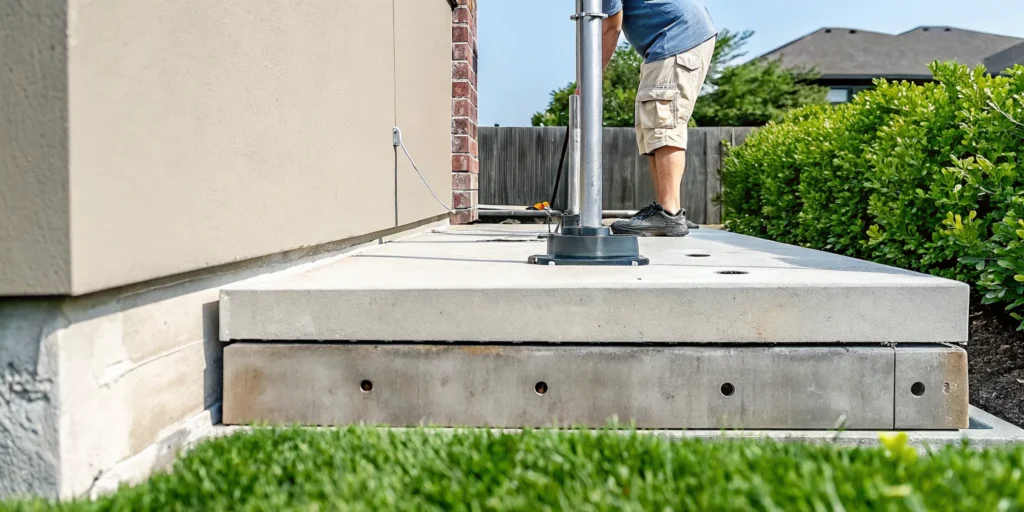
If you live in North Texas, you know our weather is anything but consistent. Long, dry spells are often followed by heavy rains, and this cycle has a dramatic effect on the ground beneath your home. Much of the DFW area is built on expansive clay soil, which acts like a powerful sponge, swelling with moisture and shrinking when it dries out. This constant movement puts incredible stress on your foundation, leading to cracks, uneven floors, and sticking doors. This guide explains why a surface-level fix isn’t enough and details the proven, long-term solution that provides deep stability. We’ll cover everything you need to know about foundation pier installation Dallas Fort Worth.
Key Takeaways
- Pay attention to the warning signs: Cracks in your brick, sticking doors, and uneven floors are your home’s way of signaling a potential foundation issue, and addressing these signs early is the smartest way to prevent more expensive repairs.
- Trust solutions designed for DFW soil: Foundation piers are the standard for a reason; they bypass the unstable, expansive clay soil by anchoring your home’s weight to a solid layer deep underground, providing a permanent fix.
- Vet your foundation repair company carefully: A trustworthy partner will have proven experience in North Texas, offer a free and detailed estimate, provide a strong warranty, and be fully licensed and insured to protect your home.
Spot the Warning Signs: Does Your DFW Home Need Foundation Piers?
It can be unsettling to notice changes around your house, but paying attention to the small details makes you a smart and proactive homeowner. Your home communicates with you, and learning its language is the first step toward protecting your investment. Many of these signs are subtle at first, but they can point to underlying foundation movement, a common issue for homes in the Dallas-Fort Worth area. If you spot any of these red flags, it doesn’t mean you need to panic; it just means it’s time to get a professional opinion. Addressing potential foundation repair needs early is always the best approach.
Cracks in Walls, Floors, and Exterior Brick
One of the most visible signs of foundation trouble is cracking. Look for zigzag cracks in exterior brick walls, or long, diagonal cracks extending from the corners of doors and windows on your interior drywall. You might also notice cracks in your tile flooring or even in the concrete slab itself. While tiny hairline cracks can be a normal part of a house settling, more significant or growing cracks are a warning sign. They indicate that the foundation is shifting or settling unevenly, putting stress on the rigid structure of your home and causing it to break.
Doors and Windows That Stick
Do you have a door that you have to force shut or a window that’s suddenly difficult to open? This isn’t just an annoying quirk; it’s a classic symptom of a shifting foundation. When the ground beneath your home moves, it can twist and warp the frames of your doors and windows. This distortion causes them to stick, jam, or not latch properly. You might notice that the gaps around your doors are uneven. If closing your doors and windows has become a workout, it’s a clear signal that your home’s foundation needs to be inspected by a professional.
Floors That Sag or Feel Uneven
Your floors should feel solid and level under your feet. If you notice a dip, a bulge, or a general feeling of sponginess when you walk across a room, pay attention. You might even see it visually, with floors that slope toward the center of the house or away from the walls. A simple test is to place a marble on the floor and see if it rolls on its own. Sagging or uneven floors are a sign that the supports underneath are failing, whether you have a concrete slab or a pier and beam foundation. This is a problem that often requires concrete repair and stabilization.
Gaps Forming Around Window Frames
Take a close look at where your window and door frames meet the wall. Are you starting to see gaps? Can you see daylight peeking through? This separation happens when the foundation settles and pulls parts of the wall away from the frame. Along with visible gaps, you might also notice that the caulk around your windows is pulling apart or cracking. These gaps not only signal a structural problem but can also lead to water intrusion and higher energy bills. If you see spaces opening up, it’s a good idea to contact us for a free, no-obligation estimate.
Why DFW Soil Is So Hard on Foundations
If you’ve ever wondered why foundation problems seem so common in the Dallas-Fort Worth area, the answer is right under your feet. The unique combination of our local soil and climate creates a perfect storm for foundation stress. Understanding these factors is the first step in protecting your home from long-term damage.
The Challenge of Expansive Clay Soil
Much of the DFW area is built on expansive clay soil. You can think of this soil as a dense, powerful sponge. When it rains, the clay absorbs a massive amount of water and swells in volume. Then, during our hot, dry summers, it loses that moisture and shrinks, often cracking and pulling away from your foundation. This constant cycle of swelling and shrinking puts incredible, uneven pressure on your home’s structure. This movement is why standard supports often fail, as they can’t provide the deep stability needed to counteract the force of our local soil, making professional foundation repair a common need for DFW homeowners.
How DFW’s Seasonal Wet and Dry Cycles Affect Your Home
The dramatic weather in North Texas is the engine that drives foundation issues. Our seasons often bring long periods of drought followed by intense, heavy rainfall. This constant wet-dry cycle is what makes our expansive clay soil so active. As the soil beneath your home swells and shrinks unevenly, it can lead to “differential settlement,” where one part of your foundation sinks or heaves more than another. This uneven movement is the direct cause of many common warning signs, from doors that suddenly stick to cracks appearing in your walls and floors. It’s a relentless cycle that puts your home in a constant tug-of-war with the ground it rests on.
Why Deep Pier Support Is Crucial in North Texas
So, how do you create a stable foundation on such unstable ground? The solution is to go deeper. Foundation piers are essential in North Texas because they are designed to bypass the volatile clay soil near the surface. These piers are installed deep into the earth until they reach a solid, stable layer of soil or bedrock that isn’t affected by moisture changes. By transferring the weight of your home onto this unmoving stratum, piers provide the deep support needed to prevent future shifting and settling. This is why a professionally engineered repair plan is so important; it ensures your home is anchored to solid ground. You can see examples of how we create this lasting stability in our work.
What Types of Foundation Piers Are Used in DFW?
When it comes to foundation repair, there’s no one-size-fits-all solution. The type of pier your home needs depends on several factors, including your foundation type, the weight of your house, and most importantly, the specific soil conditions on your property. Here in the Dallas-Fort Worth area, our infamous expansive clay soil presents a unique challenge. That’s why professionals use a few different types of piers, each designed to provide stable, long-lasting support by addressing different structural issues. Understanding these options can help you feel more confident when discussing your home’s repair plan with an expert.
Helical Piers
Think of helical piers as giant steel screws. They are twisted deep into the ground until they reach a stable soil layer capable of supporting the structure. Because the installation process involves minimal excavation and vibration, they are a great choice for lighter structures like decks, porches, or home additions. However, their effectiveness can be limited in the dense, expansive clay soil we have across DFW. For heavier homes, helical piers sometimes struggle to provide the deep, robust support needed to prevent future movement. A foundation expert can determine if they are the right fit for your specific situation or if a stronger alternative is required for lasting stability.
Steel Push Piers
Steel push piers are one of the most common and reliable methods for foundation repair in North Texas. This system uses heavy-duty steel pipes that are hydraulically driven through unstable soil until they hit bedrock or a solid, load-bearing stratum. Brackets are then attached to the foundation, and the weight of your home is carefully transferred to the piers, lifting it back toward its original position. Because they are driven so deeply, steel push piers provide incredible strength and are highly effective against the shifting caused by our expansive clay soils. They are an excellent solution for stabilizing heavy homes and ensuring your foundation remains secure for years to come.
Drilled Concrete Piers
Drilled concrete piers are a time-tested solution perfectly suited for the highly expansive clay soils found throughout the DFW metroplex. The process involves drilling wide shafts deep into the ground, often well below the active soil zone, and then filling them with steel rebar and concrete. This creates a massive, solid pier that acts as a stable column to support your foundation. Because they are built on-site, they can be customized in depth and diameter to meet the exact needs of your home. Drilled concrete piers provide exceptional stability and are a permanent solution for preventing the vertical movement that causes so many foundation problems in our area.
Slab Piers
Many homes in Texas are built on a concrete slab foundation. When the soil beneath the interior of the slab settles or shifts, you can get cracks and uneven floors right in the middle of your living space. This is where slab piers come in. Unlike perimeter piers that support the edges of your home, slab piers are designed specifically to address issues with the slab itself. They are typically installed through small holes cut in your flooring to lift and stabilize sunken sections of the concrete. This targeted approach is a highly effective way to handle interior settling and is a key part of a comprehensive concrete repair plan.
What Does Foundation Pier Installation Cost in Dallas-Fort Worth?
Let’s talk about the number one question on every homeowner’s mind: what is this going to cost? The truth is, there’s no single price tag for foundation repair because every home and every foundation issue is unique. The total cost depends entirely on the specific repair plan your home needs. While some smaller jobs might cost a few thousand dollars, more extensive repairs for larger homes can be a more significant investment. The best way to get a clear picture of the cost for your home is to schedule a free, no-obligation estimate. This allows a professional to assess the situation firsthand and give you a precise quote based on your home’s specific needs.
Understanding the Typical Cost Per Pier
When you receive a quote, it will likely be based on the number of piers required to stabilize your home. In the Dallas-Fort Worth area, the average cost for a full foundation repair project often falls between $7,000 and $8,000, but this can vary widely. A smaller home with a minor issue might only need a few piers, keeping the cost on the lower end. A larger home with more significant settling could require many more piers placed around the structure, resulting in a higher overall price. The final cost is a direct reflection of the materials and labor needed to permanently secure your foundation.
What Determines the Final Price?
Several key factors influence the final price of your foundation pier installation. The type of pier system we use, whether it’s steel or concrete, plays a role, as does the depth we need to reach to hit stable soil. The unique soil conditions on your property and the overall extent of the foundation repair needed are also major considerations. For example, a home that has settled significantly will require more lifting and more support piers than a home with only minor cracking. Our goal is to create a plan that addresses the root cause of the problem, ensuring a lasting solution.
How Acting Early Can Save You Money
It’s tempting to wait and see if those small cracks get worse, but with foundations, procrastination can be costly. Foundation problems don’t resolve themselves; they tend to get more severe and more expensive to fix over time. A hairline crack today could become a major structural issue in a year, requiring a much more extensive and costly repair. By addressing the warning signs as soon as you see them, you can often solve the problem before it escalates. Getting a professional assessment early is the smartest financial decision you can make for the long-term health of your home.
Exploring Financing and Payment Options
We understand that foundation repair is a significant and often unplanned expense. You shouldn’t have to choose between your home’s safety and your financial stability. That’s why many reputable companies, including ours, offer flexible payment plans and financing options to help homeowners manage the cost. These programs are designed to make essential repairs more accessible, allowing you to address structural issues immediately without bearing the full financial weight all at once. Don’t let cost be a barrier to securing your home; there are options available to help you protect your investment.
What to Expect During the Foundation Pier Installation Process
Finding out your home needs foundation piers can feel overwhelming, but the repair process itself is straightforward when handled by professionals. It’s a systematic approach designed to permanently solve your foundation issues with minimal disruption to your life. From the first phone call to the final cleanup, a good contractor will keep you informed and confident. We believe in total transparency, so here’s a clear breakdown of what you can expect every step of the way.
Your Initial Assessment and Inspection
The first step is a thorough, professional inspection. Selecting the right company for your foundation repair is crucial, and it all starts with this initial assessment. An expert will visit your home to examine the warning signs you’ve noticed, like cracks or sticking doors, and identify the root cause of the problem. They will take measurements, assess the soil conditions around your property, and determine the extent of the settling or movement. This isn’t just a quick look; it’s a detailed evaluation to ensure the solution addresses the specific needs of your home. This is your opportunity to ask questions and get a real sense of the company you’re working with.
Creating a Detailed Repair Plan
After the inspection, you won’t just get a quote; you’ll get a clear and detailed strategy. A professional repair plan should absolutely include a diagram, often called a “plan of repair,” that shows precisely where each pier will be installed and why. This plan will specify the type of pier being used and explain how it will support your foundation. This document is your roadmap for the project, ensuring there are no surprises along the way. It provides the transparency you need to feel confident in the work being done and helps you understand how we will restore your home’s structural integrity.
How We Lift and Stabilize Your Foundation
This is where the real work begins. Foundation pier installation is a proven method for stabilizing and lifting settling foundations. The goal is to transfer your home’s weight from the unstable, expansive clay soil near the surface to stable soil layers or bedrock deep underground. Our team will carefully excavate small areas around your foundation where the piers will be placed. Then, we hydraulically drive the steel piers into the ground until they reach a solid load-bearing stratum. Once all the piers are in place, we can gently and uniformly lift the foundation back toward its original position, closing cracks and correcting uneven floors.
The Importance of Drainage Before and After Repairs
A foundation repair isn’t complete without addressing water management. In North Texas, expansive clay soil is the primary culprit behind foundation issues, and its movement is triggered by moisture changes. Poor drainage can saturate the soil, causing it to swell, or allow it to dry out too quickly, causing it to shrink. A lasting repair often involves improving your property’s drainage to keep soil moisture levels consistent. We can help you understand if gutters, French drains, or proper grading are needed to protect your investment and prevent future problems. Clear communication and a solid warranty are things you should be able to count on from any local contractor.
Is Foundation Pier Installation as Disruptive as It Sounds?
The thought of major work on your home’s foundation can bring up images of a messy, drawn-out construction zone. It’s completely normal to worry about the impact on your home, your yard, and your daily life. The good news is that modern foundation repair methods are designed to be as efficient and minimally invasive as possible. Our goal is to stabilize your home without turning your life upside down. We focus on a clean, organized process that respects your property and your time. Let’s walk through some of the most common concerns homeowners have about foundation pier installation.
Will the Work Damage Your Landscaping?
You’ve put a lot of effort into your lawn and garden, and the last thing you want is for a repair project to destroy it. We get it. Protecting your landscaping is a key part of our process. While some excavation is necessary to install the piers, our team works carefully to minimize the impact. We strategically plan where to dig, preserving your lawn, trees, and flowerbeds whenever possible. Any soil or plants that need to be moved are handled with care so they can be put back in place once the work is done. You can see examples of our finished projects on our Our Work page, which shows how we leave properties looking neat and tidy.
Do You Need to Move Out During the Repair?
For most foundation pier installation projects, you absolutely do not need to move out of your home. We understand that relocating, even for a few days, is a major inconvenience for your family. Since the majority of the work happens outside, your daily routine can continue with very little interruption. Our professional crew works to keep the job site contained and safe, so you can feel comfortable staying in your home while we secure its foundation. Our experienced team prides itself on working efficiently and respectfully, ensuring the process is as smooth as possible for you.
How Long Does the Process Usually Take?
One of the best parts about modern piering systems is how quickly they can be installed. While every project is different, most foundation repairs are completed within just a few days. In many cases, a smaller job can even be finished in a single day. The final timeline depends on the extent of the foundation damage and the number of piers required to permanently stabilize your home. During your initial free estimate, we conduct a thorough assessment to create a detailed repair plan. This allows us to give you a clear and realistic timeline before any work begins, so you know exactly what to expect.
How to Choose the Right Foundation Repair Company in DFW
Choosing a company to fix your home’s foundation can feel overwhelming. You’re not just hiring someone for a small repair; you’re trusting them with the structural integrity of your biggest investment. The right partner will bring expertise, transparency, and peace of mind. The wrong one can lead to more headaches and costly mistakes. To help you make a confident decision, here are the key things to look for when selecting a foundation repair company in the Dallas-Fort Worth area.
Look for Proven Experience with DFW Soil
North Texas soil is notoriously tricky. The expansive clay soil here swells when it’s wet and shrinks dramatically when it’s dry, putting immense pressure on your home’s foundation. That’s why you need a team that has firsthand experience with our local conditions. A company from another state simply won’t have the same understanding of how DFW’s weather patterns and soil affect your home. Look for a company with deep roots in the area, one that has a long track record of successful foundation repair projects specifically in Dallas, Plano, or Allen. They should be able to explain exactly how they’ll address the challenges of our clay soil, ensuring a lasting solution.
Verify Licensing, Insurance, and Warranties
This step is non-negotiable. A professional foundation repair company must be properly licensed and insured. Licensing confirms they meet local and state requirements for their work, while insurance protects you and your property from liability in the unlikely event of an accident. Don’t be shy about asking for proof. Any reputable company will be happy to provide it. Also, ask about their warranties. A strong warranty is a sign that the company stands behind its work and the products it uses. It’s your assurance that the repair is built to last, giving you confidence in the stability of your home for years to come.
Insist on Free Estimates and Transparent Pricing
You shouldn’t have to pay a company just to tell you what’s wrong. Trustworthy foundation specialists offer free, no-obligation estimates. During this assessment, they should conduct a thorough inspection of your property, explain their findings clearly, and provide a detailed repair plan. The estimate you receive should be just as clear, breaking down the costs so you know exactly what you’re paying for. Vague pricing or pressure to sign on the spot are red flags. A professional team will also be upfront about payment options and may offer financing to help manage the cost of the project.
Check Customer Reviews and Local Reputation
A company’s reputation in the community speaks volumes. Before making a decision, do a little digging online. Look at reviews on Google, the Better Business Bureau, and other third-party sites. Pay attention to more than just the star rating. Read what other homeowners in the DFW area have to say about their experience. Were the crews professional and respectful of their property? Was communication clear throughout the process? Did the company follow through on its promises? Seeing examples of our work and reading testimonials can give you a real sense of the quality and service you can expect.
Secure Your Home with DFW’s Foundation Experts
Choosing the right foundation repair company is a big decision, and it’s crucial for your home’s long-term stability. The goal isn’t just to patch a crack; it’s to find a team that understands why the problem happened in the first place and can implement a solution that lasts. In the Dallas-Fort Worth area, that means finding experts who have deep experience with our challenging local soil.
The expansive clay soil across our service area is notorious for swelling when wet and shrinking dramatically when dry. This constant movement puts immense pressure on foundations, leading to the issues you might be seeing. A truly professional team doesn’t just offer a one-size-fits-all fix. We take the time to diagnose the root cause of the movement, explaining how soil conditions and drainage are affecting your home. From there, we develop a foundation repair plan that provides lasting stability, not just a cosmetic touch-up.
A trustworthy contractor will always start with a detailed, on-site evaluation to get the full picture. They should inspect your entire property, explain their findings clearly, and provide a transparent, no-obligation estimate. Quality repairs, when performed by a careful and experienced team, are designed to protect your home, not cause more disruption. By choosing a company with proven quality control and a deep understanding of DFW homes, you can feel confident that your property is in good hands. If you’re ready for a clear diagnosis and a plan you can trust, you can contact us to schedule a free, thorough estimate.
Related Articles
- Foundation Repair Cost: The Ultimate 2026 Guide
- Pier & Beam Foundation Repair: Signs, Costs & Fixes
- Ultimate Guide to Foundation Repair Options
- A Homeowner’s Guide to Foundation Repair Services
- Foundation Crack Repair: A DIY vs. Pro Guide
Frequently Asked Questions
I only see a few small cracks. Should I really be worried? It’s smart to pay attention to even small changes. While tiny hairline cracks can be normal, new or growing cracks are often the earliest signs of foundation movement. Here in DFW, our expansive soil means that a small issue today can become a much larger, more expensive problem down the road. Addressing it early doesn’t always mean a huge repair is needed, but getting a professional opinion gives you a clear picture and helps you prevent the problem from getting worse.
Will foundation repair actually fix the sticking doors and wall cracks? Yes, in many cases it will. The goal of installing foundation piers is to lift the settled parts of your home back toward their original, level position. As the foundation is raised, the pressure on your home’s frame is relieved. This often causes cracks in the drywall to close up and allows doors and windows to align properly again. While some minor cosmetic touch-ups might still be needed afterward, the structural repair addresses the root cause of these symptoms.
How do I know which type of foundation pier my home needs? You don’t have to figure that out on your own; that’s what a professional assessment is for. The right type of pier, whether it’s steel, concrete, or another system, depends on factors like your home’s weight, the type of foundation you have, and the specific soil conditions on your property. An experienced inspector will analyze these elements to create a custom repair plan that provides the best long-term stability for your specific situation.
My house is only a few years old. Can it still have foundation problems? Unfortunately, yes. Foundation issues are tied to the ground your house is built on, not the age of the structure itself. In North Texas, the active clay soil can cause settlement in a home of any age. Sometimes, issues arise from the initial construction or how the lot was prepared. Seeing signs of trouble in a newer home is a clear signal to get an expert evaluation sooner rather than later.
How long does a foundation pier repair last, and is it covered by a warranty? A professionally installed pier system is designed to be a permanent solution. The piers transfer your home’s weight to a stable layer of soil or bedrock deep underground, which isn’t affected by the moisture changes that cause problems at the surface. A reputable company will always back their work with a lifetime warranty on the piers themselves. This is your assurance that the company is confident in its materials and installation, giving you lasting peace of mind.