
Your home has a way of communicating with you, but its language isn’t always obvious. A door that jams in its frame, a hairline crack that appears above a window, or a floor that feels slightly sloped are more than just minor annoyances. These are often the first subtle signals of foundation settlement. Here in Dallas, our challenging soil conditions make it crucial to pay attention to these early warnings. Ignoring them can allow a small issue to grow into a major structural problem. This article will teach you how to interpret your home’s signals and understand the process of foundation settlement repair Dallas TX before the damage gets worse.
Key Takeaways
- Know the Signs of Settlement: Dallas’s expansive clay soil makes homes vulnerable to foundation movement. Be proactive by looking for key warning signs like cracks in brick walls, doors that stick, and sloping floors to address issues before they worsen.
- Repairs Are Specific and Effective: Modern foundation repair is not a one-size-fits-all fix. Solutions are tailored to the problem, from installing deep piers for a permanent lift to using expanding foam to level concrete slabs with minimal disruption.
- Choose Your Repair Partner Wisely: Your choice of contractor matters. Prioritize licensed and insured companies that offer free, detailed estimates, use proven products, and provide strong, transferable lifetime warranties to ensure your repair is a long-term investment.
What Is Foundation Settlement and Why Is Dallas So Vulnerable?
Foundation settlement is what happens when the soil beneath your home shifts or compresses, causing your foundation to sink or move. It’s a common issue, but here in the Dallas area, we have a unique challenge that makes our homes particularly susceptible. If you’ve noticed a few concerning cracks, you’re not alone. Understanding what causes settlement is the first step toward protecting your home’s value and structural integrity.
Understanding Dallas’s Expansive Clay Soil
The main culprit behind foundation problems in Dallas is our soil. Much of the region is built on expansive clay soil, which acts a bit like a sponge. When it gets wet during heavy rains, it swells up and expands. During our hot, dry summers, it shrinks and cracks. This constant cycle of expanding and contracting causes the ground under your home to move up and down, putting immense stress on your foundation. Over time, this movement can lead to settlement, where parts of your foundation sink lower than others. This is why so many homeowners in our area eventually need professional foundation repair to stabilize their homes.
Other Common Causes: Drainage, Roots, and Construction
While our clay soil is a major factor, other issues can make settlement worse. Poor drainage is a big one. If water pools around your foundation, it can oversaturate the soil in one area, causing it to heave. On the other hand, large tree roots can drink up moisture from under your foundation, causing the soil to shrink and the foundation to sink. Even plumbing leaks under your slab can introduce excess moisture and lead to movement. Sometimes, the way the original lot was prepared before construction can also create problems down the road. These factors often work together, creating the perfect storm for foundation and concrete repair issues.
Why Catching Problems Early Saves You Money
It’s tempting to ignore a small crack in the drywall or a door that suddenly starts to stick. However, these are often the first warning signs of foundation settlement. Addressing these issues early is the single best thing you can do to save yourself from much bigger headaches and higher costs later. A small problem left unchecked can grow into major structural damage, affecting your home’s safety and stability. Getting a professional opinion sooner rather than later can mean the difference between a straightforward fix and a complex, expensive project. A timely inspection gives you a clear picture of what’s happening and lets you stop the damage before it gets worse.
What Are the Warning Signs of a Settling Foundation?
Your home is great at communicating, you just have to know what to look for. When your foundation starts to settle unevenly, it sends out distress signals. Foundation settling is the downward movement of your house as the soil underneath it shifts or compresses. While a tiny bit of uniform settling over many years is normal, the expansive clay soil here in the Dallas area often causes uneven and excessive movement, leading to structural problems. This is why homeowners in our community need to be extra vigilant.
Catching these issues early is the key to preventing a small problem from becoming a large, expensive one. Think of these warning signs as your home’s way of asking for help. A small crack today could become a major structural issue tomorrow if the underlying problem isn’t fixed. If you notice one or more of these red flags, it’s a good idea to have a professional take a look. The sooner you address the root cause, the more secure your home and your investment will be. Paying attention to these signs can save you a lot of stress and money down the road.
Cracks in Your Walls, Ceilings, or Bricks
Cracks are one of the most obvious signs of foundation trouble. On the outside of your home, look for stair-step cracks in brick or masonry walls. These jagged lines are a classic indicator that your foundation is settling unevenly. Inside, you might see cracks running diagonally from the corners of doors and windows toward the ceiling. Don’t dismiss hairline cracks in your drywall or ceiling, either. While not all cracks spell disaster, new, growing, or zig-zagging cracks are a clear signal that it’s time to investigate a potential foundation repair.
Doors and Windows That Stick or Won’t Close
Have you noticed a door that suddenly sticks, or a window that’s become difficult to open and close? This isn’t just a random annoyance. When your foundation shifts, it can warp the frames of your doors and windows, causing them to jam or not latch properly. You might also see new gaps around the frames. As the foundation moves, it can pull the walls and framing apart, creating these separations. This is especially common with garage doors, where you might see a noticeable gap forming between the door and the wall.
Floors That Seem Uneven or Sloped
That weird feeling of walking downhill in your own hallway isn’t your imagination. Sloping or uneven floors are a significant sign of foundation settlement. This happens when one part of your foundation sinks lower than the rest, causing the entire structure above it to tilt. You might notice it when you drop a marble and it consistently rolls to one side of the room. You may also see cracks in tile floors or find that your concrete slab has visible fractures. Addressing cracked concrete slabs and uneven floors is crucial for maintaining your home’s structural integrity.
Gaps Appearing Around Walls, Trim, or Cabinets
Another telltale sign of a shifting foundation is the appearance of gaps where things should be flush. Take a look at where your walls meet the ceiling or the floor. Do you see any separation? Your baseboards or crown molding might also start pulling away from the wall. In the kitchen or bathroom, you might notice your cabinets are no longer sitting flush against the wall. These gaps are created as the frame of your house is twisted and pulled by the movement happening underneath it. If you’re seeing these signs, it’s a good time to contact us for a free, no-obligation estimate.
How to Repair a Settling Foundation in Dallas
Finding out your foundation is settling can feel overwhelming, but the good news is that it’s almost always fixable. The key is using the right method for your specific problem. Here in Dallas, the repair strategy depends on your foundation type (slab or pier and beam), the soil conditions, and just how much settling has occurred. A professional inspection is the only way to know for sure what your home needs, but the solutions generally fall into a few main categories.
For significant settlement, we often use underpinning to support the foundation from below. For sunken concrete slabs, a special injection process can lift them back into place. And for any repair to last, we have to address the root cause, which usually means managing the water around your home. Let’s walk through the most common and effective foundation repair methods used in the Dallas area so you know what to expect.
Using Steel and Helical Piers (Underpinning)
When your home’s foundation has sunk due to our tricky clay soil, underpinning is the gold standard for a permanent fix. Think of it as giving your house a new, stronger set of legs. This process involves driving steel or helical piers deep into the ground, past the unstable soil, until they reach solid bedrock or a stable soil layer. These piers then become the new support system for your foundation.
Once the piers are in place, hydraulic jacks are used to carefully lift the settled parts of your foundation back toward their original level. The weight of your home is transferred from the unstable soil to the ultra-strong piers, preventing any future sinking. This method provides a reliable and lasting solution that secures your home for the long haul, which is why it’s our go-to for significant settlement issues.
Leveling Slabs with Slabjacking or Foam Injection
If the problem is a sunken concrete slab, like a patio, driveway, or even an interior floor, there’s a less invasive solution called slab lifting. The most modern and effective way to do this is with polyurethane foam injection. It’s a clean, quick, and surprisingly simple process. We drill small, dime-sized holes in the affected slab and inject a two-part polymer foam into the void that has formed underneath.
This foam expands instantly, filling the empty space and gently lifting the concrete back to its correct position. The material is incredibly strong and lightweight, and it cures in about 15 minutes, meaning you can walk on the surface almost immediately. This concrete repair method is perfect for correcting uneven slabs without the mess and cost of tearing out and replacing the concrete.
Fixing Pier and Beam Foundations
Homes with pier and beam foundations have their own unique set of challenges and repair methods. Instead of a single concrete slab, these houses sit on a wooden structure supported by concrete piers, creating a crawl space underneath. When these foundations settle, it’s often because the piers have sunk, the wooden beams have deteriorated, or the shims between them have compressed.
The repair process involves a technician going into the crawl space to assess the situation. Depending on the problem, we might add or replace shims to re-level the floor joists, a process called “re-shimming.” In other cases, we may need to reinforce or replace rotting wooden beams or add new support piers to stabilize the structure. It’s a more hands-on approach that directly addresses the specific support points that have failed.
Installing Drainage to Prevent Future Issues
No foundation repair is truly complete without addressing the underlying cause, and in Dallas, that cause is almost always water. The expansive clay soil swells when it’s wet and shrinks when it’s dry, and this constant movement is what damages foundations. That’s why installing a proper drainage system is one of the most important things you can do to protect your home.
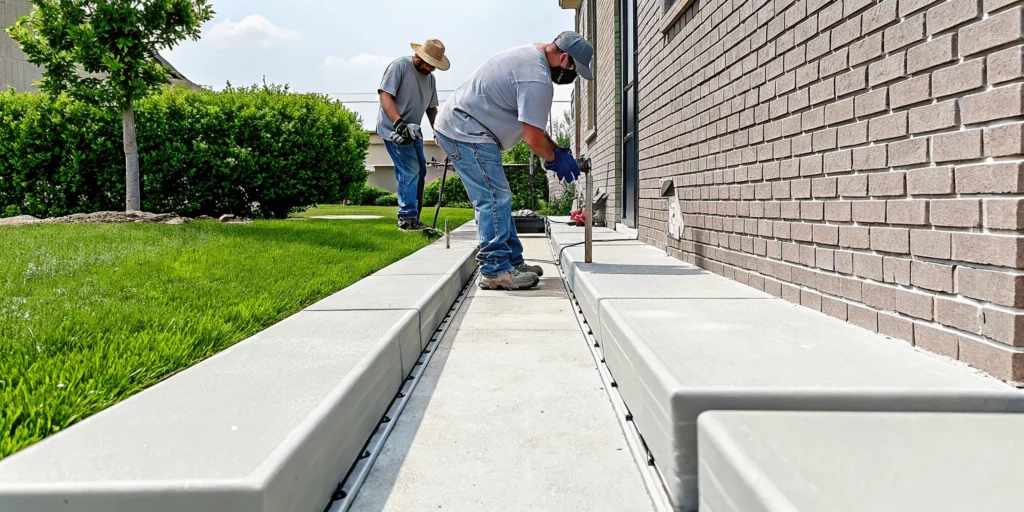
Effective drainage solutions prevent water from pooling around and under your foundation. This can include installing French drains to intercept groundwater, surface drains to remove standing water, or simply ensuring your gutters and downspouts are directing water far away from your home. Taking these proactive measures helps maintain consistent moisture levels in the soil, which is the key to preventing future foundation movement and protecting your investment in the repair.
How Much Does Foundation Repair Cost in Dallas?
Let’s get straight to the point: you want to know how much this is going to cost. The truth is, foundation repair costs in Dallas can vary quite a bit. Think of it like a car repair; a simple fix is much different from a complete engine rebuild. The final price tag depends entirely on what’s happening under your home. A few small cracks might only set you back a few hundred dollars, while more serious settlement issues requiring extensive work can be a significant investment. The goal is to find a permanent solution, not just a temporary patch, and the cost will reflect the quality and longevity of the repair.
The only way to get a true number is to have a professional take a look. An expert can assess the specific damage, identify the root cause, and create a detailed repair plan tailored to your property. This is why we offer a free, no-obligation estimate to homeowners throughout the Dallas area. It gives you a clear picture of the work needed and the associated costs, so you can make an informed decision without any pressure. To help you prepare, we’ll break down the typical cost ranges you might see.
Minor Repairs ($500 – $2,000)
If you’ve just started noticing a few hairline cracks in your foundation or drywall, you can breathe a little easier. These issues often fall into the minor repair category, which typically costs between $500 and $2,000. This type of work usually involves sealing small cracks to prevent moisture from getting in and causing bigger problems down the road. While it might be tempting to ignore them, addressing these small issues early is a smart move. It’s the most affordable way to maintain your home’s structural integrity and stop minor problems from turning into major headaches.
Moderate Repairs ($3,500 – $7,500)
When foundation settlement becomes more noticeable, you’re likely looking at moderate repairs. This tier of work generally ranges from $3,500 to $7,500. At this stage, repairs often involve installing support piers to stabilize specific areas of your foundation that have started to sink. For example, a project might require placing five to ten piers to lift and secure a corner of your home. This is a common solution for the expansive clay soil in Dallas and is a core part of our foundation repair services. It’s a more involved process, but it directly addresses the underlying problem to prevent further movement.
Major Repairs ($8,000 – $25,000+)
For homes with extensive structural damage, major repairs are necessary. These projects can range from $8,000 to $25,000 or more. This level of work is reserved for serious settlement issues, often requiring full house leveling or the installation of a large number of steel or helical piers to secure the entire foundation. Seeing a number this large can be stressful, but this kind of comprehensive repair is essential for protecting your home’s safety and value. We have experience with complex projects, which you can see in our work. We also understand this is a significant expense, which is why we offer flexible financing options to help make it more manageable.
What Determines Your Final Repair Cost?
So, what factors will a foundation specialist consider when putting together your quote? Several key elements determine the final price. The biggest factor is the severity of the damage; more significant settlement requires a more robust solution. The specific repair method chosen also plays a huge role, as injecting foam is very different from installing deep steel piers. Access to the foundation matters, too. A home with extensive landscaping or a tight crawl space may require more labor. Finally, the unique soil conditions under your home and any necessary finishing touches will also influence the cost.
What Should a Good Foundation Repair Warranty Include?
A warranty is more than just a document; it’s a company’s promise to stand behind its work. When you’re investing in a repair as significant as your home’s foundation, the warranty provides crucial long-term protection. But not all warranties are the same, so it’s important to know what to look for. A solid warranty shows that a company is confident in its solutions and is committed to you and your home for the long haul. It’s your assurance that the job will be done right and that the company will be there if any issues arise down the road.
Lifetime and Transferable Warranties
The best foundation repair companies offer a lifetime warranty that is also transferable. This is the gold standard. A lifetime warranty means the repair is guaranteed for the life of your home, not just for a few years. The transferable part is just as important: if you decide to sell your house, the warranty passes to the new owners. This provides them with peace of mind and can be a major selling point, adding real value to your property. It shows a company is confident that its foundation repair solution is permanent.
Guarantees for Workmanship and Materials
A strong warranty should explicitly cover both workmanship and materials. This protects you on two fronts. A guarantee on materials means the company is using high-quality, durable products that are designed to last. A guarantee on workmanship ensures the installation was done correctly by skilled professionals. A company that stands behind both shows immense confidence in their team and their methods. At Solid Base, we use a national network’s patented and proven products to ensure every repair is built to last, and our warranty reflects that commitment.
Will Home Insurance Cover the Repairs?
This is a question we hear all the time, and the answer often surprises homeowners. In most cases, standard homeowners insurance does not cover foundation damage caused by gradual settling, soil expansion, or other earth movements. Insurance policies are typically designed for sudden and accidental damage, not slow-developing issues common in the Dallas area. This makes your repair warranty your primary safety net. Since you’ll likely be paying for repairs out-of-pocket, it’s essential to choose a company that offers a reliable warranty and flexible financing options.
How to Choose the Right Foundation Repair Company in Dallas
Finding out you have a foundation problem can be stressful, but choosing the right company to fix it doesn’t have to be. The Dallas area has many contractors, and your goal is to find a trustworthy partner who will solve the problem correctly the first time. Taking a little time to vet your options will give you peace of mind and protect your home for years to come. Focus on a few key areas: their qualifications, how they assess the problem, the solutions they offer, and how they help you manage the cost.
Verify Their Licenses, Insurance, and Credentials
Before you let anyone work on your home’s foundation, make sure they are properly licensed and insured. This is non-negotiable. A reputable company will carry both general liability insurance to protect your property and worker’s compensation insurance to cover their crew. Don’t be shy about asking for proof. It’s also a great sign when a company uses its own trained employees rather than subcontractors. This shows they are invested in quality control and accountable for the work. A company that is transparent about its team and qualifications is one you can trust. You can often find this information on their about page.
Get Free Inspections and Compare Estimates
Any trustworthy foundation repair company should offer a free, no-pressure inspection. This initial assessment is crucial for understanding the scope of your problem. I recommend getting two or three estimates from different companies. This isn’t about finding the rock-bottom cheapest price, but about comparing diagnoses and proposed solutions. A detailed estimate should clearly explain what the problem is, how they plan to fix it, and what the costs are. A company that rushes this process or pressures you into a sale is a red flag. A thorough inspection is the first step toward an effective foundation repair.
Look for Proven Products and Repair Methods
Foundation repair technology has come a long way. The right company will use industry-leading, proven products and be able to explain exactly why their chosen method is the best fit for your home. Ask them about their process. Do they use steel piers, helical piers, or concrete piers? How do they determine the exact placement and number of supports needed? A professional team will have a systematic approach to evaluating your home’s specific needs, ensuring the solution is tailored and built to last. You can often see examples of a company’s repair methods by looking at galleries of their work.
Ask About Your Financing Options
Let’s be honest, foundation repair is a significant investment. It’s also not something you can put off. A good company understands this and will work with you to make the project manageable. When you’re getting estimates, ask about payment plans or financing options. Many established companies have partnerships with lenders to offer flexible plans that can fit your budget. The availability of financing shows that a company is not only confident in its work but also cares about making essential home repairs accessible to its customers. This can make a huge difference in your ability to move forward without financial strain.
Proactive Tips to Protect Your Foundation
While you can’t change the soil under your home, you can take steps to manage the environment around it. Being proactive is the best way to protect your investment and avoid costly repairs down the road. A little prevention goes a long way in keeping your foundation stable and secure for years to come. Here are a few key areas where you can make a real difference.
Manage Water and Drainage Around Your Home
Water is a foundation’s biggest enemy. When it pools near your home, it can oversaturate the clay soil, causing it to swell and push against your foundation. Your first line of defense is simple maintenance. Regularly clean your gutters and make sure your downspouts direct water at least five to ten feet away from the house. The ground should also slope away from your foundation, not toward it. If you notice persistent standing water after it rains, it might be time for a more robust solution. Professional drainage systems like French drains or catch basins can effectively capture and redirect water, keeping your foundation safe and dry.
Maintain Consistent Moisture in the Soil
Here in North Texas, we have what’s called expansive clay soil. This soil acts like a sponge, swelling dramatically when it’s wet and shrinking just as much when it’s dry. This constant movement puts immense stress on your foundation. The goal isn’t to keep the soil soaked or bone-dry, but to maintain a consistent moisture level year-round. During our hot, dry summers, you can prevent the soil from shrinking and pulling away from your foundation by using a soaker hose. Place it about 18 inches from the foundation and run it lightly for a couple of hours to keep the ground from cracking.
Monitor Tree Roots Near Your Foundation
Large, beautiful trees are a huge plus for any property, but their roots can be a hidden threat to your foundation. As they grow, powerful roots can push directly against the concrete, causing cracks and uplift. They also draw a tremendous amount of water from the soil, which can cause the ground to shrink and your foundation to settle unevenly. If you’re planting new trees, place them a safe distance from your home; a good rule of thumb is to plant them at least as far away as their mature height. For existing trees, watch for signs of trouble. If you suspect roots are the culprit, a professional can install a root barrier to protect your home, a solution we have implemented in many of our projects.
Related Articles
- Foundation Repair – Solid Base
- Foundation Repair Cost: The Ultimate 2026 Guide
- A Homeowner’s Guide to Foundation Repair Services
- Ultimate Guide to Foundation Repair Options
- Pier & Beam Foundation Repair: Signs, Costs & Fixes
Frequently Asked questions
I have a few small cracks, but everything else seems fine. Should I still be concerned? It’s smart to pay attention to even small cracks. Think of them as your home’s early warning system. While a single hairline crack might not be an emergency, it’s a sign that some movement is happening. Here in Dallas, with our active clay soil, a small issue can become a big one if ignored. The best approach is to get a professional opinion. A free inspection can determine if the crack is just cosmetic or the first sign of a settlement problem, giving you peace of mind and a clear path forward.
Why is watering my foundation so important during the summer? Our expansive clay soil acts like a sponge; it swells with water and shrinks when it gets dry. During our hot, dry summers, the soil can shrink dramatically, pulling away from your foundation and causing it to sink or settle. By using a soaker hose to apply a small, consistent amount of water to the soil around your home, you prevent this severe shrinkage. The goal isn’t to flood the area, but to maintain a stable moisture level, which helps keep the soil and your foundation from moving.
How long does a typical foundation repair project take? The timeline really depends on the scope of the work. A simple crack injection might be done in just a few hours, while a project involving polyurethane foam to lift a concrete slab could take less than a day. More extensive repairs, like installing steel piers to support a section of your home, typically take a few days to complete. A professional company will give you a clear and detailed timeline along with your estimate so you know exactly what to expect.
If my foundation is repaired, is it a permanent fix? Yes, a professional repair is designed to be a permanent solution. When we use methods like driving steel piers to bedrock, we are transferring the weight of your home onto an unmovable, stable source, bypassing the problematic clay soil entirely. For the fix to be truly permanent, it’s also important to address the cause, which often involves improving drainage. A lifetime, transferable warranty is the ultimate proof that a company stands behind its work and is confident the repair will last for the life of your home.
Will foundation repair disrupt my daily life or damage my yard? We know that your home is your sanctuary, and our goal is to minimize disruption as much as possible. For most foundation repair projects, you can absolutely continue living in your home while we work. Our crews are trained to be efficient and respectful of your property. While some digging is often necessary, we take great care to protect your landscaping and clean up thoroughly once the job is complete, leaving your yard looking as neat as we found it.