
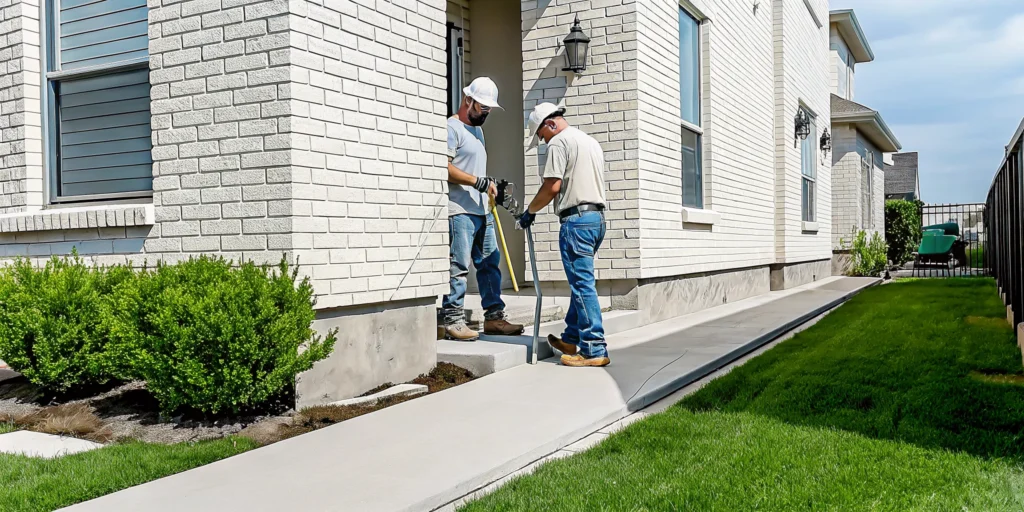
Let’s talk about the number one concern for any homeowner facing potential foundation issues: the cost. Seeing a stair-step crack in your brick can immediately trigger worries about a massive, unexpected bill. While it’s true that costs can vary, the biggest financial risk is often delaying the repair and letting a small problem become a major one. The first step isn’t to panic, but to get clear, accurate information. A professional inspection is the only way to know the true extent of the damage and what a solution will entail. This article will demystify the costs associated with residential foundation repair Dallas TX and explain how financing options can make protecting your home an affordable, manageable process.
Key Takeaways
- Watch for key warning signs: Things like stair-step cracks in brick, sticking doors, or sloping floors are your home’s way of telling you something is wrong. Addressing these signs with a professional inspection early on can save you from much bigger, more expensive repairs later.
- Focus on the real problem, not just the symptoms: In Dallas, the main culprit is our expansive clay soil, which swells and shrinks with rain and drought. A lasting fix involves addressing this soil movement with solutions like steel piers or improved drainage, rather than just patching over cracks.
- Choose your repair partner wisely: The quality of your foundation repair depends entirely on the contractor. Protect your investment by verifying their license and insurance, asking for a written warranty, and checking recent reviews. A trustworthy company will always offer a free, detailed estimate without any pressure.
Key Warning Signs of Foundation Problems in Your Dallas Home
Your home is your sanctuary, and the last thing you want to worry about is its structural integrity. But here in the Dallas area, our unique soil and weather patterns can be tough on a house’s foundation. Over time, you might notice subtle changes around your property. While not every creak or crack is a cause for alarm, some signs are clear indicators that your foundation needs attention.
Spotting these issues early is the best thing you can do. It allows you to address the root cause before it leads to more significant and costly damage. Think of it as a regular health checkup for your home. Knowing what to look for empowers you to take action and protect your investment. Below are the most common warning signs we see in Dallas homes. If any of these look familiar, it’s time to have a professional take a closer look.
Cracks in Your Walls or Floors
Small, hairline cracks can appear as a house settles, but certain types of cracks signal a bigger problem. Pay close attention to stair-step cracks in exterior brickwork or long, diagonal cracks that run from the corners of doors and windows. Inside, you might see cracks appearing in drywall or notice tile floors cracking under pressure. Horizontal cracks in your foundation wall are particularly serious. These issues often point to foundation movement that is putting stress on your home’s structure. If you see cracks in your driveway or patio, it could also be a sign of soil issues that may eventually affect your home’s concrete repair needs.
Doors and Windows That Stick
Do you have a door that suddenly refuses to latch or a window that’s a struggle to open and close? When a foundation shifts, it can twist and warp the frames of your doors and windows. This misalignment is what causes them to stick or jam. While high humidity can sometimes cause wood to swell, a persistent problem across multiple doors and windows is a classic symptom of foundation settlement. You might also notice that your doors appear uneven in their frames. This is a strong indication that it’s time to consider a professional foundation repair inspection to understand the underlying cause.
Sloping or Uneven Floors
The floors in your home should be level. If you feel like you’re walking downhill in your own hallway, your foundation is likely settling unevenly. You can test this by placing a ball or marble on the floor to see if it consistently rolls in one direction. Other clues include visible gaps between your flooring and the baseboards or furniture that seems to tilt. Sloping floors not only create a tripping hazard but also put continuous strain on your home’s entire frame. You can see examples of how we correct these issues by looking at our work on homes with similar problems.
Gaps Forming Around Windows and Doors
Along with sticking, you might see visible gaps forming around your window and door frames. This happens when the wall itself begins to pull away from the frame due to foundation movement. Look for gaps where the wall meets the ceiling or the floor, as this indicates different parts of your home are shifting at different rates. You might even be able to see daylight through the cracks around an exterior door. These separations are a definite red flag that your foundation is unstable. If you’re noticing these kinds of gaps, it’s best to contact us for a free, no-obligation estimate.
What Causes Foundation Issues in the Dallas Area?
If you’ve noticed signs of foundation trouble, it’s easy to assume the worst about your home’s construction. But more often than not, foundation problems in our area aren’t caused by poor building quality. Instead, they’re the result of shifting soil and unique environmental changes specific to North Texas. Understanding these root causes is the first step toward finding a permanent solution. The main culprits we see are the region’s tricky soil, its dramatic weather patterns, and how water behaves around your property.
The Challenge of Expansive Clay Soil
Much of the Dallas-Fort Worth area is built on what’s known as expansive clay soil. Think of this soil like a dense sponge. When it gets wet, it swells up and expands significantly. When it dries out, it shrinks and can crack. This constant movement exerts incredible force on your home’s foundation, which is supposed to sit on stable ground. Over time, the pressure from the soil’s expansion and the loss of support from its shrinkage can cause parts of your foundation to shift, settle, and crack. It’s a slow but powerful process that many North Texas homeowners face.
Cycles of Drought and Heavy Rain
The weather in DFW is famous for its extremes, swinging from long periods of hot, dry drought to sudden, intense downpours. This cycle is what really activates the expansive clay soil under your home. During a drought, the soil shrinks and can pull away from your foundation, leaving it unsupported. Then, when the heavy rains finally arrive, the soil rapidly absorbs the moisture and swells, pushing unevenly against the foundation. This constant push-and-pull stresses the concrete slab, leading to instability and damage. If you’re seeing the effects of this cycle, it’s time to consider professional foundation repair.
Poor Drainage Around Your Home’s Perimeter
How water flows around your house plays a huge role in your foundation’s health. If you have poor drainage, water can pool against your foundation instead of moving away from it. This can happen because of clogged gutters, downspouts that release water too close to the house, or improper yard grading. When water saturates the soil in one area but not another, it creates differential movement. One side of your foundation might be pushed upward by swollen soil while the other side sinks into dry, shrunken soil. This imbalance is a primary cause of significant structural damage. Getting an expert to assess your property’s drainage is a critical step.
How We Fix Common Foundation Problems
Once we’ve identified the root cause of your foundation trouble, the next step is creating a plan to fix it. There’s no one-size-fits-all answer, because every home and every foundation issue is unique. Our team focuses on providing the right solution for your specific problem, ensuring a lasting repair that protects your home for years to come. We use a variety of proven methods to address everything from settling foundations to cracked concrete slabs. Here’s a look at some of our most effective repair strategies.
Pier and Underpinning Solutions
When your foundation begins to settle or sink, we need to give it new support. That’s where underpinning comes in. This process involves installing steel piers deep into the ground beneath your foundation, past the unstable clay soil. These piers act like stilts, transferring the weight of your home onto solid, stable ground or bedrock. We can then carefully lift the foundation back toward its original level. This is one of the most reliable and permanent ways to correct foundation settlement. Our foundation repair methods ensure your home has the strong, stable base it needs to stand firm for the long haul, tackling your specific structural issues head-on.
Slabjacking with Polyurethane Foam
Have you noticed a sunken patio, driveway, or garage floor? For uneven concrete slabs, we often use a technique called slabjacking, or poly-injection. It’s a modern and minimally invasive approach to concrete repair. Instead of tearing out the old concrete, we drill small, discreet holes into the sunken slab. Then, we inject a high-density polyurethane foam underneath. This foam expands, filling any empty spaces in the soil and gently lifting the concrete back into place. The process is quick, the foam cures in minutes, and you can use your surface again the same day. It’s a clean and efficient way to restore your concrete without major disruption.
Custom Drainage Systems
In North Texas, managing water is everything when it comes to foundation health. If poor drainage is the culprit behind your foundation problems, simply repairing the damage isn’t enough; we need to address the source. We design and install custom drainage systems to protect your home from excess moisture. Solutions like French drains and catch basins collect and redirect water away from your foundation’s perimeter. This prevents the soil from becoming oversaturated during heavy rains and then shrinking dramatically in a drought. By controlling moisture levels, we help prevent future settlement and protect your home from costly repairs down the road. You can contact us to discuss a custom drainage plan for your property.
What to Expect for Foundation Repair Costs in Dallas
Let’s talk about one of the biggest questions on every homeowner’s mind: the cost. Seeing signs of foundation trouble is stressful enough without the added worry of a huge, unexpected bill. The truth is, there isn’t a single flat rate for foundation repair because every situation is different. In the Dallas area, homeowners might spend anywhere from around $2,000 for minor fixes to over $15,000 for more extensive projects. While the local average often falls somewhere around $5,000, this number is just a benchmark.
This wide range exists because every home and every foundation issue is unique. The final price depends entirely on the specific problems your foundation is facing. A few small cracks will cost significantly less to address than a foundation that has settled several inches on one side. That’s why a thorough, professional inspection is the only way to get an accurate number. It allows a specialist to diagnose the root cause and map out a precise solution tailored to your property. We understand this is a significant investment, which is why we also offer straightforward financing options to help manage the expense and make the process less stressful.
Factors That Influence Your Final Cost
The biggest factor driving your final cost is the extent of the damage. A more severe problem simply requires more work and materials to correct. The specific foundation repair method also plays a major role. For example, installing a few steel piers under one corner of your home is a different job than injecting polyurethane foam to lift an entire concrete slab.
Other key variables include the number and type of piers needed to properly support your home for the long term. The more support points required, the higher the cost of materials and labor. The accessibility of the repair area can also influence the price. Ultimately, your final cost is a direct reflection of the custom solution designed to permanently stabilize your home.
How to Read Your Repair Estimate
A trustworthy repair estimate should be clear, detailed, and easy to understand. Vague, one-line quotes are a red flag. When you review an estimate, you should be able to see exactly what you are paying for. Look for a detailed scope of work that explains the proposed repair method and why it was chosen for your home.
The estimate should also include a diagram of your foundation, clearly marking the locations where piers or other supports will be installed. It needs to specify the exact number of piers and the total cost, broken down into materials and labor. This transparency ensures there are no surprises down the road. If you have any questions, a reputable contractor will be happy to walk you through every line item. Ready for a clear, no-obligation quote? You can contact us to schedule your free estimate today.
Financing Your Foundation Repair Project
Let’s talk about the elephant in the room: the cost. Seeing a crack in your wall can immediately make you worry about your wallet. It’s true that the cost of foundation repair in the Dallas area can vary quite a bit. A minor crack repair might only be a few hundred dollars, while more extensive work for severe foundation settlement can run into the tens of thousands. This wide range makes it impossible to guess what your project will cost without a professional inspection. The final price depends entirely on the extent of the damage and the specific solution your home needs.
The good news is you don’t have to let the potential cost stop you from protecting your home. Many homeowners use financing to make the expense more manageable. Think of it as a practical tool that allows you to get critical repairs done now, before the problem gets worse and more expensive. Some companies even offer plans with 12 months of no interest, which can make a big difference. At Solid Base, we believe everyone deserves a safe and stable home, which is why we offer flexible financing to fit your budget.
Understanding your options is the first step toward peace of mind. Instead of worrying about a worst-case scenario, your best move is to get a clear, accurate picture of the situation. That’s exactly what our free, no-obligation estimate provides. We’ll assess your foundation, explain exactly what’s going on, and provide a detailed quote. From there, we can walk you through a payment plan that works for you. Don’t let financial concerns keep you from taking action; contact us to schedule your free inspection today.
What to Look For in a Dallas Foundation Repair Company
Choosing a contractor to work on your home’s foundation is a major decision. This isn’t just any weekend DIY project; it’s about protecting the structural integrity of your biggest investment. The right partner will provide a lasting solution and peace of mind, while the wrong one can lead to more problems and expenses down the road. Investing time in selecting the right contractor is critical to ensure you get reliable, effective repairs that stand the test of time, especially with Dallas’s challenging soil.
So, what separates a great foundation repair company from the rest? It comes down to a few key things: their credentials, the quality of their work and materials, their reputation in the community, and how they treat you as a customer. A trustworthy company will be transparent in all of these areas and will take the time to answer your questions without pressure. Before you sign any contracts, do a little homework to make sure you’re hiring a team of skilled professionals who have a proven track record in the DFW area and will get the job done right the first time. This due diligence is your best defense against shoddy work and future headaches.
Check for Proper Licensing and Insurance
This is the absolute first step and it’s non-negotiable. A reputable foundation repair company must be fully licensed and insured to work in the Dallas area. Licensing confirms that the contractor meets local and state requirements for their trade. More importantly, proper insurance protects you from liability. If an accident happens on your property during the repair process, the company’s insurance, not your homeowner’s policy, should cover it. Ask for proof of both general liability insurance and workers’ compensation. Any hesitation to provide these documents is a major red flag that you should find another contractor.
Ask About Warranties on Work and Materials
A foundation repair is a significant investment, and you want to know that the company stands behind its work. Always ask about the warranties they offer. Reputable companies provide strong, often transferable, warranties on both the labor they perform and the products they install. Be sure to get the details in writing. Understand the length of the warranty, what it covers, and if there are any conditions that could void it. A solid warranty not only protects your investment but also gives future buyers peace of mind, which can help preserve or even increase your home’s value.
Understand Their Repair Methods and Product Quality
Foundation issues aren’t one-size-fits-all, and their solutions shouldn’t be either. The best repair method depends on the specific cause of the problem, your home’s construction, and our area’s challenging soil conditions. A trustworthy contractor will conduct a thorough inspection and explain exactly why they are recommending a particular solution, whether it’s installing piers or using polyurethane foam for concrete repair. Don’t be afraid to ask questions about the quality of the products they use. The long-term success of the repair depends just as much on the durability of the materials as it does on the skill of the installation team.
Read Recent Customer Reviews and Testimonials
What are other homeowners saying? In the age of the internet, it’s easier than ever to get a sense of a company’s reputation. Look for recent reviews on third-party sites like Google and the Better Business Bureau. While a single bad review isn’t necessarily a dealbreaker, you should look for patterns. Are customers consistently praising the company’s communication, professionalism, and the quality of the final result? Seeing examples of our work and reading testimonials can give you a clear picture of the experience you can expect and help you avoid contractors who don’t have a proven track record.
Confirm They Offer Free, Transparent Estimates
The process should always start with a free, no-obligation inspection and a detailed written estimate. A professional company will want to see the problem firsthand before quoting a price. Be wary of any contractor who gives you a price over the phone without an inspection. Your estimate should be transparent and easy to understand, clearly itemizing the scope of the proposed foundation repair, the materials to be used, and the total cost. A surprisingly low bid can be tempting, but it often indicates that a company is cutting corners on materials or labor, which will only cost you more in the long run.
Foundation Repair Myths vs. Reality
When you first notice a crack in your wall, it’s easy to fall down a rabbit hole of misinformation online. Foundation repair can feel like a big, mysterious topic, but it doesn’t have to be. Let’s clear up some of the most common myths so you can move forward with confidence and a clear understanding of what to expect.
Myth: “My homeowner’s insurance will definitely cover it.”
It’s a common belief that your homeowner’s insurance will automatically cover foundation repairs, but this often isn’t the case. Most standard policies do not cover damage from soil settlement, which is a primary cause of foundation issues in the Dallas area. Coverage typically applies only when the damage is a direct result of a covered peril, like a documented plumbing leak. Before you assume anything, review your policy documents carefully or speak with your insurance agent to understand your specific coverage. If the repair isn’t covered, remember that reputable companies offer financing options to make the project more manageable.
Myth: “Foundation repair is always unaffordable.”
The thought of foundation repair often brings scary price tags to mind, but the cost can vary widely. A few hairline cracks don’t automatically mean you’re facing a massive expense. Because of the expansive clay soil here in Texas, minor cosmetic cracks are quite common. The key is to address issues early before they become larger, more complex problems. The only way to know for sure what you’re dealing with is to have a professional assess the situation. A free, no-obligation estimate will give you a clear picture of the scope of work and the actual cost, which might be much less than you fear.
Myth: “A DIY fix is good enough for small cracks.”
While it can be tempting to patch a small crack yourself, a DIY approach is rarely a safe or effective long-term solution for foundation issues. Simply covering up a crack doesn’t address the underlying problem, whether it’s soil movement, poor drainage, or something else. An improper repair can trap moisture or mask a growing issue, leading to more significant and costly damage down the road. Professional foundation repair involves diagnosing the root cause and implementing a proven solution to ensure your home’s stability for years to come. It’s best to leave this critical work to the experts.
Myth: “All foundation repair companies are the same.”
Believing all foundation repair companies offer the same quality of work is a risky assumption. The longevity and effectiveness of a repair depend heavily on the contractor’s experience, the methods they use, and the quality of their materials. A less reputable company might offer a quick, cheap fix that fails in a few years, while an established expert uses patented, proven products designed to last. When choosing a contractor, do your research. Look for a company with a long track record, transparent processes, and a team of skilled professionals. Seeing examples of our work can help you understand the difference quality makes.
The Value of a Free Foundation Inspection
If you’ve noticed a few cracks or a sticky door, you might be worried about what’s happening with your foundation. It’s easy to put off investigating, but ignoring potential issues won’t make them disappear. This is where a free, no-obligation inspection becomes your most powerful first step. It’s a chance to get clear, expert answers about your home’s health without any risk or pressure.
An inspection allows for the early detection of problems. A trained professional can spot subtle signs you might overlook, identifying the root cause of issues before they escalate into major structural damage. Catching a problem early is the single best way to prevent a small, manageable repair from turning into a large, expensive project. A thorough assessment gives you a complete picture of your home’s condition, so you can make an informed decision about any necessary foundation repair.
Every home in the Dallas area is different, and so is every foundation issue. A professional evaluation provides a solution tailored specifically to your property. Instead of a one-size-fits-all guess, you get a detailed plan that addresses the unique challenges your foundation faces, whether it’s due to soil conditions or drainage problems. You can see examples of how we apply specific solutions by looking at our work on other homes in the area.
Ultimately, a free inspection is about protecting your biggest investment. Your home’s value is directly tied to its structural integrity. By getting a professional opinion, you gain peace of mind and a clear path forward. It empowers you to act promptly, preserve your home’s value, and avoid much costlier repairs down the road. When you’re ready for clarity, you can schedule your free estimate with our team.
Related Articles
- Foundation Repair Cost: The Ultimate 2026 Guide
- Pier & Beam Foundation Repair: Signs, Costs & Fixes
- Ultimate Guide to Foundation Repair Options
- A Homeowner’s Guide to Foundation Repair Services
- Is Foundation Repair Covered by Insurance? The Answer
Frequently Asked Questions
Are small cracks always a sign of a big problem? Not necessarily. It’s normal for a house to settle over time, which can cause tiny, hairline cracks in the drywall. However, you should never ignore a crack without understanding its cause. The key is to look at the type and location of the crack. A long, diagonal crack coming off a door frame or a stair-step crack in your exterior brick is more concerning than a simple vertical line in the drywall. The best approach is to have a professional take a look, so you can know for sure if it’s just cosmetic or a symptom of a deeper issue.
Why can’t I get a simple price quote over the phone? Giving a price over the phone would be a disservice to you. Foundation issues are complex, and a responsible repair plan depends on many factors specific to your home. We need to see the extent of the damage, understand your home’s layout, and assess the soil and drainage conditions around your property. A quote without a thorough inspection would just be a guess. Our free, in-person estimate ensures you get an accurate and transparent price for a solution designed to permanently fix your specific problem.
How long does a typical foundation repair project take? The timeline really depends on the solution your home needs. A straightforward concrete lifting job using our poly-injection method can often be completed in just a few hours, and you can use the surface the very same day. More extensive projects, like installing steel piers to stabilize a settling foundation, might take a few days to complete. When we provide your detailed estimate, it will include a clear and realistic timeline for the entire project from start to finish.
Will the repair process be disruptive to my home and yard? We understand that your home is your sanctuary, and our goal is to be as respectful of your space as possible. While any construction work involves some level of activity, we take great care to minimize the impact on your daily life and property. For interior work, we protect your belongings and flooring, and for exterior work, we are careful with landscaping. Our modern repair methods are much less invasive than old-fashioned tear-out-and-replace techniques, and our crews always clean up the work site thoroughly when the job is done.
What happens if I ignore these warning signs? It can be tempting to wait and see, but foundation problems almost never fix themselves. Because most issues in the Dallas area are tied to soil movement, they tend to be progressive. A small crack or a slightly sticking door can slowly develop into a much larger structural problem. Over time, this can lead to more severe damage, including major wall fractures, sloping floors, and even plumbing breaks. Addressing the signs early is the most effective way to protect your home’s value and avoid a much more complicated and expensive repair later on.