
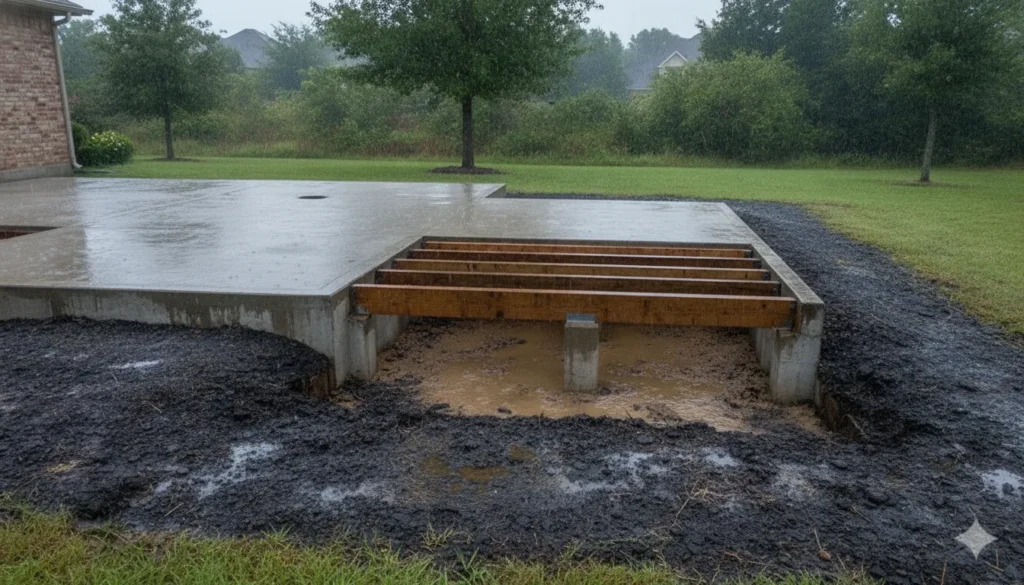
Water can affect your foundation long before you see a puddle, leak, or dramatic crack. In North Texas, that hidden risk deserves attention because expansive clay soil shrinks and swells as moisture changes. A property may look dry at the surface while groundwater remains close enough to influence the soil beneath a slab or inside a pier-and-beam crawl space.
A high water table foundation can face pressure and movement even without visible surface flooding. A high water table marks the level where soil or rock becomes fully saturated, while hydrostatic pressure is the force groundwater exerts as gravity pulls it downward. As saturated soil shifts or stays wet, it can contribute to uneven support, heaving, moisture intrusion, or gradual structural stress. The USGS has documented foundation damage associated with a rising water table, underscoring why visible flooding is not the only warning.
The right response starts with understanding where groundwater sits, how pressure travels through different foundation systems, and why North Texas soil can amplify the effect. That foundation helps you recognize risks before subtle movement becomes a larger structural concern.
What Is a High Water Table, and How Can It Threaten Your Foundation?
If moisture is collecting below your home, the visible symptoms may not appear right away. A high water table describes the level where soil or underlying rock becomes completely saturated with water. The water may remain below the surface while still changing the conditions around footings, slabs, and pier supports. The U.S. Geological Survey explains that a rising water table can contribute to building-foundation damage, even when the problem begins underground.
How groundwater creates pressure below a home
When groundwater accumulates against a foundation, it creates hydrostatic pressure. The Pennsylvania State University Extension defines hydrostatic pressure as the pressure a fluid at rest exerts because of gravity. In practical terms, saturated soil and trapped water can push against foundation walls, slabs, or other structural members. That pressure may contribute to cracking, leakage, or movement when the surrounding system cannot relieve it through effective drainage.
The effect is not limited to homes with basements. A slab-on-grade foundation can experience changing support conditions when water saturates the soil beneath it. A pier-and-beam home can develop excessive moisture in its crawl space, where damp conditions affect soil, wood, and ventilation. The exact response depends on the foundation design, soil profile, drainage pattern, and duration of saturation.
Why North Texas soil makes the combination more complicated
In the Dallas-Fort Worth area, expansive clay adds another variable. This North Texas expansive clay soil can shrink as it dries and swell as it absorbs moisture. A high water table can keep portions of the soil persistently wet, while surface drainage or seasonal weather may leave other areas drier. Those uneven moisture conditions can create differences in soil volume and support beneath the same structure.
Water also changes how the soil bears against a foundation. Saturation can reduce the consistency of some soil layers, while swelling clay can press upward or laterally as it takes on moisture. Instead of one uniform force, your foundation may face shifting pressure across different areas. That is one reason a high water table foundation problem can appear as isolated cracks, uneven floors, sticking doors, or recurring movement rather than obvious flooding.
Surface water management remains part of the picture. The University of Minnesota Extension notes that poor grading, missing downspouts, and inadequate subsurface drainage commonly worsen groundwater-related moisture problems. An inspection can distinguish a high water table from a localized plumbing leak. Runoff issue, or normal seasonal change, then identify how moisture is interacting with your foundation system.
How a High Water Table Damages Slab Foundations From Below
A slab foundation can experience serious moisture-related stress even when your yard looks dry and no water has entered the home. Groundwater may collect beneath the slab as the water table rises, creating pressure and changing the condition of the supporting soil. The University of Minnesota Extension identifies groundwater accumulation as a common source of moisture problems, while the U.S. Geological Survey documents foundation damage associated with a rising water table even when surface conditions do not clearly reveal the problem. Foundation repair starts with identifying that hidden movement rather than waiting for visible flooding.
| Foundation type | How a high water table affects it | Where damage usually shows |
|---|---|---|
| Slab-on-grade | Groundwater and hydrostatic pressure build beneath the concrete, saturating support soil and driving uneven movement. | Interior cracks, uneven or sloping floors, doors and windows that stick. |
| Pier and beam | Moisture and water vapor rise into the crawl space, raising humidity around wood joists and subfloor. | Musty odors, damp or soft wood, sagging floors, condensation on pipes. |
Hydrostatic pressure pushes against the slab
Water trapped in soil exerts hydrostatic pressure. Under a slab-on-grade home, that pressure can act upward against the concrete and laterally against the edges and connected foundation elements. Pressure does not automatically mean the slab will fail, but persistent or uneven pressure can contribute to cracking. Leaks, or changes in how the slab transfers weight to the ground. The pressure may be greater in one part of the footprint than another when groundwater follows an irregular path through the soil.
That uneven loading matters in North Texas, where expansive clay soil responds strongly to changes in moisture. Blackland prairie clay can swell as it absorbs water and shrink as it dries. If groundwater keeps one area wetter while another area drains or dries, the slab may face different soil conditions beneath different rooms. The result can include movement that looks like ordinary settling at first, even though the moisture pattern below the slab continues to change.
Saturated soil can lose support
A high water table also changes the soil itself. Saturation can soften or loosen some soil layers, while moving groundwater may erode fine material or carry it away from voids and weak points. A slab does not settle uniformly when one section retains firm support and another section loses contact or compresses. This differential settling can show up as cracks in floors or walls, uneven surfaces, sticking doors, or gaps around trim. Those symptoms do not prove groundwater caused the damage, but they justify a closer look at drainage and subsurface conditions.
Surface flooding is not a requirement. Water can rise through soil pores, collect beneath low areas of a slab, or remain trapped by dense clay without forming a visible pool. Gutters, downspouts, grading, and subsurface drainage can influence how much water reaches the foundation zone. If those systems direct water toward the home, repeated saturation can compound the natural shrink-swell cycle of North Texas clay. An inspection can distinguish moisture-driven movement from other causes and help establish the right next step.
Pier and Beam Homes: Why Crawl Space Moisture Is a Hidden Risk
If your home sits above an open crawl space, moisture can affect the structure long before you see standing water indoors. A high water table is the level where soil or underlying rock becomes fully saturated. When that saturated layer rises beneath a pier and beam home, water vapor can move upward through the soil and collect in the crawl space. The risk is especially important in North Texas, where expansive clay changes volume as its moisture level shifts.
Raised construction creates an air space beneath the living area, but it does not eliminate contact with ground moisture. Damp soil can increase humidity around wood joists, beams, and subfloor materials. Over time, repeated exposure can encourage wood rot, weaken connections, and contribute to musty odors or mold growth. Moisture can also move through gaps, vents, and poorly sealed areas, allowing damp conditions to affect the floor system above.
The crawl space moisture control approach is designed around that specific risk. Encapsulation typically uses a durable vapor barrier over the crawl space floor and along applicable wall surfaces. Helping separate the wood structure from moisture rising out of saturated soil. It is not simply a cosmetic covering. The goal is to create a cleaner, more controlled environment beneath a raised wood-slab home.
North Texas clay adds another layer of complexity. During wet periods, clay can absorb water and swell. During dry periods, it can shrink and leave movement beneath or around supporting piers. If drainage directs runoff toward the crawl space, localized saturation may make those moisture swings more severe. Water can also exert pressure against foundation components as it accumulates in the soil. The U.S. Geological Survey has documented foundation damage associated with a rising water table, even when the concern begins below the visible surface: USGS research on water-table rise and foundation damage.
Watch for damp or soft wood, sagging floors, persistent odors, peeling insulation, or condensation on pipes and ductwork. These signs do not identify one cause by themselves, but they justify a closer inspection of the crawl space, drainage paths, piers, and soil conditions. Addressing moisture at its source can help protect the supporting wood system and reduce the chance that a hidden problem develops into visible structural movement.
Silent Signs of a High Water Table Under Your Foundation
Groundwater can affect your home before you see a single puddle. In North Texas, expansive clay soil responds to changing moisture levels by shrinking and swelling, while saturated soil can also increase pressure beneath or beside the foundation. A high water table may therefore show up as a gradual change inside the home rather than obvious surface flooding. Watch for patterns that persist after weather conditions change, especially when several signs appear together.
- A damp or musty smell: A persistent earthy odor in a crawl space, basement area, or lower level can point to moisture from groundwater or rain accumulation. The smell may be noticeable even when walls and floors look dry. The University of Minnesota Extension identifies groundwater and rain as common sources of indoor moisture, so ventilation alone may not resolve the underlying issue. Foundation damage prevention starts with identifying where that moisture enters and how long it remains.
- Hairline cracks that change over time: Small cracks deserve attention when they widen, lengthen, or return after patching. Saturated soil and hydrostatic pressure can alter the support conditions around a foundation. The pressure of groundwater comes from the force of gravity acting on the fluid, and accumulated water can push against structural elements. Do not judge a crack by size alone. Track its location, direction, and change over several weeks.
- Sloping or uneven floors: A floor that feels newly out of level, or furniture that no longer sits as it once did, can signal movement below the slab. Moisture changes in expansive clay can create uneven support, while saturated areas may contribute to shifting or settlement. Use this sign alongside cracks, sticking doors, or drainage observations rather than treating it as proof of one specific cause.
- Doors and windows that misalign: Interior doors may stick, swing open, or leave an uneven gap. Windows can become harder to operate when framing shifts. These changes can develop gradually, making them easy to dismiss as ordinary house movement. When several openings on the same side of the home change at once, record the pattern and have the surrounding foundation evaluated.
- Efflorescence or recurring slab moisture: A white, powdery residue on concrete indicates that moisture has moved through the slab or masonry and left mineral deposits behind. Damp spots, peeling finishes, or recurring condensation near the floor also deserve inspection. These symptoms do not always prove a high water table foundation, but they show that water is moving through or collecting near the structure.
- Standing water near the foundation after rain: Surface flooding is not required for drainage to create a problem. Short-lived pooling beside the home, missing downspouts, or soil that does not slope away from the foundation can keep moisture concentrated at the perimeter. The University of Minnesota Extension lists poor grading, inadequate gutters and downspouts, and missing subsurface drainage as common factors that worsen groundwater problems.
One isolated symptom may have a simple explanation. A cluster of changing cracks, moisture evidence, interior odor, and drainage problems is more meaningful. Document when each sign appears, particularly after heavy rain, and arrange a professional inspection before movement or moisture exposure progresses.
How Proper Drainage Prevents High Water Table Damage
In North Texas, drainage is part of foundation protection, not merely a landscaping concern. Expansive clay soil absorbs water, swells, and later contracts as moisture levels change. When groundwater or runoff remains against the structure, that moisture cycle can add stress to the foundation and surrounding soil. Groundwater that accumulates against foundation walls also creates hydrostatic pressure, the force a fluid exerts because of gravity. Over time, that pressure can contribute to cracking or water intrusion, as Penn State Extension explains.
A coordinated drainage plan moves water away from the foundation, manages subsurface flow, and corrects failures before they become recurring sources of pressure. Use these four measures as a practical framework:
-
Slope the ground away from the foundation
Inspect the soil and hardscape around the home for low spots, settled areas, or surfaces that direct water toward the walls. Regrading the area to send runoff away from the foundation reduces the amount of water that can collect beside the structure. This matters especially on lots with North Texas clay, where repeated wetting and drying can change the soil profile and create new pathways for water. The University of Minnesota Extension identifies ground that fails to slope away from the foundation as a common drainage problem.
-
Keep gutters and downspouts functional
Gutters should collect roof runoff, and downspouts should discharge it well beyond the foundation rather than releasing it at the base of the wall. Clear leaves and sediment, check for leaks at seams, and confirm that extensions remain connected after storms or landscaping work. A downspout that empties beside the house can concentrate a large volume of water in one small area, increasing saturation and pressure against the foundation. The University of Minnesota Extension lists missing or nonfunctioning gutters and downspouts among frequent causes of moisture problems.
-
Use subsurface drainage and sump systems when needed
Surface grading and roof drainage may not resolve groundwater that moves through saturated soil. A French drain, footing drain, or properly designed sump system can collect subsurface water and route it to a safe discharge point. The right approach depends on the foundation type, site elevations, soil conditions, and the location of the water. For a broader look at foundation waterproofing solutions, consider how drainage and waterproofing work together instead of treating either system as a standalone fix.
-
Repair drainage failures before they repeat
A crushed drain line, clogged subsurface system, disconnected discharge pipe, or settled grade can undermine an otherwise sound plan. Look for recurring wet areas, soil erosion, standing water, or moisture that returns after each storm. If drainage problems coincide with cracks, uneven floors, sticking doors, or other structural changes, an inspection can separate a surface water issue from a foundation movement problem. Solid Base Foundations can evaluate the relationship between site drainage and foundation repair needs, then recommend a response suited to the property rather than applying a generic solution.
Drainage will not reverse every foundation problem, but it can reduce the water loading that keeps stressing North Texas soil. Addressing the source early gives your foundation a more stable moisture environment and makes future monitoring more meaningful.
Diagnosing a High Water Table Foundation: What an Inspection Reveals
When your home shows no standing water or dramatic cracks, it can still feel unsettling to wonder what is happening below the surface. A professional inspection looks beyond visible symptoms to identify moisture conditions that may be affecting the foundation before damage becomes obvious. That early view matters in North Texas, where expansive clay soil responds to changes in moisture by shrinking and swelling around the structure.
An inspection can also separate a high water table foundation concern from ordinary surface drainage, plumbing leaks, or normal seasonal movement. The USGS has documented cases where rising water tables contributed to foundation damage without the kind of surface flooding homeowners expect. USGS research on rising water tables shows why subsurface conditions deserve attention even when the yard appears dry.
Soil moisture and subsurface conditions
The inspector checks moisture levels around and beneath the foundation, looking for patterns rather than relying on a single reading. Saturated soil can reduce stability, encourage movement, and change how expansive clay bears against structural components. The inspection may also consider soil transitions, areas where water collects, and whether the foundation sits in conditions that vary from one side of the home to another.
These observations help explain why one room may feel uneven while another appears unaffected. They also help identify problems before they become visible and more disruptive. A high water table can influence foundation integrity without creating a puddle at the surface, so hidden moisture deserves the same attention as a visible leak.
Hydrostatic pressure and drainage performance
Water that accumulates in soil can exert hydrostatic pressure against foundation walls, footings, or other structural elements. An inspection looks for evidence consistent with that pressure, including cracking, moisture intrusion, soil displacement, or movement concentrated near poorly drained areas. The inspector also reviews gutters, downspouts, grading, swales, and subsurface drainage to determine whether water is being directed away from the home.
Drainage problems can intensify structural concerns by repeatedly adding moisture to already reactive clay soil. The University of Minnesota Extension notes that flat or inward-sloping ground, missing downspouts, and nonfunctioning subsurface drainage commonly contribute to groundwater problems. A complete assessment considers the full path of water, not just the location where a symptom first appears.
Level readings and a practical repair plan
Level readings help document whether floors or foundation sections have shifted and whether the pattern suggests settlement, heave, or another movement pattern. The inspector compares readings with visible conditions and site drainage findings rather than treating one measurement as a diagnosis. This combination gives you a clearer basis for deciding whether monitoring, drainage improvements, or structural evaluation should come next.
For a broader maintenance approach, review this guide to foundation damage prevention. If the inspection identifies active movement or water-related structural risk, Solid Base Foundations can evaluate the next step in foundation repair. Schedule a free estimate to discuss your home’s moisture conditions and inspection findings. Call (940) 365-4221 to get started.
Frequently Asked Questions
What does a high water table mean for a foundation?
It means the soil or underlying rock reaches complete saturation at a relatively shallow depth. Groundwater can collect beneath a slab or around crawl-space supports, creating changing moisture conditions that deserve professional evaluation. In North Texas, expansive clay can shrink and swell as moisture levels change, adding another source of movement. The U.S. Geological Survey has documented foundation damage associated with a rising water table, even when surface flooding is not obvious: USGS water-table research.
How do you manage groundwater under a house?
Start with an inspection that evaluates grading, gutters, downspouts, surface runoff, crawl-space conditions, and visible movement. Correcting drainage can reduce the amount of water reaching the foundation, while subsurface drainage or waterproofing may help when groundwater remains persistent. The University of Minnesota Extension identifies ground slope, gutter and downspout performance, and subsurface drainage as important moisture-control factors: moisture-management guidance.
Can hydrostatic pressure damage a slab or pier-and-beam foundation?
Yes. Hydrostatic pressure is fluid pressure created by gravity. When groundwater accumulates around structural components, it can contribute to cracking, leakage, soil erosion, or movement. A slab and a pier-and-beam home respond differently, so an inspection should identify the foundation type before anyone recommends repairs.
What are signs of a high water table under a foundation?
Possible clues include recurring crawl-space dampness, musty odors, standing water after otherwise moderate rain. Unexplained floor movement, cracks that change with wet and dry conditions, or drainage that repeatedly fails. These signs can have other causes, so track when they appear and have the site evaluated rather than assuming groundwater is responsible.
What drainage solutions help protect a foundation?
Effective measures may include correcting the slope away from the home, repairing gutters, extending downspouts to safe discharge points, and adding subsurface drainage where site conditions justify it. The right approach depends on groundwater depth, soil behavior, foundation design, and the home’s existing drainage system.
Ready to schedule a closer look?
Water below your foundation can be difficult to recognize, especially when North Texas clay shifts with changing moisture. A professional inspection can help connect drainage conditions, hydrostatic pressure, and visible foundation concerns so you can choose an informed next step. Schedule a free foundation and drainage inspection with Solid Base Foundations at (940) 365-4221.