
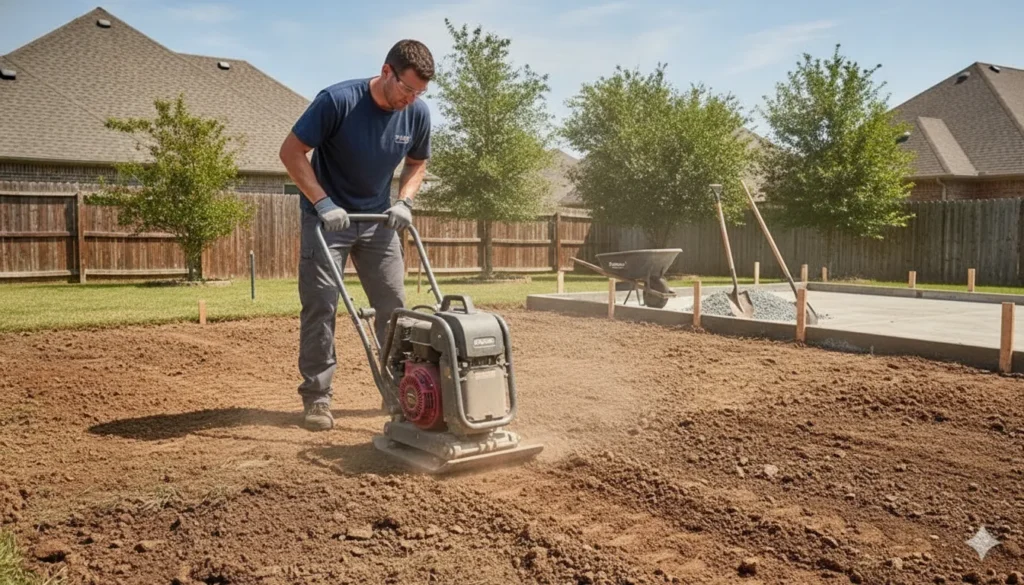
A new patio, driveway, or sidewalk should feel like a lasting improvement, so it is frustrating to notice a low corner. A widening joint, or water collecting beside the slab soon after the pour. In many cases, the problem began below the concrete rather than in the finished surface. If backfill remained loose, went in too thickly, or lacked a stable granular base, the ground can consolidate and leave unsupported areas beneath the slab.
Schedule a free inspection for your new concrete with Solid Base Foundations at (940) 365-4221
Soil compaction concrete settling usually begins when inadequately compacted fill shifts or compresses under a new slab. Proper preparation, including suitable fill, controlled lift depths, mechanical compaction, drainage, and a stable base, helps protect your flatwork from uneven settlement. If a slab does sink, professional lift-and-level methods may restore its position without automatically requiring replacement.
North Texas adds another consideration: expansive clay changes volume as moisture levels rise and fall. That movement can amplify weaknesses in poorly prepared backfill, especially where drainage directs water toward a patio or driveway. Before concrete is placed, ask how the soil will be excavated, placed, moistened, compacted, and tested, rather than focusing only on the finish and thickness of the slab. Good base preparation gives the concrete consistent support from the start and helps limit pooling, edge drops, and stress at joints. Understanding the connection between the ground and the slab makes it easier to plan a project that stays level, beginning with how compaction influences settlement beneath new flatwork.
How does soil compaction affect concrete settling on new patios and driveways?
A concrete patio or driveway can look perfectly finished on pour day and still develop a dip months later. In many cases, the problem is not the concrete mix itself. It begins below the slab, where loose or inadequately compacted backfill gradually compresses under the weight of the concrete and everyday traffic.
Concrete follows the support beneath it. When the soil base is firm and evenly prepared, the slab has a continuous platform that helps distribute loads. When the base contains loose pockets, uncompacted fill, or areas with different densities, those areas respond differently over time. One portion may remain stable while another consolidates. The slab then loses uniform support and begins to settle unevenly.
What happens beneath an inadequately compacted slab
Settlement-prone backfill can shift as moisture moves through the ground. Soil particles may pack closer together, wash away from a poorly drained area, or move as the moisture content changes. This process leaves small voids beneath the concrete surface. Once a void forms, the slab bridges the unsupported space until its own weight, a vehicle, or repeated foot traffic pushes it downward.
That movement can appear as a low corner, a sloping driveway, a gap along an edge, or water that pools where the surface once drained. Cracks may follow, especially where the slab is forced to bend across areas with unequal support. The visible symptom is concrete settling, but the underlying cause is often a soil and drainage problem that started before the concrete was poured.
Why North Texas soil makes preparation especially important
North Texas adds another variable through its expansive clay soil. Clay changes volume as its moisture content changes, swelling during wetter periods and shrinking during dry conditions. Those seasonal shifts can move or loosen sections of the supporting ground, particularly where grading directs water toward one part of a patio or driveway. Even a new slab can respond to these changes when the base was not compacted and drained consistently.
Proper preparation does not mean compressing the surface once and assuming the work is finished. The fill must be placed and compacted in controlled layers so the entire support zone reaches a more consistent density. Drainage and a stable granular base also help limit uneven moisture and preserve support beneath the slab. For a practical overview of proper soil compaction and related concrete concerns, review the homeowner’s guide before your project begins.
Planning ahead matters because a finished slab conceals the conditions beneath it. Once settling appears, an assessment can help determine whether the issue is isolated to the concrete support or connected to broader drainage and soil movement. Addressing that cause protects the surface from repeating the same pattern.
Why some backfill settles and leaves voids under your slab
A slab can look sound when it is first poured, then develop a low corner or hollow spot months later. The concrete is often not the original problem. The soil and backfill beneath it have changed, leaving parts of the slab without consistent support.
Moisture changes can consolidate loose soil
Settlement-prone backfill contains soil that was not compacted firmly enough before the pour. When moisture moves through that material, individual particles can shift closer together or redistribute. The result is a lower surface and a void between the ground and the underside of the slab. As the unsupported area grows, the concrete may settle unevenly instead of moving as one stable plane.
North Texas adds another variable. Expansive clay responds to changing moisture conditions by shrinking when it dries and swelling when it becomes wet. Those volume changes can disturb the support beneath patios, sidewalks, driveways, and other flatwork. If one portion of the base holds more moisture than another, the slab can lose support in isolated areas rather than settling uniformly.
Water, roots, and loads create local weak spots
Drainage problems can accelerate the process. Water flowing along the edge of a slab or through poorly prepared backfill can carry fine soil away, gradually enlarging a gap beneath the concrete. Even when erosion is not visible at the surface, uneven moisture distribution can produce uneven compression in the base. Poor base preparation and inadequate drainage are common reasons concrete settles unevenly over time.
Tree roots can also change the soil profile below flatwork. As roots grow, they may displace soil in one location, while drying nearby soil as they draw in moisture. When roots decay or the surrounding soil changes, a space may remain beneath the slab. Heavy loads, such as vehicles or concentrated equipment, add stress to areas that already have inconsistent support. A slab spanning a small void may tolerate it for a time, but repeated loading can widen cracks or cause a section to drop.
Compaction gaps often start during installation
Hasty backfill work is another common source of voids. Placing a deep layer of fill and compacting only the surface can leave the lower material loose. That hidden layer may consolidate later, even if the finished grade looked level on pour day. Wet soil, changing fill materials, or missed areas around utility trenches can create the same uneven support pattern.
For a lasting pour, the entire base should be prepared as a system, with suitable compaction, controlled drainage, and consistent support beneath the slab. When a new patio or driveway begins to dip. An assessment can identify whether the cause is a localized void, expansive clay movement, drainage, or a broader base-preparation issue. That distinction matters because leveling the concrete without addressing the support beneath it may leave the same settlement pattern in place.
What signs tell you that your new concrete is sinking from poor compaction?
It is frustrating to see a new driveway, patio, or walkway change shape soon after installation. A small dip can seem harmless at first, but early movement often shows that the base beneath the slab is compressing unevenly. Loose or inadequately compacted soil is a primary cause of future sinking because the concrete depends on that supporting soil to remain stable.
Watch for changes that develop after rain, irrigation, or a period of dry weather. North Texas expansive clay responds to moisture fluctuations, and poor base preparation or drainage can make movement more noticeable in one part of a slab than another. These signs do not automatically mean the concrete itself has failed, but they are worth documenting and having evaluated before the affected area becomes harder to use.
- Water pools beside or against the slab. A low spot may collect water after rain instead of directing it away from the house, driveway, or walkway. Uneven moisture around the base can contribute to uneven compression and may expose drainage problems that are allowing the supporting soil to shift.
- The slab edge sits lower than it did originally. Look along borders next to landscaping, curbs, steps, or the garage. A dropping edge, especially when one corner is lower than the rest, can indicate that the soil beneath that section is consolidating or that material has washed away.
- Hairline cracks widen at joints or follow a changing elevation. Joints are designed to help control cracking, but widening gaps or cracks that become more visible as one section drops deserve attention. Take periodic photos from the same angle so you can compare changes rather than relying on memory.
- Doors or gates no longer align where slabs meet the house. A patio or walkway that settles near a threshold can create a noticeable step. While a driveway shift may affect a gate, fence line, or transition to the garage. These alignment changes can reveal movement even when the slab surface looks mostly intact.
- You can see a gap beneath the slab edge. Do not fill an open space with loose soil and assume the problem is resolved. A visible void may mean the supporting material has settled or eroded, leaving part of the concrete unsupported.
If several signs appear together, note where water flows, when the movement began, and whether the change follows wet or dry conditions. A sinking driveway is one example of a broader soil-support issue that can affect other exterior slabs. An assessment can help distinguish a correctable base problem from surface cracking or normal construction movement, without guessing at the cause.
How to compact soil properly before pouring concrete
A durable patio, driveway, or walkway starts below the concrete surface. Before the pour, the soil must provide consistent support across the entire footprint. That matters especially in North Texas, where expansive clay can respond to changing moisture levels and magnify weak spots in an improperly prepared base. A careful pre-pour process reduces the chance that loose fill will consolidate later and leave voids beneath the slab.
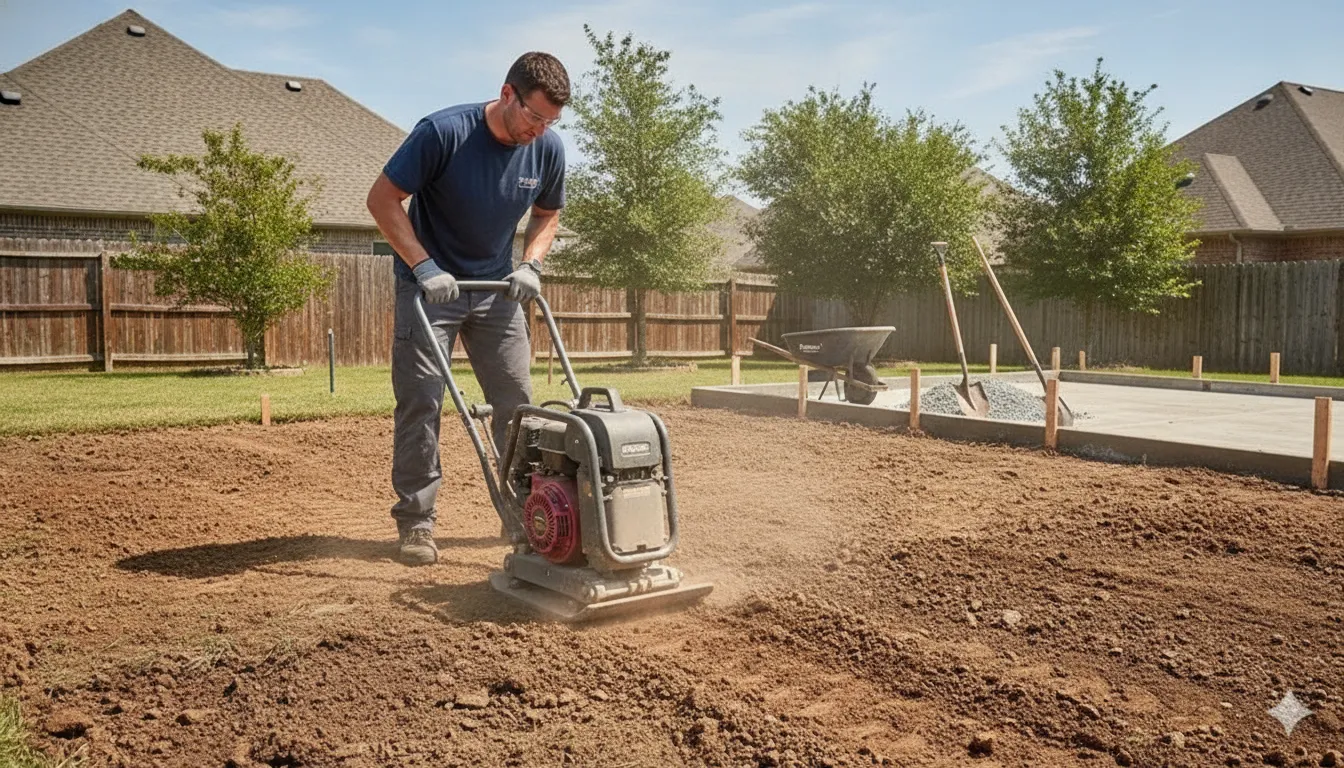
- Excavate to the planned depth. Remove organic material, loose topsoil, debris, and any visibly unstable fill from the project area. The excavation should account for the concrete thickness and the granular base beneath it, while also reaching firm, suitable soil. A shallow preparation that leaves soft material under one portion of the slab can create uneven support even when the finished surface looks level on pour day. Confirm the planned elevations against nearby thresholds, drainage paths, and adjoining flatwork before placing material.
- Place fill in controlled lifts. Do not dump a deep mass of soil into the excavation and expect one pass with a compactor to reach the bottom. Add fill in layers approximately 6 to 8 inches deep. Each lift should be spread evenly before compaction. These manageable layers let the equipment densify the full depth instead of merely tightening the surface while leaving loose soil below. Consistent lift thickness also helps keep the finished grade uniform across the patio or driveway.
- Mechanically compact every lift. Use a vibrating plate compactor for granular or smaller residential areas, or a suitable roller when the project and access call for heavier equipment. Make enough passes to produce firm, even support across the entire lift, including edges and transitions. Hand tamping may help in tight corners, but it should not replace mechanical compaction across a broad slab area. Skipping this step is a common path to settlement-prone backfill and future sinking.
- Manage moisture during compaction. Soil that is excessively dry may not bind and densify effectively, while saturated soil can rut, pump, or shift beneath equipment. Work toward a condition where the material compacts without becoming muddy or unstable. Pause after heavy rain and correct drainage or standing water before continuing. Moisture deserves particular attention in North Texas because clay soils change volume as their moisture content fluctuates, and uneven moisture distribution can contribute to uneven compression.
- Install a stable granular base. Finish the preparation with a properly graded layer of compactable granular material. Spread it evenly, compact it in controlled lifts when its thickness requires, and verify that it supports the intended slab elevation. The base should work with the site drainage plan rather than trap water beneath the concrete. Proper mechanical compaction, adequate drainage, and a stable granular base address the main pre-pour conditions that allow concrete to settle unevenly.
These steps address support below the slab, not the concrete mix or finishing process itself. During placement, the crew should also manage surface water and finishing operations so excess water does not weaken the upper layer. If a slab settles despite careful preparation, reviewing the available concrete leveling methods can help you understand the next appropriate option.
Backfill mistakes that lead to sunken slabs and how to avoid them
A new patio, driveway, or walkway can look perfect at first and still settle later if the base was rushed. In North Texas, expansive clay adds another variable because its volume changes as moisture levels rise and fall. Good preparation gives the slab a more stable surface and reduces the chance that changing soil conditions will create voids beneath it.
Placing too much fill in one lift
One of the most common mistakes is spreading a deep layer of fill and compacting only the top. The upper soil may feel firm while loose material remains underneath. As that deeper backfill consolidates, the slab loses support and begins to sink unevenly.
The practical alternative is to place fill in lifts roughly 6 to 8 inches deep. Compact each lift before adding the next one, so the equipment can reach and densify the full depth rather than masking weak soil below the surface.
Skipping mechanical compaction
Walking over fill, driving a truck across it, or waiting for rain to settle it is not a substitute for controlled compaction. Loose or inadequately compacted soil beneath concrete is a primary cause of future sinking.
Soil can shift or consolidate when moisture changes, leaving unsupported areas below the slab.
Use the appropriate mechanical equipment, such as a vibrating plate compactor for granular material or a roller for larger areas. The goal is consistent support across the entire slab footprint, including edges and narrow areas where settlement often becomes visible first. For a closer look at proper soil compaction, review the related guide before planning exterior flatwork.
Using unsuitable fill material
Not every excavated soil or dumped fill performs well beneath concrete. Material that contains excessive organic matter, large debris, inconsistent moisture, or poorly graded particles can compress differently from one area to another. That uneven compression creates a settlement-prone base.
Choose clean, suitable fill and establish a stable granular base where the project design calls for it. The material should be placed in manageable lifts and compacted consistently. If the existing soil is soft or visibly disturbed, address that condition before the pour instead of covering it with a thin layer of aggregate.
Ignoring drainage and ground conditions
Even well-compacted soil can perform poorly when water is directed toward the slab. Inadequate grading or drainage creates uneven moisture distribution, which is especially important in expansive North Texas clay. Water movement can contribute to uneven base conditions and settlement over time.
Grade the surrounding surface to move water away from the concrete, and resolve obvious drainage problems before placing the base. Avoid pouring over saturated, actively muddy, or frozen ground. Let the site reach workable conditions, then compact the prepared soil and base. This combination of mechanical compaction, adequate drainage, and stable granular material helps prevent settlement before the concrete is placed.
What to do if your new concrete is already settling
Seeing a fresh patio, walkway, or driveway begin to dip can feel especially frustrating. You planned a new surface, yet the slab is already showing signs that the ground below has changed. That does not automatically mean the entire project has failed or that replacement is your only option. Exterior flatwork can often be evaluated, stabilized, and raised when the slab remains sufficiently sound.
Start by looking beyond the visible low spot. Soil beneath the concrete may have consolidated or shifted as moisture changed, leaving a void under part of the slab. In North Texas, expansive clay adds another variable because its volume changes as the soil gains or loses moisture. Drainage, the condition of the base, the extent of the void, and the slab’s overall integrity all influence the right response.
For a slab that is structurally intact but no longer level, contractors may consider mudjacking or polyurethane foam injection. Mudjacking pumps a cement-based slurry beneath the concrete to fill voids and lift the surface. Polyurethane foam injection, including PolyLevel systems, uses expanding foam to fill the void and raise the slab.
The two approaches differ in material, equipment, and installation process. Polyurethane injection is often faster, cleaner, and more precise than traditional mudjacking, according to the company’s repair guidance. A professional can explain which method fits the soil conditions and access around your project.
| Factor | Mudjacking | Polyurethane foam injection |
|---|---|---|
| Material injected | Cement-based slurry pumped beneath the slab. | Expanding polyurethane foam that fills the void. |
| How it lifts the slab | The slurry adds mass and hydraulic pressure to push the surface up. | The foam expands and cures quickly, raising the slab as it fills the gap. |
| Relative speed | Slurry typically needs more time to set before full traffic returns. | Polyurethane cures in minutes, often allowing faster reuse. |
| Precision and cleanup | Uses larger injection points and can be more involved to clean up. | Generally uses smaller access holes, with less waste and a cleaner result. |
Repair makes sense when the concrete still has enough strength to be lifted without breaking apart and the underlying problem can be addressed. Leveling can improve drainage and remove trip hazards while preserving a slab that remains serviceable. You can review the factors involved in repairing or replacing concrete before deciding how to proceed.
Replacement may be more appropriate when the slab has extensive cracking, substantial deterioration, or damage that prevents it from responding safely to leveling. Hardened concrete also experiences volume changes such as shrinkage and creep. And those changes can contribute to distress when the design or surrounding conditions do not account for them. That is one reason an assessment should consider both the concrete and the soil beneath it, rather than treating the dip as a surface-only defect.
If raising is a possibility, acting before water continues to collect beside the slab or the unsupported edge breaks down can help preserve your options. Learn more about raising sunken concrete, then schedule a professional review of the site. Solid Base Foundations can assess the settled concrete, identify contributing soil or drainage conditions, and explain the repair path.
Request a free estimate from Solid Base Foundations at (940) 365-4221
Frequently Asked Questions
How does poor soil compaction cause concrete to settle?
When fill soil remains loose beneath a patio, driveway, or sidewalk, it can compress and shift after the slab is poured. That movement leaves unsupported areas, or voids, beneath the concrete. The slab then follows the changing support and sinks or cracks. In North Texas, moisture changes can make expansive clay shrink and swell, adding another source of movement. Proper compaction, drainage, and a stable granular base help create consistent support before concrete placement.
How long should I wait for dirt to settle before pouring concrete?
There is no reliable waiting period that makes unprepared fill safe to pour on. The appropriate schedule depends on the soil type, moisture conditions, fill depth, and whether the material has been mechanically compacted. Waiting alone does not replace proper preparation. Have the fill placed in manageable lifts, compact each lift, correct drainage concerns, and confirm that the subgrade is firm and evenly supported before the pour.
What is the best way to compact soil for a concrete project?
Start with suitable fill, then place it in layers about 6 to 8 inches deep rather than dumping a deep mass at once. Compact every layer with equipment matched to the material, such as a vibrating plate compactor or roller. Manage moisture so the soil is workable, not saturated, and install a stable granular base where the project calls for one. Proper grading and drainage also reduce the moisture changes that can weaken support later.
Why does concrete settle unevenly?
Uneven settlement usually means the slab does not have consistent support underneath. One area may contain loose backfill, while another sits on firmer native soil. Water can also wash soil away, collect along an edge, or change the volume of expansive clay in only part of the project. Differences in base preparation, drainage, roots, or loading can create the same pattern. Pooling water, widening cracks, dropped edges, and gaps beneath a slab are useful signs to document.
How can you fix settled concrete?
A professional assessment can determine whether the slab can be raised and supported or whether replacement is more appropriate. Common repair options include mudjacking and polyurethane foam injection. Polyurethane injection can lift exterior flatwork through small access points and fill voids beneath the slab. While replacement may be considered when the concrete is severely damaged or the base cannot be stabilized. The right choice depends on the slab condition, soil movement, drainage, and the cause of settlement. Before repairing, address active water flow or leaking downspouts so the same support problem does not return. A qualified contractor can also check whether nearby slabs, joints, and transitions remain safely aligned after lifting.
Ready to schedule your concrete assessment?
If your patio, driveway, or walkway is settling, a professional assessment can help clarify whether the slab needs leveling, additional drainage attention, or another repair approach. An experienced technician can review the slab, surrounding soil, grading, and visible gaps, then explain the practical next step for your property. You can ask questions, understand the recommended solution, and decide how to move forward without guessing.
Schedule a free estimate with Solid Base Foundations to discuss your concrete leveling or foundation assessment.