
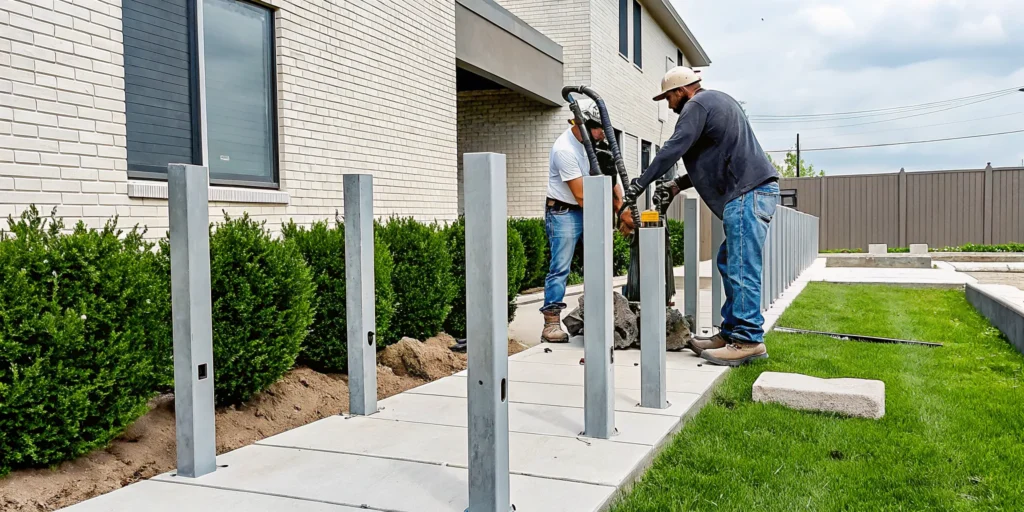
Vertical cracks in your brick siding signal that North Texas clay soil is shifting under your home. This expansive ground moves with every rain storm, pulling your heavy foundation down with it.
Helical pier installation is a specialized foundation repair method that uses large steel screws to anchor a sinking home to stable, load-bearing soil found deep underground. Experts use heavy hydraulic equipment to twist these rugged steel shafts into the ground until they reach a dense soil layer that can support the house. This method is vital in North Texas because it bypasses the weak, expansive clay that shifts and causes heavy foundations to tilt or drop over time. According to Dalinghaus Construction, this approach provides a permanent lift by transferring structural weight to dense earth while keeping your lawn and landscaping intact. Most crews finish the work in just a few days and leave your property looking as clean as it did when they arrived for the job.
If you want to stop your home from sinking, you must understand the science behind the screw. Most homeowners are surprised to see how simple the repair is once the crew starts. Here is a look at How Helical Piers Work to Stabilize Foundations and why they work so well.
How Helical Piers Work to Stabilize Foundations
Foundation settlement is a common problem for people in North Texas. The area is known for its expansive clay soil. This type of soil shrinks and swells as moisture levels change. These shifts put a lot of stress on a home’s base. To fix this, many people choose helical pile installation. This deep foundation system stops the sinking. It works by moving the weight of the house from the weak topsoil to much stronger layers deep below the surface.
The screw-like design
A helical pier is a steel shaft with round, screw-like plates. These plates are called helices, and they pull the pier into the earth as it turns. During installation, a machine turns the pier like a large screw. This direct action is not like a plain pile that you push or hammer into the soil. The shape and size of the blades matter a lot. Research shows that blade shape and shaft diameter affect how much weight a pier can hold. This design allows the pier to stay firm even when the soil around it moves.
Reaching load-bearing soil
The goal is to reach a soil stratum that is strong enough to support the home. In the Dallas area, this means going past the active clay layer. Crews drive the piers deep into the ground until they hit stable soil or rock. This layer provides a high bearing capacity that can handle the load. Once the pier is at the right depth, it acts as a strong pillar. The pier stays fixed in place because the deeper layers of earth do not change with the weather. This gives the foundation a level and solid base for years to come.
Transferring the weight
After the pier is set, a steel bracket is attached to the top. This bracket fits under the house footing so the weight of the structure can move onto the pier. This process stops the house from settling any further. In some cases, it can even lift the foundation back to its first spot. Using helical piers is a smart move for homes built on soft or loose soils. The piers provide a direct link to the firm earth far below the surface. This keeps the home safe from the damage caused by North Texas soil.
Signs Your Home May Need Helical Pier Installation
North Texas homes often face foundation stress due to the region’s expansive clay soil. This soil shrinks during dry spells and swells during wet seasons. This cycle leads to foundation settlement, which may require professional helical piers for foundation repair. Unlike normal settling, structural damage shows clear signs that the home’s weight is no longer supported. Recognizing these red flags early helps homeowners prevent more costly repairs in the future.
Cracks in interior and exterior walls
One common sign of a failing foundation is the appearance of wall cracks. Inside the home, you might notice diagonal cracks above door frames or windows. On the exterior, “stair-step” cracks often form in the brickwork or mortar. These cracks happen because the foundation is sinking into soft or loose soil. Research shows that helical piles provide high bearing capacity even in these challenging soil conditions. While tiny hairline cracks might be normal, large gaps usually indicate a need for helical pier installation.
Doors and windows that stick or jam
When a foundation shifts, the house frame becomes slightly tilted. This change in shape often makes doors and windows hard to open or close. You might notice that a door sticks at the top or bottom, or a window no longer locks correctly. Gaps may also appear between window frames and the exterior siding. These issues often stem from poor drainage or low soil density. To fix this, engineers use specific shaft diameters and blade shapes to help each pier hold more weight.
Sloping floors and chimney separation
Uneven floors are a major sign that your home needs helical pier installation. You might feel a slope when walking through a room, or notice that furniture seems to lean. In severe cases, the chimney may start to pull away from the rest of the house. This gap happens when the heavy chimney settles faster than the main house. These signs show that the home’s weight needs to move to deeper, more stable soil. Helical piers act like screws to anchor the house to load-bearing layers far below the surface.
The Helical Pier Installation Process: Step by Step
Helical pier installation is a clean and fast way to fix a foundation. The method works much like a large screw going into the ground. In North Texas, the clay soil often moves and shifts. This soil action leads to cracks in walls and floors. Helical piers stop this movement by reaching deep into the earth. The entire job often takes only one to three days to finish. By using an expert helical pile installation team, you can protect your home for years.
Getting the Site Ready
Every project starts with a clear plan. A structural expert visits the home to check the damage. They find why the foundation is sinking. This check helps the team know where to put each pier. Once the plan is set, the crew starts the site work. They dig small holes near the edge of the home. These holes expose the concrete footing. This work allows the crew to reach the spots that need support. Small holes also mean less mess for your yard.
Driving the Steel Piers
The crew uses heavy machines to install the piers. They often use a mini-excavator or a skid steer. These machines have a hydraulic drive attached. The drive turns the steel pier into the soil. The first part of the pier has screw-like plates. These plates pull the pier deep into the ground. Installers add more steel sections as the pier goes deeper. They keep going until the pier hits a layer of hard soil. As shown in studies on helical pile strength, these systems work well in soft or loose soils by reaching stronger layers below.
The crew watches the force needed to turn the pier. This is called torque monitoring. Higher force shows that the soil is getting harder and stronger. This data gives the team proof of the pier’s strength in real-time. Continuous torque monitoring ensures that every pier meets the right safety rules. It removes the doubt from foundation repair. This real-time check is a key part of a quality job.
The Steps to Fix Your Home
The following steps show how the team makes your home strong again.
- Step 1: Professional Check. A structural expert looks at the site. They find signs of sinking and map out where the piers go. This step ensures that the fix meets local rules and safety needs.
- Step 2: Site Prep. The crew digs small holes to reach the foundation footing. This access is needed for the motor to reach the steel shaft. They work with care to protect your grass and plants.
- Step 3: Driving the Pier. The team drives the lead part into the ground. They add more sections until the pier reaches strong soil. This often happens at depths between 15 and 40 feet.
- Step 4: Shifting the Weight. The crew attaches a strong steel bracket to the footing. They use hydraulic jacks to shift the weight of the home onto the piers. This move can lift the home back to its right level.
- Step 5: Final Check. The team checks the torque logs one last time. They fill the holes and clean the site. This step confirms the house is stable and the yard is clean.
Final Lifting and Support
After the piers are deep enough, the crew connects them to the home. They use a strong steel bracket to fix the pier to the foundation footing. This metal link is key for a safe weight transfer. Once the bracket is in place, the team can lift the structure. They use hydraulic jacks to slowly raise the foundation. This move can close gaps in bricks and fix stuck doors. The goal is to make the home level and stable again.
The weight of the house now sits on the steel piers. This weight goes down to the deep, stable soil. It no longer sits on the weak clay soil near the top. This change gives a long-term fix for foundation sinking. Homeowners can feel safe knowing their house is on a solid base. The process is fast, safe, and helpful for North Texas homes.
Helical Piers vs Push Piers vs Concrete Piers
Choosing the right way to fix your foundation depends on your soil and home. In North Texas, expansive clay soil often causes foundation settlement because it moves as moisture levels change. While there are a few ways to fix this, helical pier installation is often the best choice for these tough soil conditions.
Three common foundation repair systems
Helical piers are steel shafts with screw-like plates that pros screw into the ground. This method removes the need for big holes or waiting for concrete to cure. Push piers are driven into the soil using the weight of the house to push them down. They work well for heavy homes that sit on top of very deep, stiff soil. Concrete piers are an older choice that needs much more digging and time.
Helical pier installation is a minimally invasive process that needs less digging than other ways. Since they do not use the weight of the house during the install, they work well for light buildings, decks, or porches. This helical pier installation method is also vibration-free, which keeps nearby walls and floors safe from extra damage.
Comparing pier performance and installation
| Feature | Helical Piers | Push Piers | Concrete Piers |
|---|---|---|---|
| How it installs | Screwed into soil | Driven into ground | Poured into holes |
| Soil needs | Best for clay soil | Needs stiff soil | Needs solid base |
| Access needs | Limited-access areas | Needs house weight | Needs large area |
| Wait time | Ready right away | Ready right away | Must cure for days |
| Vibration | Vibration-free | Low vibration | Medium vibration |
Why helical piers work best for local homes
For most Dallas-area homes, helical piers give the best results. They reach deep into stable soil layers even if the top soil is weak. They can be installed in tight areas where large tools cannot reach. This makes them a great choice for many kinds of properties. According to Family Handyman, these deep systems are a top way to fix a home that is sinking or failing.
Concrete piers can take days to get hard, but helical piers give support at once. This lets our team lift or steady your home right away. A 25-year warranty from the maker keeps your fix safe for a long time. If you see cracks or uneven floors, picking the right pier is the first step to a fix that lasts.
What Affects the Cost of Helical Pier Installation?
The cost of helical pile installation depends on many factors. Most home repair jobs take one to three days to finish. But the exact price is based on the needs of your home and the soil under it. While this method may cost more than other ways, it offers a permanent path to fix your house. Many people find the cost is worth it for a long-term fix.
Number of piers and soil depth
The total number of piers is the largest part of the cost. A team must find each area that needs support. Each pier must also go deep enough to reach firm ground. In the Dallas area, this firm soil is often 15 to 40 feet deep. A study on pile design shows that shaft size and plate shape change how much weight a pier can hold. Longer piers with more parts will add to the total price.
Site access and house layout
Where the team needs to work also changes the cost. Helical piers are great for limited access areas where big machines cannot fit. If the repair is on the outside of the home, it is often fast. But if a pier must go inside, the team has to cut through the concrete floor. This extra work and cleanup will add to the bill. Most jobs come with a 25-year warranty, which helps keep your home safe for years.
Why Solid Base Foundations Is the Trusted Choice for Helical Piers in DFW
Choosing the right team for helical pier installation is key to a stable home. We have over 18 years of experience helping people in the Dallas-Fort Worth area. Our team knows how the local clay soil moves and how to fix the damage it causes. We offer a 25-year manufacturer’s warranty on our pier systems to give you peace of mind.
Deep local knowledge and proven results
North Texas has expansive clay soil that can shrink or swell as moisture levels change. This movement is a main cause of house settling in our area. We use foundation repair methods that work with these local soil traits. Our 4.8-star rating with over 1,300 reviews shows our commitment to doing high-quality work for every client.
Patented tools and expert training
As part of the Foundation Supportworks network, we use patented tools and get special training. These helical piles offer high bearing capacity even in soft or loose soil, as noted in academic research. We can also help you decide between push piers vs helical piers for your specific project. Our goal is to provide a long-lasting fix for your structural issues.
Easy process and free estimates
We try to make the repair process as simple as possible for you. We start with a free estimate to look at your home and find the best plan. Our team installs piers all year, so you do not have to wait for a certain season to get help. We focus on giving you clear facts so you can make the best choice for your property.
Frequently Asked Questions
How deep do helical piers need to be installed?
The depth for helical pier installation depends on the local soil. These piers must reach deep, stable layers that can hold the weight of your home. In the North Texas area, this often means going down 15 to 40 feet. According to Dalinghaus Construction, workers screw these steel shafts into the ground until they find a soil layer strong enough for the load. This depth ensures your foundation stays firm even when surface clay shifts.
What machinery is used for helical pier installation?
Workers use small, powerful machines to install helical piers. Most crews use a mini-excavator or a skid steer loader. These machines have a special hydraulic tool that screws the pier into the ground. As stated by Foundation Repair, these tools monitor the force used to ensure the pier is deep enough to hold the house. This equipment is small enough to fit in tight yards without causing major damage to your lawn or trees.
Can helical piers lift a foundation?
Yes, helical piers can lift a foundation back to its right spot. Once the piers reach deep soil, workers attach steel brackets to your home. They use hydraulic jacks to slowly raise the structure. According to Thrasher, this process can level floors and close gaps in walls. While some homes only need to be stable, many owners use this method to fix old settling damage and make the house level again.
Is helical pier installation noisy or disruptive?
Helical pier installation is much quieter than other repair methods. The process is vibration-free, so it will not shake your home or bother the neighbors. Because the piers screw into the dirt, workers do not need to dig giant holes or use heavy hammers. As Dalinghaus Construction notes, this makes it a safe choice when working very close to other buildings. The work is fast, clean, and has a low impact on your landscaping.
How long does it take to install helical piers?
Most foundation repair jobs with helical piers are finished in one to three days. The exact time depends on the size of your home and how many piers you need. According to Thrasher, the work is fast because workers do not have to wait for concrete to dry. Once the piers are in the ground and the house is level, the crew can clean up and leave your property looking good right away.
Ready to schedule a free foundation inspection?
Foundation problems only get worse with time. Waiting to fix your home lets the North Texas clay soil cause more damage. This leads to higher repair costs and a lower home value later. Acting now stops the sinking and gives you peace of mind that your home is safe. Our team can set up a plan today to reach solid soil and keep your home level. You do not have to live with stuck doors or cracked walls. We offer fast help and clear answers to protect your largest asset from local soil issues. Our experts use proven methods to fix your structure for the long term. We can walk you through the entire process and give you a clear price.
Ready to schedule a free foundation inspection and estimate? Call (940) 365-4221 to set up your appointment.