
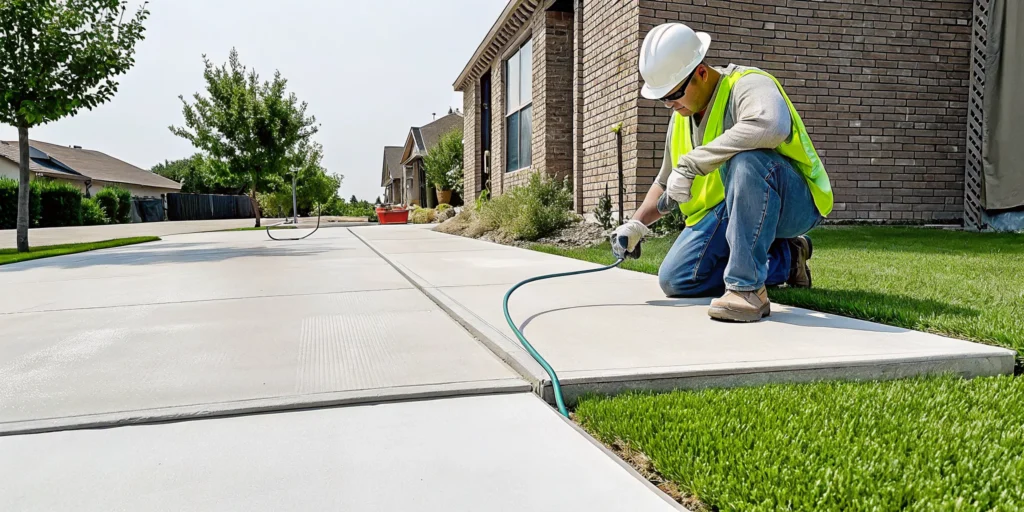
That sinking feeling you get when you see a dip in your pool deck or a trip hazard on your walkway is completely valid. Uneven concrete isn’t just an eyesore; it’s a clear signal that something is wrong with the ground supporting it. Here in Denton, the problem is almost always the soil. Whether it’s being washed away by poor drainage or shrinking during our hot, dry summers, unstable soil leaves voids beneath your concrete slabs. This guide is designed to walk you through why this happens and what your repair options are. Before you can make an informed decision, you need to find a professional who repairs sinking concrete near Denton TX and can accurately diagnose the problem without trying to sell you on a full replacement you might not need.
Key Takeaways
- Look Beneath the Surface: Sinking concrete is rarely a problem with the slab itself; it’s a sign that the soil underneath is failing. In Denton, this is often caused by our expansive clay soil, poor water drainage, or erosion.
- Repair Is Usually the Smarter Choice: Don’t assume you need a full replacement. Modern repair methods like polyjacking can lift and stabilize your existing concrete, saving you up to 70% of the cost and disruption of tearing everything out.
- Control Water to Protect Your Investment: To prevent concrete from sinking again, you must manage water flow. Make sure your gutters, downspouts, and yard grading all work to direct rainwater far away from your concrete slabs and foundation.
Why Is Your Denton Concrete Sinking?
It’s unsettling to see your once-perfect driveway, patio, or sidewalk start to sink and crack. If you’ve noticed uneven concrete around your Denton home, you’re not alone. This is a common issue across North Texas, largely thanks to our unique soil and weather patterns. Your concrete slab is heavy, and it relies completely on the ground beneath it for support. When that ground gives way, the concrete follows.
The good news is that sinking concrete doesn’t mean you have to tear everything out and start over. Most of the time, the problem lies with the soil underneath, not the concrete itself. Understanding what’s causing the issue is the first step toward a lasting fix. The main culprits are usually soil erosion, poor water drainage, or even tree roots creating trouble just below the surface. Identifying the root cause is key to choosing the right concrete repair method and preventing the problem from happening again.
Soil Erosion and Shifting
The ground beneath your home is more active than you might think, especially in Denton. Our area is known for its expansive clay soil, which acts like a sponge. When it rains, the clay absorbs water and swells up; during dry spells, it shrinks and cracks. This constant cycle of expansion and contraction causes the ground to shift, creating empty pockets, or voids, under your concrete slabs.
Without a stable base, the heavy weight of the concrete has nowhere to go but down, causing it to sink and crack. Water can also simply wash away the soil from under the slab, a process called erosion. This leaves even larger voids and leads to more significant sinking. This unstable soil is the same reason many homes in our area also require foundation repair.
Poor Drainage and Water Pooling
Water is the number one enemy of stable soil. If you have poor drainage around your property, water can cause serious problems for your concrete. Things like clogged gutters, downspouts that dump water right next to your driveway, or improper grading can lead to water pooling on and around your concrete slabs.
This excess water saturates the soil underneath, weakening it and washing it away over time. Leaky sprinkler systems or broken pipes can also create a constant source of moisture that erodes the soil base. Once that supportive soil is gone, the concrete slab is left unsupported and will inevitably sink and settle. Managing water flow is one of the most important things you can do to protect your concrete surfaces.
Tree Roots and Organic Decay
While we love our beautiful Texas trees, their roots can be a hidden source of concrete trouble. As large tree roots grow and spread out in search of water, they can push their way under your concrete. This can lift and crack the slab or displace the soil around it, creating unstable ground.
Another issue is organic decay. If a tree was removed from your yard years ago but the stump and roots were left buried, they will eventually rot. As this organic material decomposes, it leaves behind a significant void in the soil. The same can happen with any construction debris that was buried when your home was built. This empty space creates a weak spot, and the concrete above it will eventually sink to fill the gap. You can see examples of complex issues we’ve solved on our Our Work page.
Signs Your Concrete Needs Repair
Noticing a change in your concrete can be unsettling, but catching problems early is the best way to prevent them from becoming bigger, more expensive headaches. Most concrete issues are symptoms of what’s happening in the soil underneath. Here in North Texas, our expansive clay soil is notorious for shrinking and swelling with moisture changes, which can wreak havoc on slabs. If you see any of these signs around your property, it’s a good idea to have a professional take a look. Ignoring them can lead to more significant structural damage and safety risks down the road. Knowing what to look for is the first step toward a lasting solution.
Uneven or Sunken Slabs
One of the most obvious signs of trouble is a concrete slab that has visibly dropped or become uneven. You might notice your patio slants toward your house, a section of your driveway is lower than the rest, or your pool deck has a dip in it. This isn’t just a cosmetic issue; a sinking slab is a clear indicator that the soil beneath it can no longer provide adequate support. This can create a dangerous tripping hazard for your family and guests. Addressing the root cause with professional concrete repair is essential to stabilize the slab and prevent further sinking.
Cracks and Gaps
While tiny hairline cracks can sometimes be a normal part of concrete curing, larger, growing cracks are a red flag. Pay attention to cracks that are wider than a quarter-inch, run the entire length of a slab, or have one side that is higher than the other. These often signal that the slab is under stress from soil movement. You might also notice that the slab feels unstable when you walk on it. In some cases, this shifting can even cause nearby doors or windows to stick, which could point to a more serious foundation issue.
Water Pooling on Surfaces
Your driveway, patio, and walkways were designed to shed water away from your home’s foundation. If you start seeing puddles forming on these surfaces after it rains, it means the concrete has shifted and created low spots. This standing water does more than just make a mess. It can seep into cracks and saturate the soil underneath, weakening it further and making the sinking problem worse. Proper drainage is critical for the stability of your concrete, so pooling water is a sign that shouldn’t be ignored.
Obvious Tripping Hazards
An uneven edge between two concrete slabs is more than an eyesore; it’s a serious safety risk. A raised edge on a walkway, pool deck, or patio can easily cause someone to trip and fall, creating a liability for you as a homeowner. These hazards are a direct result of soil problems, such as soil shrinking during our hot Texas droughts or washing away after heavy rains. If you have a noticeable trip hazard on your property, it’s a clear sign that your concrete needs professional attention. You can get a clear picture of the problem by scheduling a free estimate with an expert.
How to Fix Sinking Concrete: Your Repair Options
Seeing your concrete sink can be alarming, but the good news is you have options. Fixing sinking concrete isn’t a one-size-fits-all job. The best approach depends on what’s causing the problem, how much the slab has sunk, and the condition of the concrete itself. From modern foam injections to heavy-duty structural supports, there’s a solution for almost every situation. Understanding these methods can help you have a more informed conversation with a professional. Let’s walk through the most common concrete repair techniques so you can feel confident about your next steps.
Polyurethane Foam Injection (Polyjacking)
Think of polyjacking as a minimally invasive procedure for your concrete. This modern technique involves drilling a few small, dime-sized holes into the sunken slab. We then inject a high-density polyurethane foam that expands underneath the concrete, filling any voids in the soil and gently lifting the slab back to its original level. The foam cures quickly, meaning you can use your driveway, patio, or sidewalk again in a matter of hours, not days. It’s also incredibly lightweight and waterproof, so it won’t add extra stress to the soil and helps prevent future erosion. This makes it an excellent, long-lasting solution for most sinking concrete problems around your home.
Mudjacking (Slabjacking)
Mudjacking is the classic approach to lifting concrete. It works on a similar principle to polyjacking, but instead of foam, it uses a slurry mixture of soil, cement, and other materials. This “mud” is pumped through larger holes drilled into the slab to fill gaps and raise the concrete. While it can be an effective method for certain situations, the material is much heavier than polyurethane foam. In areas with unstable soil like we have here in North Texas, adding that extra weight can sometimes cause more settling down the road. The process is also typically messier and requires a longer cure time before you can use the surface again.
Piering and Helical Piers
When sinking concrete is a symptom of a deeper problem with unstable soil, piers offer a permanent structural solution. Instead of just lifting the slab, this method supports it from below. Helical piers, which look like giant steel screws, are driven deep into the ground until they reach solid, stable soil or bedrock. Brackets are then attached to the piers and the concrete slab, transferring the weight of the slab to this stable foundation. This is the most robust fix for significant sinking and is often the best choice when you need to address underlying foundation issues to prevent the problem from happening again. It’s a true, long-term fix for serious situations.
Full Slab Replacement
Sometimes, a concrete slab is too cracked or deteriorated for a repair to be practical. In these cases, the only option is a full replacement. This involves breaking up and hauling away the old, damaged concrete and pouring a brand-new slab. While this gives you a fresh surface, it’s the most disruptive, time-consuming, and expensive option. It’s important to remember that replacement doesn’t fix the underlying soil problem that caused the original slab to sink. Without addressing the poor soil, your new slab could eventually sink too. That’s why we often recommend exploring repair options first.
What Does Concrete Repair Cost in Denton?
One of the first questions every homeowner has is, “How much is this going to cost?” It’s a fair question, and the answer depends on your specific situation. The type of repair, the size of the damaged area, and the underlying cause of the problem all play a role in the final price. While I can give you some general price ranges to help you budget, the only way to get a precise number for your property is to have a professional take a look. That’s why we always start with a free, no-obligation estimate to give you a clear and accurate picture of the investment required to fix your concrete for good.
Price Ranges by Repair Method
The method used for your concrete repair is one of the biggest factors in determining the cost. Generally, you can expect a professional concrete leveling job to fall somewhere between $750 and $6,000, though some larger projects can cost more. The two most common methods are mudjacking and polyurethane foam injection (polyjacking). According to a guide on leveling costs, mudjacking is often the most budget-friendly option, with prices typically ranging from about $585 to $5,400. Polyjacking, which uses a more advanced foam material, tends to be more expensive, with costs running from $875 to over $8,100. The higher price reflects the cost of the high-tech materials used.
Factors That Influence the Final Cost
Beyond the repair method, several other details will influence your final quote. The overall size of the job is a major one; repairing a small section of a sidewalk will naturally cost less than lifting an entire driveway. Accessibility also matters. If the damaged concrete is in a hard-to-reach area, it may require more time and specialized equipment. The current condition of your concrete is another key factor. A single, clean crack is a simpler fix than a slab that is broken into multiple pieces. Our team evaluates all these elements during your inspection to provide a comprehensive and accurate estimate for your specific concrete repair project.
Why Leveling Is Often More Affordable Than Replacement
When you see a sunken or cracked slab, you might assume you need to tear it all out and start over. The good news is that this is rarely the case. Choosing to level your existing concrete instead of replacing it can save you a significant amount of money, sometimes up to 70%. Replacement is a massive undertaking that involves demolition, removal of old concrete, preparing the ground, and pouring a brand-new slab. This process is not only expensive but also time-consuming and messy. Concrete leveling, on the other hand, is a much faster, less invasive process that uses your existing slab. It’s a smart, effective solution that restores your concrete without the high cost and disruption of a full replacement.
Finding a Concrete Repair Contractor in Denton
When your driveway, patio, or sidewalk starts to sink, finding the right person for the job can feel like a big task. You need a contractor who not only understands the problem but also has the right tools and experience to fix it for good. In Denton, you have options, but the key is to find a reliable professional who can provide a lasting solution without breaking the bank. The right choice will save you from future headaches and ensure your property is safe and stable.
Why Choose Solid Base Foundations
As you search for a dependable contractor in the Denton area, you’ll find that Solid Base Foundations specializes in exactly these kinds of problems. We fix sinking and uneven concrete using advanced methods like polyurethane foam injection, a clean and effective technique for lifting slabs back into place. Our team of experienced, skilled professionals understands the unique soil conditions in North Texas that often cause these issues. We use patented, proven products to deliver a long-lasting concrete repair that restores your property’s safety and appearance. We’re proud to be a local company dedicated to providing our neighbors with honest work and reliable results.
What to Look for in a Local Pro
When you’re ready to hire a contractor, it’s smart to do a little homework to protect your investment. A great first step is to gather several free estimates from different local companies. This helps you compare costs and understand the proposed scope of work. Don’t just look at the price tag; consider the company’s reputation by reading online reviews and looking at examples of our work. A trustworthy contractor will be transparent about their methods and materials and will happily answer your questions. Make sure any company you consider is properly insured for your protection. We encourage you to include Solid Base when you request your free estimates.
How to Choose the Right Concrete Repair Contractor
Finding the right person for the job is the most important step in getting a lasting concrete repair. A great contractor will not only fix the visible problem but also address the root cause, ensuring your concrete stays stable for years to come. But with so many options out there, how do you pick the best one? It comes down to doing a little homework. By focusing on a few key areas, you can feel confident that you’re hiring a true professional who will treat your home with care and expertise.
Check Ratings and Reviews
Before you even pick up the phone, spend some time looking at what past customers have to say. Online reviews on sites like Google and Yelp are a great starting point. Don’t just look at the star rating; read through the comments to find patterns. Are customers consistently happy with the communication, professionalism, and final results? A few negative reviews aren’t always a dealbreaker, but a long history of positive feedback is a strong signal of quality. Also, check the contractor’s website to see if they showcase examples of their past projects. This gives you a direct look at the quality of their work.
Verify Licensing and Insurance
This step is all about protecting yourself. A reputable contractor should be fully licensed to work in your area and carry both general liability insurance and worker’s compensation. Licensing proves they meet local standards, while insurance protects you from any liability if an accident happens on your property. Don’t be shy about asking for proof of their credentials. Any professional company will be happy to provide documentation. This simple check gives you peace of mind and separates the serious professionals from the rest. You can often find this information on a company’s about page, which speaks to their transparency.
Ask About Methods, Materials, and Warranties
Not all concrete repairs are created equal. When you talk to a contractor, ask them to walk you through their proposed solution. What method will they use to lift and level your concrete? What kind of materials are involved? A good contractor will explain the pros and cons of their approach, whether it’s polyurethane foam injection or another technique. It’s also crucial to ask about warranties. A strong warranty shows that the company stands behind its concrete repair services and gives you a safety net in case any issues arise down the road.
Get Multiple Free Estimates
It’s always a good idea to get at least two or three estimates before making a final decision. This helps you get a feel for the average cost and what different companies include in their proposals. Be cautious of any bid that is significantly lower than the others, as it might indicate cut corners or lower-quality materials. Use the estimate process as an interview. Pay attention to how the representative answers your questions and whether they seem knowledgeable and trustworthy. Ultimately, you want to choose the contractor who offers the best value, not just the lowest price. When you’re ready, you can request a free estimate to get the process started.
Repair or Replace? Making the Right Call for Your Concrete
One of the biggest questions homeowners face with damaged concrete is whether to repair it or tear it out and start over. It’s a tough call. On one hand, you want a solution that lasts. On the other, you have a budget to consider. The right choice depends on two key things: the condition of the concrete itself and the stability of the soil beneath it.
Making this decision can feel overwhelming, but it doesn’t have to be. While a professional assessment is always the best way to get a definitive answer, you can learn to spot the signs that point toward one path or the other. Understanding the difference will help you have a more informed conversation with a contractor and choose the best long-term solution for your property. If your concrete is showing signs of trouble, a professional concrete repair can restore both its function and appearance.
When Repair Is the Best Option
If your concrete slab is still in one piece but has simply sunk, repair is almost always the smarter, more cost-effective option. Methods like polyjacking can lift and level uneven driveways, patios, and sidewalks for significantly less than the cost of a full replacement. This approach is not only easier on your wallet but also much less disruptive. Instead of days of demolition and construction, a repair can often be completed in just a few hours. Modern repair techniques address the root cause by stabilizing the soil, providing a durable fix without adding more weight to already-compromised ground. This is especially important when the same soil issues could affect your home’s foundation.
When Replacement Is Necessary
Sometimes, a concrete slab is too far gone for a patch-up job. If your concrete is severely damaged, showing a web of deep cracks, crumbling edges, or has broken into multiple pieces, replacement is likely the only lasting solution. Pouring a new slab is also necessary when the ground underneath has eroded so significantly that it can no longer provide adequate support. Trying to repair a slab that is structurally compromised is like putting a bandage on a broken bone; it’s a temporary fix that won’t solve the underlying problem. In these cases, the best course of action is to remove the old slab, properly prepare a new base, and pour fresh concrete. If you think your concrete is beyond repair, it’s time to get a professional opinion.
How to Prevent Your Concrete from Sinking Again
After you’ve invested in repairing your concrete, the last thing you want is to see it sink again. The good news is that you can take proactive steps to protect your driveway, patio, or walkway for the long haul. Preventing future issues often comes down to managing the two main culprits behind sinking slabs: water and unstable soil. By addressing these root causes, you can maintain a solid, level surface and protect your home’s value. Here are a few key strategies to keep your concrete stable and secure.
Improve Your Property’s Drainage
Water is the number one enemy of stable concrete. When it pools near or under your slabs, it erodes the soil, creating voids that cause the concrete to sink and crack. To prevent this, make sure your gutters and downspouts direct water at least five feet away from your foundation and concrete surfaces. The ground around your home should also have a gentle slope, dropping about six inches over ten feet, to guide rainwater away naturally. If you constantly see puddles on your patio after it rains, it’s a clear sign your drainage needs attention. Addressing these water issues is a critical first step in long-term concrete repair.
Stabilize the Soil Under Your Slabs
Here in the Dallas area, we have a lot of expansive clay soil. This type of soil shrinks and swells dramatically with changes in moisture, which puts a lot of stress on the concrete above it. After your slab is lifted, it’s important to ensure the soil beneath it remains stable. In some cases, professionals can inject special materials, like polyurethane foam, to strengthen the soil and fill any remaining voids. This process helps create a more solid, reliable base that is less susceptible to the shifting and settling that caused the initial problem. This is a job best left to experts who understand our local soil conditions and have the right equipment.
Schedule Routine Concrete Inspections
Ignoring a small crack or a slightly uneven spot can lead to much bigger, more expensive problems down the road. One of the easiest ways to protect your investment is to simply pay attention. A few times a year, take a walk around your property and look for early warning signs: new cracks, widening gaps, or areas where water starts to pool. Catching these issues early helps you act before they become major headaches. If you see something that doesn’t look right, don’t hesitate to get a professional opinion. A quick inspection can give you peace of mind or a plan of action, and many companies offer free estimates to assess the situation. You can always contact us to take a look.
Related Articles
- Ultimate Guide to Foundation Repair Options
- How to Fill Large Cracks in Concrete Like a Pro
- Concrete Repair – Solid Base
- Foundation Repair Cost: The Ultimate 2026 Guide
- A Homeowner’s Guide to Foundation Repair Services
Frequently Asked Questions
How long does a typical concrete repair take? One of the best parts about modern concrete leveling is how fast it is. For most projects, like a sunken driveway or patio section, the repair itself only takes a few hours. With a method like polyjacking, the foam cures very quickly, so you can usually walk on the surface within 30 minutes and drive on it after a few hours. It’s a huge difference from a full replacement, which can take days of demolition and construction.
Is concrete leveling a permanent fix? When done correctly by a professional, concrete leveling is a very durable, long-term solution. The high-density polyurethane foam we use is waterproof, so it won’t wash away, and it doesn’t break down over time like the organic materials in soil. It effectively creates a new, stable base under your slab that resists the soil erosion and shifting that caused the problem in the first place.
Will the repair process damage my yard or landscaping? This is a common concern, and it’s why we prefer using polyurethane foam injection. The process is minimally invasive. We drill a few small, dime-sized holes in the concrete itself and don’t need to bring heavy, lawn-destroying equipment onto your property. Unlike a full replacement that requires major excavation, our goal is to fix your concrete with as little disruption to your surrounding yard as possible.
My concrete is cracked and sunken. Can you fix both problems at once? Yes, absolutely. Sinking is often what causes the stress that leads to cracks. When we lift the sunken slab back to its proper level, it relieves that pressure, and the cracks often close up significantly. After the slab is stabilized, we can seal any remaining cracks to prevent water from getting in and causing future problems, leaving you with a surface that is both level and secure.
Why is leveling often a better choice than just replacing the concrete? Leveling is usually a better value because it addresses the root of the problem, not just the symptom. Simply pouring a new slab of concrete doesn’t fix the unstable soil underneath, so your new slab could eventually sink just like the old one did. Concrete leveling, on the other hand, stabilizes the soil and lifts your existing slab for a fraction of the cost and time of a full replacement, making it a smarter, more efficient long-term solution.