
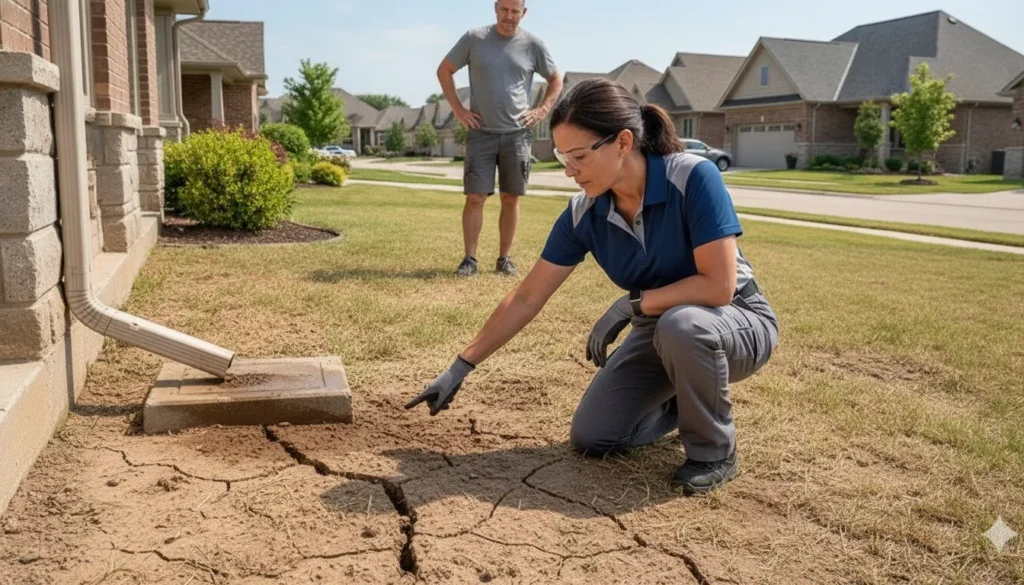
North Texas foundations face a soil problem that changes with the weather. The expansive clay beneath much of the Dallas area can shrink during prolonged drought, then swell after heavy rain. Those opposing movements can shift the support beneath your home, even when the foundation itself has not changed. That is why homeowners across the metroplex ask whether dry soil vs wet soil foundation movement is the bigger threat. And the honest answer depends less on the soil than on how quickly its moisture swings.
Understanding dry soil vs wet soil foundation movement helps you respond before seasonal moisture swings become uneven settlement, heave, or new cracking. Keeping moisture more consistent around the foundation is the key preventive step. In short, both extremes are risky for the expansive clay under North Texas homes; the most dangerous condition is a rapid swing from one extreme to the other.
Clay volume can change by up to 30 percent as moisture fluctuates. Which is why the ground can pull away from your foundation in summer and press upward against it after a heavy storm. Neither extreme is a verdict on its own; what matters is how evenly you manage the soil year-round. A practical plan starts with understanding how soil moisture transfers movement into the structure, then managing watering. Drainage, and runoff throughout the year so the clay stays closer to one consistent condition.
Request a free foundation estimate or call (940) 365-4221
Why Soil Moisture Around the Foundation Is the Real Problem
North Texas foundations contend with a material that responds dramatically to changing moisture: expansive clay formed in the region’s blackland prairie. During drought, the clay loses water and contracts. After prolonged rain, it absorbs water and expands. The soil type matters because of that capacity, but the damaging force comes from the volume swing. When moisture changes unevenly or too quickly, the foundation no longer rests on consistent support.
Expansive clay soil can change volume by up to 30 percent as its moisture content fluctuates. That movement helps explain why expansive clay is considered the root cause of most foundation problems in the Dallas-Fort Worth area. A foundation may be structurally sound, yet still experience stress when the soil beneath one portion shrinks while the soil beneath another portion remains damp or swells.
Consider the difference between uniform movement and differential movement. If the soil beneath an entire structure changes in a relatively even way, the foundation has a better chance of moving as a unit. If one side dries beside a mature tree, while another side receives runoff from a downspout, each section responds differently. That uneven support can produce settlement, rotation, or heave. In other words, the concern is not simply whether soil is dry or wet. It is whether moisture remains reasonably balanced around the foundation.
How swelling clay loads a foundation
Swelling clay does more than push vertically. It can apply uplift pressure beneath a foundation and lateral pressure against foundation walls. The Texas Department of Transportation explains that uplift from swelling active clays may be evaluated over an active-zone depth of approximately 10 to 20 feet. Depending on engineering judgment and site conditions. That depth is significant: surface moisture changes can influence soil behavior well below the visible grade.
These forces do not act in a perfectly predictable pattern around every home. Drainage, vegetation, plumbing leaks, grading, shade, and seasonal weather all influence where moisture accumulates or disappears. A localized wet area can swell while nearby clay remains comparatively dry, creating the uneven pressure that causes movement.
For a closer look at the regional geology, review North Texas expansive clay soil and its role in foundation performance. Understanding that mechanism makes seasonal maintenance more practical: the goal is not to make clay permanently dry or permanently wet. But to limit abrupt, uneven changes that compromise support.
TxDOT’s geotechnical manual provides the engineering context for uplift and downdrag forces in moisture-sensitive soils. When visible cracking, sloping floors, or recurring movement appears, a site-specific inspection can determine whether soil conditions are contributing to the problem.
How Dry Soil vs Wet Soil Foundation Movement Flips with the Seasons
North Texas expansive clay does not respond to every season in the same way. During a prolonged dry spell, the soil loses moisture and contracts. During a wet season, that same clay absorbs water and expands. The direction of movement changes, but the structural concern remains: your foundation is being asked to follow uneven ground movement instead of resting on stable support.
That seasonal cycle matters because dry soil is a leading cause of foundation movement in North Texas. Moisture fluctuations can change the volume of expansive clay by up to 30 percent, creating conditions where one part of a home moves differently from another. The comparison below shows how the two conditions differ.
| Condition | Trigger | What the clay does | What can happen to the foundation | Typical first visible sign |
|---|---|---|---|---|
| Dry soil | Drought, prolonged heat, limited rainfall, or moisture drawn out by nearby vegetation | Contracts and pulls away from the foundation, creating gaps where support was previously present | The foundation can settle or drop into the unsupported area, often unevenly | New drywall or masonry cracks, sloping floors, or doors that begin sticking |
| Wet soil | Heavy rainfall, poor drainage, plumbing leaks, or concentrated water along one side of the home | Absorbs water and swells, with the greatest movement where moisture is concentrated | The foundation can heave or lift, and excess moisture can also contribute to uneven settling over time | Cracks that widen or shift, uneven floors, or movement concentrated near a wet area |
Dry-soil movement often begins when shrinking clay pulls away and leaves part of the foundation unsupported. Wet-soil movement can produce the opposite force: swelling clay may push the foundation upward. Excess moisture does not always create a clean, uniform lift, however. If water reaches only one section, the resulting difference in soil volume can lead to uneven settling across the structure.
For that reason, the question is not simply whether dry soil or wet soil is worse. Rapid swings between the two, or a sharp moisture difference from one side of your home to the other, are particularly hard on expansive clay. A leaking downspout beside one corner can be as important to address as drought-related dryness along another wall.
Understanding foundation damage from expansive soil helps you recognize why a single crack should be viewed in context. Track when it appears, look for related changes in doors or floors, and consider whether recent weather or drainage changes explain the timing. Early attention gives you a better opportunity to correct the moisture condition before movement becomes a larger structural problem.
What Happens to Your Foundation When North Texas Soil Dries Out
North Texas summers can put more stress on your foundation than a brown lawn suggests. During a prolonged dry spell, intense heat and limited rainfall draw moisture from the region’s expansive clay. As the clay dries, it contracts and pulls away from the foundation. The soil that once supported the slab or footings can lose contact, creating pockets where the structure is no longer evenly supported. Dry soil is recognized as a leading cause of foundation movement in North Texas.1
That loss of support does not always affect the entire house at once. One portion of the foundation may settle or sink while another remains on firmer soil. The resulting differential movement can place stress on framing, drywall, flooring, doors, and windows. You may notice cracks that appear or widen during a dry season, doors that begin sticking, or floors that feel less level. These signs do not identify the cause by themselves, but they are worth documenting and evaluating rather than dismissing as ordinary summer movement.
Prolonged drought is especially demanding because the drying process continues day after day. The Texas sun can bake exposed soil while shaded areas retain a different moisture level. That contrast matters in expansive clay, where uneven drying can cause one section of the foundation to lose support before the rest of the structure responds. A careful perimeter review helps distinguish a broad seasonal pattern from a concentrated problem.
Vegetation can intensify the dry zone
Large trees near the home can extract substantial moisture from the soil through their root systems. Unwatered turf and other shallow-rooted vegetation can also remove moisture from the upper soil layer, particularly during extended heat. That added demand can make the soil near one side of the foundation dry faster than the surrounding area. The result is an uneven moisture pattern, which increases the potential for localized shrinkage and settlement. If you are tracking clay soil foundation damage signs, note whether cracks or other changes are concentrated near mature landscaping.
Dry conditions matter during concrete work, too
Soil moisture is important before a concrete footing or slab is poured, not only after the home is complete. Extremely dry soil can draw water from the concrete mix before it properly cures. That moisture loss can compromise the concrete’s structural integrity, according to guidance on soil conditions during footing pours.2 Proper site preparation and attention to soil conditions help create a more reliable base from the beginning.
When drought has already created visible movement, watering alone may not restore lost support or correct a structural shift. Consistent moisture management can reduce future extremes, while a professional assessment can determine whether the slab or footings have settled and what conditions contributed to it.
What Happens When Wet Soil Saturates Clay Around Your Foundation
Heavy rain is not automatically a foundation problem. The risk rises when water remains concentrated around the structure, whether it comes from repeated storms. A downspout that discharges beside the footing, poor grading, or a plumbing leak. North Texas homes sit in expansive clay that responds to changes in moisture. Once that clay becomes over-saturated, it absorbs water, swells, and changes the support conditions beneath and beside your foundation.
Swelling clay can push upward and sideways
As saturated clay expands, it can exert upward pressure against parts of a foundation. That movement is commonly called heave. It rarely affects every point equally because soil composition, moisture levels, foundation loading, and drainage conditions vary around the property. The result can be a floor or wall section that moves differently from the rest of the structure.
Swelling soil can also press laterally against foundation walls, not just vertically beneath footings. The Texas Department of Transportation explains that uplift from active swelling clays is evaluated over an active zone that may extend roughly 10 to 20 feet deep. Depending on engineering judgment and site conditions. Its guidance also recognizes the lateral forces associated with expansive soil. Read the TxDOT guidance on swelling-clay uplift forces.
Localized water creates localized movement
A leaking supply line, drain, or sewer pipe can saturate one limited area while the surrounding soil remains comparatively stable. That uneven moisture distribution creates differential movement. One section of the foundation may heave or settle while nearby sections respond less dramatically, placing stress on connected walls, floors, framing, and finishes.
Even without a plumbing leak, a short downspout or a low area beside the home can create the same pattern over time. Excess moisture can contribute to uneven settling in concrete foundations, while repeated wet and dry cycles keep changing the clay’s volume. This is one reason it is important to understand foundation damage from expansive soil, rather than treating each crack or sloping area as an isolated cosmetic issue.
Drainage controls the conditions you can control
Gutters and downspouts should carry roof water away from the foundation, and grading should encourage surface water to move away rather than collect beside the structure. Where site conditions call for it, a drainage solution such as a French drain can help reduce over-saturation. The goal is not to make the soil bone-dry. It is to maintain more consistent moisture around the perimeter and limit concentrated water that gives expansive clay a reason to swell unevenly.
How to Manage Soil Moisture Year-Round to Protect a Foundation
In North Texas, prevention starts with consistency. Expansive clay soil responds to every drought, storm, irrigation change, and plumbing leak by changing volume. The goal is not to keep the soil permanently wet or permanently dry. It is to keep moisture as consistent and uniform as possible around the entire foundation, limiting the uneven movement that can lead to differential settlement.
During a prolonged dry spell, inspect the soil around the perimeter and water it gradually. A practical approach is a slow, deep soak a few feet away from the slab, applied evenly around the home rather than concentrated in one area. Follow local watering restrictions, and adjust for rainfall. Letting one section of the planting bed become powder-dry and then flooding it creates the same kind of abrupt moisture swing that makes clay difficult to manage. Consistent, moderate moisture supports the balance that helps clay remain more stable.
Landscaping deserves the same attention. Large, water-thirsty trees and dense vegetation close to the foundation can draw moisture from the soil and intensify shrinkage during dry weather. Consider the mature size and water demand of plants before placing them near the house. Keep irrigation coverage even. And look for dry pockets beneath trees or beside hardscape that may not receive the same amount of water as the rest of the perimeter.
Drainage is the other half of moisture management. Check that the grade slopes away from the foundation instead of directing runoff toward the slab. Clean gutters regularly, extend downspouts, and confirm that each one discharges far enough from the foundation to prevent concentrated saturation. Where surface drainage cannot solve the problem, a properly designed French drain or related drainage system can help control excess water. The objective is to prevent one side of the home from staying saturated while another side dries out.
Do not overlook hidden sources of localized moisture. A leaking supply line, drain, sprinkler, or hose connection can create a persistently wet area that moves soil differently from the surrounding perimeter. Repair plumbing and irrigation leaks promptly, then monitor the area as it returns to a more uniform condition. This matters because uneven moisture distribution, rather than moisture alone, can create localized foundation movement.
Make perimeter checks part of your seasonal routine. Look for standing water after rain, separating soil, unusually soft ground, or a widening gap between soil and slab. Monitoring moisture around the foundation is a proactive step, and it gives you an opportunity to correct drainage or watering patterns before movement becomes more significant. For more regional context, review how North Texas expansive clay soil responds to changing moisture conditions.
When Is It Time to Call a Foundation Repair Expert?
Moisture management can reduce stress on a North Texas foundation, but prevention has limits. If expansive clay has already shrunk, swelled, or shifted beneath part of your home. Watering the perimeter may help stabilize future conditions without restoring the foundation to its previous position. At that point, an inspection can distinguish an active structural movement problem from ordinary cosmetic wear.
Watch for changes that appear together or continue to worsen, especially after a drought, heavy rain, or a plumbing leak. Common warning signs include:
- Cracks in interior drywall or exterior siding, particularly when they grow or reappear after patching.
- Doors or windows that stick, bind, or no longer close squarely.
- Floors that feel uneven, slope noticeably, or develop a new change in elevation.
- Separation around door frames, trim, or other areas where finishes once met cleanly.
- Visible settlement cracks in exterior masonry, concrete, or other areas outside the home.
These signs do not establish a repair method by themselves. They do indicate that the structure deserves a closer look, especially when several occur in the same area. A professional can evaluate patterns across the home, compare interior and exterior evidence, and identify whether localized moisture is contributing to movement.
Effective repair addresses two connected problems: the structural position of the foundation and the clay soil condition that caused it to move. North Texas soil can change volume as moisture fluctuates. Swelling clay may exert both upward and sideways pressure, while shrinking clay can pull away and leave portions of the foundation with uneven support. Correcting only the visible crack or lifting only the affected section without considering the soil can leave the underlying cause in place. Review this guide to foundation settlement repair for more detail on how settlement is evaluated and addressed.
Consider arranging an assessment when warning signs persist, spread, or coincide with noticeable floor or opening changes. Early documentation gives you a clearer baseline and helps an expert recommend a measured response rather than relying on guesswork.
Request a free estimate or call (940) 365-4221.
Frequently Asked Questions
Is dry soil or wet soil worse for a foundation?
Both can damage a foundation in North Texas. Drought can shrink expansive clay and leave parts of the foundation without consistent support, while saturated clay can swell, shift, and contribute to heaving or uneven settling. The larger concern is often the cycle between extremes. Expansive clay soil can change volume by up to 30 percent as moisture fluctuates, so consistent moisture and effective drainage are important. Source.
How can I tell if the soil around my foundation is too wet or too dry?
Check several points around the perimeter rather than relying on one spot. Dry soil may look cracked, pull away from the foundation, or feel hard and dusty. Wet soil may feel soft or muddy, hold standing water, or remain saturated after nearby areas have drained. Uneven conditions around the home matter most because they can create differential movement.
Does watering around the foundation help prevent damage?
Controlled watering can help during prolonged drought by limiting severe drying and shrinkage. Apply moisture consistently around the perimeter, avoid soaking one area, and stop if water pools or runs toward the house. Watering cannot correct poor grading, plumbing leaks, or movement that has already occurred, so pair it with drainage maintenance and periodic inspections.
What are common signs of foundation damage from soil movement?
Watch for new or widening cracks in interior drywall, exterior siding, or masonry, along with doors that stick, uneven floors, or visible separation around windows and trim. A single small crack does not identify the cause by itself, but patterns that change with the seasons deserve a professional evaluation.
Should I worry about foundation damage after heavy rain?
Heavy rain becomes a concern when gutters, downspouts, grading, or drainage systems concentrate water beside the foundation. Over-saturated clay can swell and place uneven pressure on the structure, while runoff can wash soil away. Keep downspouts discharging away from the home, correct standing-water areas, and arrange an inspection if new movement signs appear.
Ready to Protect Your Foundation Through Every Season?
Dry and saturated clay can both affect how your foundation is supported. A professional inspection can help clarify whether seasonal soil movement has played a role and what steps may help protect your home.
Request a free foundation inspection and estimate, or call (940) 365-4221.