
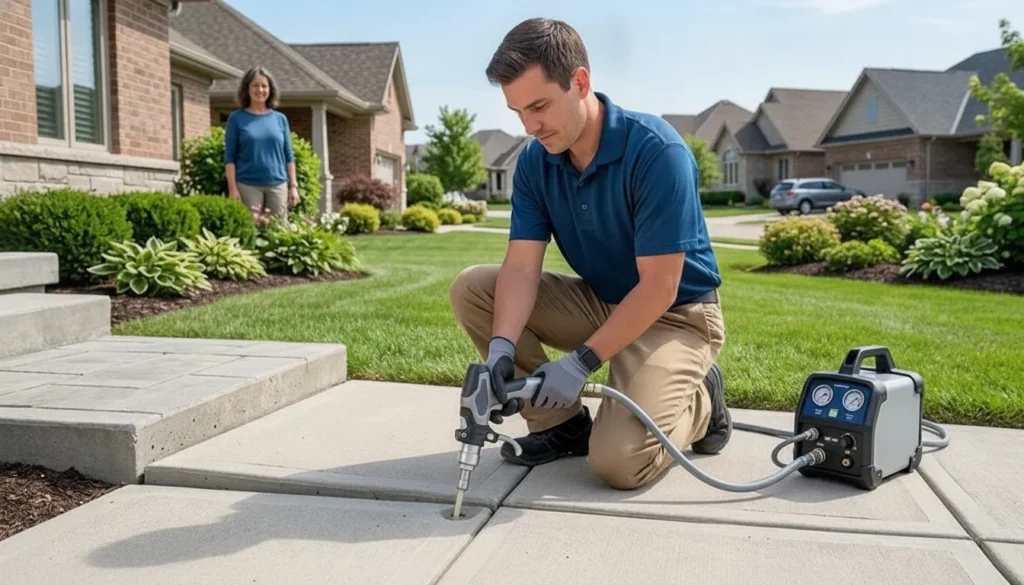
A sinking porch step can turn an ordinary entrance into a daily worry, especially when the edge catches a shoe. The rise between steps no longer feels even, or a small crack begins to widen with each season. For many Dallas and Fort Worth homeowners, the change is gradual. So it is easy to overlook a step that sits just a fraction lower than the rest until a visitor or a family member stumbles on the way in. In North Texas, these changes often trace back to expansive clay soil beneath the slab. The clay shrinks as it dries and swells after absorbing moisture, creating movement that can leave exterior concrete unsupported or out of level.
Call Today for a Free Quote
The professionals at Solid Base Foundations have been providing expert foundation repair services in the Dallas-Fort Worth area since 1993. Call (940) 365-4221 for your free estimate today!
Concrete step leveling involves injecting material beneath a settled step or slab to lift and support it back toward its original position. It can address a localized trip hazard while an inspection determines whether the settlement reflects isolated concrete movement or a broader foundation concern.
Because even a small settlement can worsen through repeated soil cycles, it is important to understand what is moving below the steps before choosing a repair. The cause begins with the distinctive soil conditions beneath North Texas homes.
Schedule a free foundation inspection for your sunken porch steps in Dallas today.
Why Concrete Steps Sink in North Texas
If your porch steps have dropped on one side, separated from the landing, or developed a noticeable slope, the problem may begin below the concrete. In North Texas, expansive clay soil responds continually to changes in moisture. That movement can settle a lightly loaded set of steps even when the concrete itself still looks mostly intact.
Blackland prairie clay shrinks as it dries and expands as it absorbs water. During repeated wet and dry cycles, the soil volume changes beneath the steps. Those changes do not occur evenly across every part of a porch or landing. One area may lose support while another shifts or rises, creating the uneven movement that makes steps sink, tilt, or pull away from adjacent concrete. This regional soil behavior is one reason homeowners should understand expansive clay soil effects on concrete.
How expansive clay moves beneath a porch
When clay dries, it can contract and leave voids beneath a slab. When rain or runoff reaches that soil, the clay absorbs water and swells again. The resulting cyclic movement can continue beneath exterior concrete, especially where shade, landscaping, roof runoff. Or poor drainage creates different moisture levels from one side of the steps to the other.
Expansive clays can exert uplift pressures of up to 5,500 pounds per square foot, enough to damage lightly loaded structures. That pressure does not mean every set of steps will move by the same amount. Building loads, soil depth, drainage patterns, and moisture differences affect how each section responds. The result is often differential movement, where one portion settles or shifts more than another.
Why drainage affects concrete step settlement
Water management plays an important role in limiting these moisture swings. Gutters and downspouts should direct runoff several feet away from the home rather than concentrating it beside the porch. Grading, irrigation, and landscape beds also deserve attention when one side of the steps stays noticeably wetter than the other. Stabilizing moisture around the structure can reduce a contributing cause, although it cannot reverse concrete that has already settled.
Cracks, gaps, rocking steps, and uneven risers can point to movement beneath the surface. For a broader look at the relationship between soil movement and surface damage, read why concrete cracks and sinks. A professional evaluation can determine whether the settlement is isolated to the steps or connected to a larger foundation concern. Then identify whether concrete step leveling is an appropriate next step.
Why Are Sunken Porch Steps a Trip Hazard?
If a porch step has dropped only an inch or developed a narrow crack, it can be easy to overlook. You may still use the entrance every day without thinking about the uneven edge beneath your feet. Guests, children, delivery workers, and anyone carrying groceries may not notice the change until a misstep occurs. Sunken porch steps are a common trip hazard and a liability concern for homeowners, so addressing the problem protects more than the appearance of your entryway.
In North Texas, expansive clay soil can keep the problem active beneath the concrete. The soil shrinks as it dries and expands when it absorbs moisture. That repeated cycling can gradually create voids or uneven support below a step. A small settlement may therefore represent an ongoing soil movement issue rather than a defect that will stabilize on its own.
Why a small settlement can become a bigger problem
Uneven concrete changes how weight moves across the step. Each footfall adds stress at the cracked or lowered area, while water can enter openings and affect the soil below. As the ground continues to shrink and swell, the step may drop farther, tilt away from the porch, or separate from the adjoining slab.
That progression can create more than an isolated tripping point. Larger gaps may allow water to collect near the porch or foundation, and continued movement can damage connected concrete. Watching the step for months without an assessment may turn a manageable correction into a broader repair concern.
Leveling restores a safer walking surface
Professional concrete leveling addresses the support beneath the settled step rather than simply covering the crack. A technician evaluates the step, the surrounding concrete, and the nearby foundation to determine whether the settlement is localized or connected to broader movement. If the existing concrete remains structurally sound, injected leveling material can lift and support it back toward the proper grade.
Restoring a more even surface removes the immediate trip hazard and helps extend the useful life of the existing concrete. If you notice a step that rocks, slopes, cracks, or no longer meets the porch evenly, consider arranging an inspection before the soil cycle creates additional movement. A clear evaluation gives you a practical path forward and helps keep your entry safe for everyone who uses it.
Concrete Step Leveling vs. Full Replacement
A settled step does not automatically mean the concrete has reached the end of its useful life. The right repair depends on the condition of the slab, the support beneath it, and whether the movement reflects a broader foundation concern. When the existing concrete remains sound and the foundation integrity is stable, leveling is typically more economical than removing and rebuilding the steps.
Both options can restore a safer, more even entry. The difference is how much of the existing structure you can preserve and how much work the repair requires.
| Consideration | Leveling | Full replacement |
|---|---|---|
| Basic approach | Inject material beneath the settled slab to lift it back toward the proper grade and support the existing concrete. | Demolish the existing steps, remove the concrete and damaged supporting material, then form and pour a new set of steps. |
| What it preserves | Keeps the existing concrete when it is structurally sound, which can reduce unnecessary demolition. | Replaces the entire step assembly, including concrete that may still be serviceable. |
| Material options | Polyjacking uses fast-expanding polyurethane foam to fill voids and lift the slab. Mudjacking uses a grout slurry pumped beneath the concrete. | Typically uses new concrete after demolition, site preparation, forming, placement, and finishing. |
| Disruption and timing | Usually involves smaller access points and less disruption because the slab stays in place. The repair process can be completed without waiting for a full new pour to cure. | Creates more noise, debris, excavation, and access disruption. The new concrete also requires curing before normal use. |
| When it fits | A practical choice when the steps have settled but remain substantially intact and the base can accept new support. | More appropriate when the concrete is severely cracked, broken, unstable, or otherwise unsuitable for lifting. |
How the condition of the base changes the decision
Leveling corrects the elevation of the existing steps, but it does not make severely deteriorated concrete sound. A professional evaluation should check for major cracking, separation, drainage problems, voids, and signs that movement extends beyond the steps. If the base is stable, preserving the slab may avoid the added disruption of replacement. If the concrete has lost its structural integrity, a new pour may provide the more dependable repair.
The lifting material also matters. Polyjacking foam expands into gaps beneath the slab, while mudjacking grout fills those gaps with a cement-based mixture. The appropriate method depends on site conditions and the repair plan, not on a one-size-fits-all promise. Because North Texas expansive clay can shrink and swell as moisture changes, correcting the step height should go hand in hand with identifying the cause of settlement.
Solid Base Foundations can inspect the steps and explain whether leveling or replacement makes sense for your property. Request a free estimate before choosing a repair path, rather than making the decision from appearance alone.
How Concrete Step Leveling Works
When your front steps settle, the visible drop is only part of the problem. A professional starts by examining the steps, landing, nearby slabs, joints, cracks, and the surrounding grade. The goal is to determine whether the settlement is localized to the steps or connected to broader foundation movement. That distinction matters because lifting one section will not address an underlying structural issue elsewhere. Solid Base Foundations evaluates that relationship before recommending a leveling method.
In North Texas, expansive clay can shrink as it dries and expand when it absorbs moisture. Those cycles can leave voids beneath exterior concrete and cause different sections to move at different rates. An assessment helps connect the condition of your steps to the soil and drainage conditions around your home, rather than treating the uneven surface in isolation.
Small access holes reach the settled area
Once the steps are suitable for leveling, the crew drills a series of small injection holes through the concrete. The holes give technicians access to the void beneath the settled step or landing without removing the entire structure. Technicians then place injection ports and monitor the slab as material enters below it.
Concrete leveling works by injecting material beneath a settled slab to lift and support it back toward its intended grade. The technician controls the placement and amount of material, making gradual adjustments while checking the step height, slope, and alignment. This measured process helps restore a safer transition between the walkway, landing, and entry.
Foam or grout fills voids and supports the step
With polyjacking, fast-expanding polyurethane foam spreads beneath the settled concrete, fills empty space, and applies upward pressure as it expands. The foam is lightweight and allows the technician to make controlled lifts. With mudjacking, a grout slurry is pumped beneath the step to fill voids and create support that raises the concrete. The appropriate method depends on the slab, access conditions, soil movement, and the assessment findings.
PolyLevel, a polyurethane foam system, cures in approximately 15 minutes. It also uses injection holes about 60% smaller than those used for mudjacking and leaves no comparable slurry mess around the work area. Once the material cures in place, the step can return to service according to the technician’s guidance. The crew closes the access holes and leaves the area ready for normal use.
Leveling corrects the settled concrete, but moisture management remains part of the long-term plan. If gutters, downspouts, or surface drainage keep concentrating water beside the steps, the expansive clay may continue to move. Addressing those conditions helps protect the repaired area and gives you a clearer path toward durable concrete and foundation care.
PolyLevel vs. Mudjacking for Porch Steps
When your porch steps settle, the repair method affects how quickly you can use the entryway and how much disruption the work creates. Both PolyLevel and mudjacking can lift settled concrete by placing material beneath the slab, but they use different materials and behave differently after injection. A professional evaluation can help determine which approach suits the condition of your steps and the soil below them.
How the two methods differ
PolyLevel, also called polyjacking, uses a fast-expanding polyurethane foam to fill voids beneath settled concrete and lift the steps back toward their intended position. The foam is lightweight and expands through the underlying spaces, allowing the technician to make controlled adjustments with minimally invasive access points.
Mudjacking pumps a grout slurry mixture beneath the steps. The slurry fills voids and creates a supportive base that raises the settled concrete. This traditional method can be appropriate in some situations, particularly when the slab and underlying conditions support that repair strategy. However, the material remains a grout mixture and generally requires more time before the repaired area fully cures.
| Consideration | PolyLevel | Mudjacking |
|---|---|---|
| Material | Expanding polyurethane foam | Grout slurry mixture |
| Typical cure time | About 15 minutes | About 24 to 72 hours |
| Injection access | About 60% smaller holes | Larger injection holes |
| Worksite impact | No mess from slurry | Slurry-based process |
For a homeowner comparing concrete leveling methods like PolyLevel or mudjacking, the practical differences matter. PolyLevel cures in approximately 15 minutes, while mudjacking may take 24 to 72 hours. PolyLevel also uses injection holes about 60% smaller than those used for mudjacking and does not leave slurry around the work area. Solid Base Foundations also provides a 25-year manufacturer warranty for its PolyLevel solution, subject to the applicable warranty terms.
Neither method removes the expansive clay soil that contributes to movement across North Texas. The right repair should address the settled steps while also considering drainage, moisture patterns, and whether the movement is isolated or connected to a broader foundation concern. If you see new cracks, uneven risers, or recurring settlement, request an assessment before the trip hazard worsens.
Managing Moisture to Keep Steps Level
Keeping concrete steps level starts with more than the concrete itself. The soil beneath and around the steps responds to every major change in moisture. Especially in North Texas, where expansive clay can shrink as it dries and swell as it absorbs water. Even a relatively small amount of clay can influence soil behavior. Research indicates that clay percentages as low as 5% by weight can control how many soils expand and contract. That soil behavior can affect concrete stability long after the steps were installed.
Water management helps reduce uneven moisture conditions that contribute to soil movement. Walk around your steps after a storm and look for pooling, washed-out soil, or runoff collecting beside the porch. These signs can point to drainage patterns that place more moisture on one side of the steps than the other. That uneven moisture can contribute to differential settlement, leaving one step edge lower than the opposite side.
Direct roof runoff away from the foundation
Start with the home’s gutters and downspouts. Leaves, debris, or damaged sections can allow concentrated roof runoff to fall beside the porch instead of moving through the drainage system. Be sure to keep gutters clear and check that downspout extensions direct water several feet away from the foundation. This simple adjustment helps prevent repeated saturation in the soil immediately beside your steps.
Also check the ground around the porch for low areas where water can collect. Soil that has eroded away from the steps can leave gaps beneath adjoining concrete or create a channel for runoff. Maintain a consistent surface that moves water away from the home rather than toward the foundation. If the grade, drainage system, or soil conditions continue to send water toward the steps, correcting only the concrete may not address the reason it settled.
Watch for movement after repairs
Moisture management supports a concrete leveling repair, but it does not stop every change in expansive soil. Keep an eye on new cracks, widening joints, rocking steps, or a gap developing between the steps and the porch. These changes can indicate ongoing movement or a broader foundation concern. A professional assessment can help determine whether the settlement is isolated or connected to other movement around the home.
For a broader maintenance approach, review this guide to concrete maintenance and leveling. When drainage improvements do not resolve unevenness, request an evaluation before the steps become a larger safety problem.
Request a free assessment before sunken porch steps create a bigger repair.
Frequently Asked Questions
How do you level sunken concrete steps?
A contractor drills small access holes and injects a lifting material beneath the settled steps. The material fills voids and supports the slab as it returns toward a safer, more even position. The crew then checks the rise between steps and the surrounding walkways.
Is it possible to lift concrete steps instead of replacing them?
Often, yes. Leveling can be a practical alternative when the steps remain structurally sound and the main problem is settlement beneath the slab. A site evaluation can determine whether lifting and supporting the existing concrete is appropriate or whether cracking and damage call for replacement.
What causes concrete steps to sink in North Texas?
Expansive clay soil is a common factor. It absorbs water, swells, dries, and shrinks, creating movement beneath lightly supported porch steps and slabs. Poor drainage, leaking downspouts, or uneven moisture around the entry can increase that movement.
Can concrete leveling fix a trip hazard on a porch?
It can correct a vertical change where a step has settled and reduce the abrupt edge that catches a foot. Leveling does not replace damaged concrete or correct every structural problem, so the full stair assembly and adjacent walkway should be inspected before selecting a repair.
What are the signs that concrete step leveling may be needed?
Watch for a tilted landing, uneven riser heights, gaps beneath a step, cracks where the porch meets the walkway, or a noticeable change in elevation. Even a small settlement can worsen as North Texas soil continues cycling between wet and dry conditions.
Ready to Address Sunken Porch Steps?
If uneven porch steps are making you hesitate at the entry, a professional inspection can clarify whether slab movement, soil conditions, or drainage is affecting the concrete. Consider the next step before a small change becomes a larger repair concern. Request a free foundation inspection for your sunken porch steps, or call (940) 365-4221 to talk to our team about a practical path forward.