
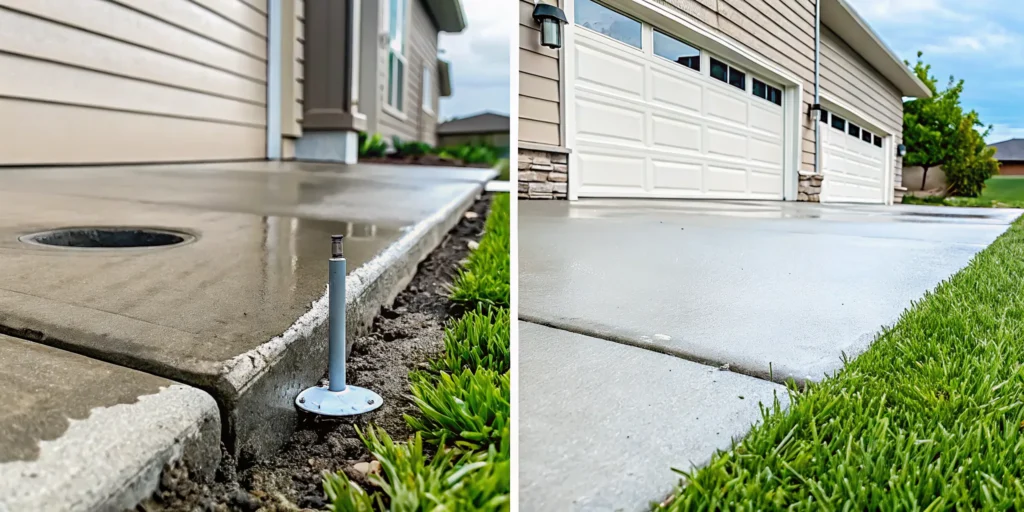
That sinking feeling you get when you see water pooling on your patio after a storm isn’t just in your head. It’s a clear sign that your concrete has settled, creating a low spot where water collects instead of draining away. This isn’t just an eyesore; that standing water can seep under the slab, wash away the soil, and even threaten your home’s foundation. This leads many Dallas homeowners to ask, can PolyLevel fix drainage problems around concrete? The answer is a definitive yes. By injecting a high-density foam to lift the slab back to its proper grade, PolyLevel restores the original slope, guiding water away from your home and solving the issue at its source.
Key Takeaways
- Stabilize the soil for a permanent fix: Sinking concrete is often a symptom of unstable ground. PolyLevel solves the core issue by injecting a lightweight foam that fills empty spaces and compacts the soil, creating a solid base that prevents future settling.
- Correct the slope to stop water pooling: Lifting a sunken slab with PolyLevel restores its original grade, ensuring rainwater flows away from your home’s foundation instead of collecting in puddles. This directly solves drainage issues caused by settled concrete.
- Get your space back almost immediately: The PolyLevel process is minimally invasive and incredibly fast. Since the foam cures in about 15 minutes, you can walk on your patio or even drive on your driveway the same day, avoiding the long downtime of a full replacement.
What is PolyLevel and How Does It Work?
If you’ve noticed your driveway, sidewalk, or patio starting to sink and crack, you’ve probably wondered what it takes to fix it. The good news is you don’t always need a full replacement. PolyLevel is a modern, minimally invasive solution for lifting and leveling uneven concrete. Think of it as a high-tech foam that brings sunken slabs back to their original position, creating a stable and even surface without the mess and hassle of traditional methods.
Unlike old-school mudjacking, which uses a heavy slurry of mud and concrete, PolyLevel is a lightweight structural-grade polymer. It’s an effective way to handle all kinds of concrete repair jobs, from a dipping pool deck to a hazardous, uneven walkway. The process is quick, clean, and incredibly precise, allowing a professional team to restore your concrete with minimal disruption to your home and daily life. It’s a smart fix that addresses both the symptom (the sunken slab) and the cause (unstable soil underneath).
How the Foam Works
The magic of PolyLevel lies in its unique polyurethane foam. It starts as two separate liquids that are combined right at the injection site under your concrete slab. Once mixed, a chemical reaction causes the foam to expand, filling every empty space and void in the soil below. This controlled expansion generates a powerful lifting force, gently raising the concrete back into place.
Because the foam is so dense, it’s strong enough to support the weight of the slab and anything on top of it, yet it’s surprisingly lightweight. This means it won’t add extra stress to the already weak soil, which is a common problem with heavier materials like mudjacking slurry. The foam also cures into a waterproof, stable material that won’t wash away, ensuring a long-lasting repair.
The Injection Process, Step-by-Step
One of the best parts about PolyLevel is how simple and clean the installation is. There’s no heavy equipment tearing up your yard. Instead, our team follows a straightforward, four-step process:
- Drill: We start by drilling a few small, dime-sized holes through the sunken concrete slab.
- Port: Next, we place injection ports into these holes, which allow us to connect our equipment.
- Inject: We inject the PolyLevel foam, which flows beneath the slab and expands to lift it with precision. Our technicians carefully monitor the process to prevent over-lifting.
- Patch: Once the slab is level, we remove the ports and patch the small holes with concrete. You can see the results for yourself; the patches are barely noticeable.
What to Expect on Installation Day
When you hear “concrete repair,” you might picture a long, messy construction project, but a PolyLevel installation is the complete opposite. On installation day, our professional crew arrives with a single truck containing all the necessary equipment. The process is so efficient that most jobs are completed in just a few hours.
Because the foam cures so quickly, your concrete is ready for normal use almost immediately. You can walk on a treated sidewalk or patio in about 15 minutes, and you can even drive on your driveway the same day. There’s no need to wait days for concrete to cure or deal with a torn-up lawn. We handle the entire process from start to finish, leaving your property clean and your concrete stable, level, and ready to use.
Signs of a Concrete Drainage Problem
It’s easy to overlook the concrete around your home, but your driveway, patio, and sidewalks are more than just functional surfaces. They’re part of a system designed to keep water away from your house. When that system fails, you’ll start to see clues. Recognizing the early signs of a drainage problem can save you from more extensive and expensive repairs down the road. Let’s walk through what to look for, so you can catch issues before they get out of hand.
Water Pooling on Concrete Surfaces
Have you noticed puddles sticking around on your driveway or patio long after the rain has stopped? This is one of the most obvious signs of a drainage issue. Concrete slabs are poured with a slight grade to direct water away from your home and toward a street or drain. If water is pooling, it often means the concrete has sunk or settled, creating a low spot. This standing water isn’t just an annoyance; it can seep into the concrete, accelerate wear, and create a slippery hazard, especially if temperatures drop. Proper concrete repair can correct the slope and get water flowing where it’s supposed to go.
Soil Erosion and Gaps Under Your Concrete
Water that pools on the surface will always look for a place to go. Often, it will find its way underneath your concrete slabs. As water flows beneath the concrete, it can wash away the soil that supports it. This process, called soil erosion, creates empty spaces or voids under the slab. You might notice soil washing away from the edges of your driveway or see visible gaps forming between the concrete and the ground. This is a serious problem because an unsupported slab is much more likely to crack and sink, putting stress on the concrete and even your home’s foundation.
Cracks, Uneven Slabs, and Foundation Issues
When concrete loses its underlying support due to soil erosion, it can’t handle the stress. The result is often cracking and settling. You might see new cracks forming or existing ones getting wider. You may also notice that sections of your sidewalk or driveway have become uneven, creating a dangerous trip hazard. These are not just cosmetic problems; they are clear indicators of an unstable base. Over time, poor drainage around your home can lead to significant foundation damage. Seeing how we’ve fixed similar issues in our our work gallery can help you visualize the transformation from a cracked, uneven surface to a stable, secure one.
How Lifting Concrete Fixes Drainage
When your concrete patio, driveway, or walkway starts to sink, it doesn’t just look bad; it creates a serious drainage headache. The sunken sections become basins for rainwater, and that pooling water can cause a whole host of problems, from soil erosion to foundation damage. Lifting the concrete with PolyLevel is a powerful solution because it tackles the problem at its source. By raising the slab back to its original position, we can correct the underlying issues that are causing poor drainage and prevent future damage.
Create a Proper Slope for Water Runoff
The most direct way lifting concrete fixes drainage is by re-establishing the proper grade. Your concrete surfaces were originally installed with a slight slope to guide rainwater away from your home’s foundation. When a slab sinks, it disrupts this slope, creating low spots where water collects. PolyLevel injection allows us to precisely lift the concrete, getting rid of those low spots and restoring the correct angle for drainage. This simple adjustment ensures water flows away from your home as intended, which stops soil from washing away under the slabs and prevents water from pooling again. It’s a critical step in any effective concrete repair plan.
Fill Gaps to Prevent Future Damage
A sunken slab is often a sign of what’s happening underneath it: empty space. Soil erosion or settlement can create voids beneath your concrete, leaving it unsupported and prone to cracking and sinking. When we inject the PolyLevel foam, it expands to fill every one of these gaps. This does more than just lift the slab; it creates a solid, stable base that supports the concrete’s full weight. By filling these voids, the polyurethane foam keeps the slab from sinking again in the future. This makes the repair incredibly durable, addressing both the symptom (the sunken slab) and the cause (the unstable ground).
Stabilize Soil to Stop Erosion
Beyond just filling voids, the PolyLevel foam actively improves the ground beneath your concrete. As the foam expands, it permeates and combines with the loose soil, compacting it and increasing its stability. This process essentially strengthens the soil, making it far more resistant to future erosion and compression. By creating a solid, waterproof barrier between the soil and the concrete, the foam helps prevent the washout that likely caused the slab to sink in the first place. This soil stabilization is key to a long-lasting fix and is a major reason this method is superior to others for protecting your foundation repair investment.
Which Drainage Problems Can PolyLevel Fix?
PolyLevel is an incredibly effective tool for drainage problems that stem from one root cause: sinking or settling concrete. When your driveway, patio, or sidewalk slab is no longer level, it can’t guide water away from your home properly. By lifting the concrete back into place, PolyLevel directly addresses these specific drainage issues at their source. It’s not a solution for clogged gutters or poor yard grading, but it’s the perfect fix when your concrete itself is the culprit.
Water Pooling Near Your Foundation
If you notice puddles forming on your concrete patio or driveway after it rains, pay close attention to where that water sits. When a slab sinks, it creates a low spot that allows water to collect, often right next to your home’s foundation. This standing water can exert immense pressure on your foundation walls and lead to serious structural damage over time. PolyLevel corrects this by lifting the sunken slab, re-establishing the original slope so water flows away from your home as intended. This simple lift can be a crucial step in protecting your home’s long-term stability and preventing costly foundation repair.
Sunken Concrete with Poor Drainage
A sunken concrete slab is a drainage problem. Whether it’s a section of your pool deck that now slopes toward the pool or a walkway that holds water for days, the uneven surface is the issue. PolyLevel is designed specifically to fix this. The process lifts and levels the slab, immediately restoring proper drainage. As a bonus, this also eliminates dangerous trip hazards and can help close the cracks that often appear when a slab settles. It’s a comprehensive concrete repair that solves the drainage issue while also making your property safer and more attractive.
Erosion Underneath Concrete Slabs
Sometimes, the problem isn’t just the slab; it’s the soil underneath it. Water can wash away the soil supporting your concrete, creating empty pockets or voids. This lack of support causes the slab to sink and crack, which in turn worsens water flow and leads to even more erosion. It’s a destructive cycle. When we inject PolyLevel, the foam expands to fill these hidden voids completely. This not only lifts the slab but also stabilizes the ground beneath it, preventing the slab from sinking again. By addressing the underlying erosion, PolyLevel provides a durable, long-lasting solution.
Is PolyLevel Always the Answer?
PolyLevel is an incredible tool for fixing concrete problems, but it’s not a magic wand for every situation. As a homeowner, you want the right fix, not just a quick fix. Understanding when PolyLevel is the perfect solution and when another approach is better will help you make a confident decision for your property. Think of it as having a full toolbox; you need to pick the right tool for the job.
Sometimes, lifting the concrete is exactly what’s needed. Other times, the problem runs deeper, and a different method is required to ensure a lasting repair. Let’s walk through the specific scenarios where PolyLevel shines and where you might need to consider another option.
When to Use PolyLevel
PolyLevel is the go-to solution for fixing almost any kind of sinking or uneven concrete. If you have a driveway that’s settled, a patio that slopes toward your house, or a walkway with dangerous trip hazards, PolyLevel can correct it. It works by injecting a high-density foam beneath the slab, which expands to lift the concrete back to its original position.
This process is ideal for closing up cracks caused by settling and fixing drainage problems that stem from an improper slope. It’s a proven and effective method for most common concrete repair needs around your home, from pool decks to garage floors. It addresses the unstable soil underneath, providing a stable base for your concrete.
When Another Solution is Needed
While PolyLevel is versatile, it has its limits. If a concrete slab is shattered into many small pieces or is severely damaged, lifting it might not be practical or effective. In these cases, a full concrete replacement could be the better long-term solution. Similarly, if the soil beneath your slab has been completely washed away, creating a large void, we may need to look at a more robust approach.
For significant structural issues affecting your home’s foundation, a pier-based foundation repair system might be necessary to transfer the structure’s weight to stable, load-bearing soil. An honest contractor will assess the root cause and recommend the right repair, even if it isn’t PolyLevel.
Debunking PolyLevel Myths
One common misunderstanding is that PolyLevel alone solves all drainage issues. While lifting a slab can restore proper water flow away from your foundation, it doesn’t fix underlying grading problems or a faulty gutter system. PolyLevel corrects the position of the concrete; it doesn’t change where the water comes from.
However, one of its biggest advantages is that it addresses the problem beneath the concrete instead of just patching the surface. Unlike a simple patch, PolyLevel stabilizes the soil that caused the slab to sink in the first place. This provides a durable, long-lasting solution you can see in our work with homeowners across the Dallas area.
PolyLevel vs. Other Repair Methods
When you have sinking or uneven concrete, it can be tricky to figure out the best way to fix it. You’ve probably heard of a few different methods, from traditional mudjacking to a full-on replacement. Understanding how PolyLevel stacks up against these other options can help you make an informed decision for your home. The right choice often comes down to effectiveness, cost, and how long the repair will last.
PolyLevel offers a modern approach that solves the problem at its source, but it’s helpful to see a direct comparison. Let’s break down how it compares to mudjacking, total concrete replacement, and simple surface drains so you can see why it’s often the preferred solution for homeowners dealing with drainage issues and settled slabs.
PolyLevel vs. Mudjacking
Mudjacking, also known as slabjacking, is a traditional method that involves pumping a heavy slurry of mud, sand, and cement beneath a concrete slab to lift it. While it can be effective, it has some significant drawbacks. The material is incredibly heavy, which can add more stress to the already weak soil underneath, potentially causing the slab to sink again over time. The process can also be quite messy, requiring large injection holes and a lot of cleanup.
PolyLevel, on the other hand, uses a lightweight, high-density polyurethane foam. The injection holes are much smaller, and the foam expands to lift the slab and stabilize the soil without adding significant weight. This makes it a less invasive and more permanent concrete repair solution. It’s a cleaner, faster, and more durable way to get your concrete back where it belongs.
PolyLevel vs. Concrete Replacement
Tearing out and replacing a concrete slab might seem like the most straightforward solution, but it’s often the most expensive and disruptive one. Concrete replacement doesn’t address the root of the problem, which is usually poor or unstable soil. If you pour a new slab over the same compromised soil, you’re likely to see the same sinking and cracking issues reappear down the road. It’s a temporary fix for a long-term problem.
PolyLevel is a much more cost-effective alternative, often saving homeowners a significant amount compared to a full replacement. More importantly, it solves the underlying issue. The expanding polymer foam not only lifts the existing slab but also fills voids and compacts the soil beneath it, creating a stable base. This prevents future settling and gives you a lasting repair without the cost and headache of demolition and new construction.
PolyLevel vs. Surface Drains
If you’re dealing with water pooling on your patio or driveway, installing a surface drain might seem like a logical fix. However, this approach only manages the symptom, it doesn’t solve the problem. A surface drain might redirect water, but it does nothing to correct the sunken, uneven slab that’s causing the water to pool in the first place. Over time, these temporary fixes can fail, leaving you right back where you started.
PolyLevel addresses the cause of the drainage problem directly. By lifting the settled concrete, we can restore the slab to its original, intended slope, allowing water to drain away naturally. This eliminates pooling at the source and prevents water from seeping into the soil near your foundation. It’s a comprehensive solution that fixes the slab and the drainage issue in one go.
Why Choose PolyLevel for Drainage Repair?
When you’re facing drainage problems around your concrete, the repair method you choose matters just as much as fixing the issue itself. You need a solution that not only corrects the slope but also prevents the problem from coming back. That’s where PolyLevel stands out. It’s a modern approach to concrete repair that offers distinct advantages over traditional methods like mudjacking or a full concrete replacement.
Instead of relying on a heavy, messy slurry or a disruptive tear-out, PolyLevel uses a high-tech expanding foam to lift and stabilize your concrete. This process is cleaner, faster, and often more effective for creating a long-term fix. Let’s look at a few key reasons why PolyLevel is an excellent choice for correcting drainage issues and protecting your property.
It’s Lightweight and Won’t Stress Soil
One of the biggest problems with traditional repair methods is that they add a tremendous amount of weight to the soil under your concrete. A mudjacking slurry, for example, can weigh around 120 pounds per cubic foot. If the soil is already weak or prone to settling, this extra weight can cause the slab to sink again over time. PolyLevel’s high-density polyurethane foam weighs only about 4 pounds per cubic foot. This means it can lift and support your concrete without overburdening the soil, preventing future settlement and protecting your foundation. It’s a smarter way to stabilize the ground for good.
It Cures Fast with Minimal Disruption
Nobody wants their home to feel like a construction zone for days on end. A full concrete replacement can put your driveway, patio, or walkway out of commission for a week or more. PolyLevel is different. The injection process is done through small, dime-sized holes, creating very little mess. Even better, the foam cures incredibly fast. Just 15 minutes after the injection is complete, the slab is stable enough for you to walk or even drive on. This means you get a permanent solution to your drainage problem with almost no downtime, letting you get back to your life right away. You can see examples of these efficient repairs in our work.
It’s Waterproof and Made to Last
When you’re fixing a drainage issue, the last thing you want is a repair material that can be washed away by water. Unlike mudjacking slurry, which can erode over time, PolyLevel’s polyurethane foam is completely waterproof. Once it cures, it creates a solid, stable barrier that won’t wash out or deteriorate when exposed to moisture. This is critical for a lasting repair, as it prevents water from seeping underneath the slab and causing further soil erosion. By choosing a waterproof solution, you’re not just lifting the concrete; you’re ensuring it stays exactly where it needs to be for years to come. Our team is committed to using proven, durable products, which you can learn more about on our about page.
How to Choose a PolyLevel Contractor
Choosing the right repair method is only half the battle; finding the right contractor to do the work is just as critical. Since PolyLevel is a specialized technique, you can’t just hire any general contractor. You need a team with specific training and a deep understanding of how the polyurethane foam interacts with different soil types and concrete slabs. A great contractor will not only fix the immediate problem but also ensure the solution is stable and long-lasting. When you start vetting companies, focus on a few key areas to make sure you’re hiring a true professional for your concrete repair.
Look for Experience and Proven Products
When it comes to PolyLevel, experience is non-negotiable. This isn’t a simple patch job. It’s a precise process that requires a skilled technician to control the foam injection and achieve the perfect lift. An experienced crew knows how to assess the underlying soil issues and apply the foam correctly to stabilize the slab without causing new problems. Ask potential contractors about their training and how many PolyLevel jobs they’ve completed. You can often see the quality of their work by looking through a portfolio of past projects. A company proud of its results will have plenty of examples to show you.
Ask About Warranties, Estimates, and Local Knowledge
A reputable contractor will be transparent about their process and pricing from the start. Always ask for a detailed, written estimate before any work begins. Professionals are happy to provide a clear breakdown of costs and what the job entails. Inquire about warranties, too. A company that stands behind its PolyLevel application will offer a guarantee on its work, giving you confidence in the repair’s longevity. Finally, local knowledge is invaluable, especially in the Dallas area where expansive clay soils are common. A local expert understands these unique challenges and can ensure your foundation repair addresses the root cause, preventing the same issues from happening again.
Why Dallas Homeowners Trust Solid Base for Concrete Repair
When you see cracks in your driveway or your patio starts to slope, your first thought might be about the hassle and cost of a repair. Choosing the right company feels like a huge decision, because it is. You need a team that doesn’t just patch the problem, but actually solves it for good. Here in Dallas, where shifting soil can be a constant battle, finding a permanent solution is everything.
That’s where we come in. At Solid Base, we’ve built our reputation on providing effective, long-lasting concrete repair solutions. We don’t believe in temporary fixes. Instead of just pouring new concrete over the same unstable soil that caused the issue in the first place, we address the root of the problem. We use PolyLevel, a state-of-the-art polyurethane foam, to lift and stabilize sinking slabs. This method fills the voids in the soil underneath, creating a solid, stable base that prevents the concrete from sinking again.
The magic of PolyLevel is in its design. It’s incredibly strong yet remarkably lightweight, weighing only about 4 pounds per cubic foot compared to the 120 pounds of a traditional mud-cement slurry. This is a critical difference. By not adding extra weight, we avoid putting more stress on the already compromised soil beneath your concrete. This makes PolyLevel a smarter, more durable solution that fixes everything from trip hazards to drainage issues without the risk of future settlement.
Ultimately, a great product is only as good as the team installing it. Our skilled professionals are trained to use this advanced technology to restore your concrete with precision. We combine patented, proven products with years of hands-on experience to ensure the job is done right. When you choose Solid Base, you’re choosing a reliable partner committed to protecting your home’s value and safety.
Related Articles
- PolyLevel – Solid Base
- Polyurethane Slab Jacking: A Homeowner’s Guide
- Concrete Repair – Solid Base
- Our Work – Solid Base
- Ultimate Guide to Foundation Repair Options
Frequently Asked Questions
How long does a PolyLevel repair take, and when can I use my concrete again? Most PolyLevel jobs are surprisingly quick and are usually finished in just a few hours. Because the foam cures so rapidly, you can walk on a repaired sidewalk or patio in about 15 minutes. For a driveway, you can typically drive on it the very same day. There’s no need to wait days for a messy slurry or new concrete to set, so you can get back to your routine with minimal disruption.
Is PolyLevel a permanent solution for sinking concrete? Yes, PolyLevel is designed to be a long-term, durable repair. Unlike methods that just patch the surface or add heavy material to already weak soil, PolyLevel addresses the root cause. The foam expands to fill voids and compact the soil beneath the slab, creating a stable base. It’s also completely waterproof, so it won’t wash away or break down over time, which prevents the slab from sinking again in the future.
Why is PolyLevel better than just replacing the concrete slab? Replacing a concrete slab is expensive, disruptive, and often fails to solve the actual problem. If the soil underneath is unstable, a new slab will likely sink and crack just like the old one did. PolyLevel is a more targeted and cost-effective solution because it fixes the unstable soil. By lifting your existing concrete and stabilizing the ground, it provides a lasting repair without the cost and mess of demolition and replacement.
Will the PolyLevel process make a mess of my yard? Not at all. The process is very clean and minimally invasive. Our crew works from a single truck and injects the foam through small, dime-sized holes drilled directly into the concrete. There is no heavy equipment tearing up your lawn or landscaping. Once the slab is lifted, we patch the small holes, leaving your property clean and your concrete ready to use.
Can PolyLevel fix any and all concrete problems? PolyLevel is incredibly versatile for lifting and leveling sunken concrete, but it isn’t the right tool for every single situation. It’s the perfect solution for settled driveways, patios, walkways, and pool decks that are otherwise in good shape. However, if a slab is shattered into many small pieces or has extensive surface damage, a full replacement might be a more practical option. We always assess the specific issue to recommend the most effective, lasting repair for your home.