
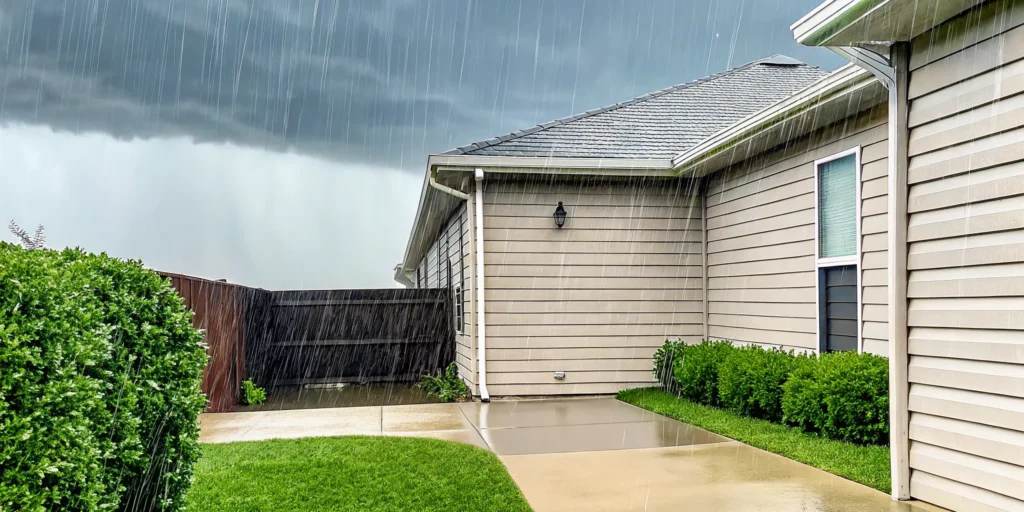
Heavy rain foundation problems begin when the expansive clay soil of North Texas absorbs excessive water and swells. This sudden change in soil volume puts immense pressure on your home’s structure. Knowing these early signs of moisture stress can help you protect your home.
Call Today for a Free Quote — (940) 365-4221
Heavy rain foundation problems occur when the expansive clay soil common in North Texas absorbs moisture and expands against your home’s concrete slab. This swelling exerts thousands of pounds of pressure that can lift foundations and cause structural cracks. When the soil later dries out, it shrinks and leaves large voids that allow the foundation to settle or sink. These cycles of expansion and contraction are the primary source of damage for local homes. In fact, expansive soils cause roughly $9 billion in annual damage to U.S. buildings and roads according to researchers at the University of Iowa. Proper water management is the key to stopping these issues and keeping the long-term safety of your home. By keeping soil moisture levels steady and ensuring proper drainage, you can reduce the risk of costly repairs.
To protect your property, it is important to understand how local conditions and the weather impact your structure. You should learn more about the unique behavior of the ground under your feet. This begins with a closer look at how expansive clay soil reacts to heavy rain in North Texas.
Heavy Rain Foundation Problems: How Expansive Clay Soil Reacts to Heavy Rain in North Texas
North Texas is home to expansive clay soil, often called blackland prairie. This soil acts as the main cause of foundation damage in our region. When heavy rain hits, these clay minerals soak up water like a sponge. This leads to a cycle of shrinking and swelling that can put your home at risk. Understanding how moisture affects expansive clay soil is the first step in protecting your property.
The science of soil swelling
The clay in the Dallas-Fort Worth area contains smectite minerals, such as montmorillonite. These minerals have a unique shape that lets them hold large amounts of water. As they absorb rain, the soil particles push away from each other. This change causes the ground to expand. Research shows that swelling clays can exert as much as 5,500 pounds per square foot of uplift pressure. This force is strong enough to lift and crack the concrete slabs used in local homes.
Deep moisture changes
Soil movement is not just a surface problem. In North Texas, the zone where moisture levels change can reach from 3 to 40 feet deep. This deep shift creates a constant cycle of movement in the top soil layers. During heavy rain, water seeps deep into the ground. This triggers expansion far below your foundation. Because our local soils are so sensitive to these shifts, you must manage water around your home with care to maintain foundation health.
Regional soil behavior
The land in North Texas makes our homes more vulnerable than those in other states. The clay here reacts fast to weather changes. Sudden heavy rain after a dry spell can cause the soil to swell quickly. This leads to stress on your walls and floors. Homeowners in cities like Denton and Plano often see these issues first. This is due to the high clay content in their neighborhoods. Staying aware of how these local soils behave helps you spot problems before they turn into big repairs.
How Heavy Rain Causes Foundation Problems: The Science
North Texas is known for its heavy rains and its special soil. The ground in the Dallas area is mostly made of expansive clay. This region sits on a layer of Blackland Prairie soil. This type of soil acts like a sponge. It grows much larger when it gets wet and it shrinks as it dries. When a big storm hits, the soil around your home soaks up water. This growth creates big pressure that can shift your house. This soil action is the main cause of foundation damage in our area.
The growth cycle and soil pressure
When heavy rain falls, the clay soil around your home swells. This growth creates water pressure. This pressure is a type of force that water puts on the ground as it fills every gap. The wet soil pushes hard against the base of your home. Facts from the National Association of Home Builders show that about 15% of all foundation problems start with this upward force. This moisture makes the soil push against the concrete with great power.
This pressure is often too much for concrete to handle. Your slab foundation is strong, but it cannot bend. As the ground grows, it tries to lift the heavy concrete. This shift often leads to foundation heave caused by excess moisture. This heave makes parts of your floor feel high. You might feel like you are walking uphill in some rooms of your home. It is a common sign of soil problems in North Texas.
Why slab corners lift during storms
The science shows that foundation movement does not happen the same way in all spots. Moisture levels change under other parts of your house. The edges of your home are out in the rain while the middle stays dry. This causes uneven movement. Research from the Missouri University of Science and Technology shows that the corners of a slab are most likely to lift first. This happens because the corners carry less weight than the rest of the walls.
When the corners rise, they create stress in the concrete. You might see cracks appear in your brickwork or indoor walls. These cracks are often a sign that the soil is pushing the slab upward. This lifting can warp the frame of your home. It often makes doors and windows stick or jam during the rainy season. It is vital to watch for these signs after a long week of wet weather. These issues show how much the ground can change during a storm.
Voids and the loss of foundation support
The problems do not stop when the clouds clear. The drying phase is just as unsafe for your home. After the ground is soaked, it will start to lose that water. As the moisture leaves, the clay shrinks back to its small size. This change often leaves gaps or “voids” under your slab. These voids mean your house is no longer resting on solid ground. This is when the most damage often occurs.
These voids are a major threat to your home’s safety. When the soil pulls away, the concrete is left hanging with no help. In areas that see many heavy rains, homes can lose up to 25% of their foundation support. This loss of strength leads to sinking. The house drops into the empty spaces. This sinking causes deep cracks in your foundation and makes your floors slope. Fixing these voids is the only way to save the structure.
Signs of Foundation Problems After Heavy Rain
Heavy rainfall often reveals issues with a home’s structural health. In North Texas, the link between rainwater and expansive clay soil creates stress on concrete slabs. Spotting the signs of foundation movement after rain early can help you fix problems before they need big repairs. These signs often show up when water levels in the soil change fast. This causes the ground to swell and shift under your home.
Visible cracks in walls
One common sign of foundation trouble is the start of new cracks in your walls. These often show up near the corners of doors and windows or where walls meet the ceiling. Experts at Solid Base Foundations note that these cracks happen because shifting soil causes the house frame to tilt or twist. While small cracks might be normal, gaps that grow fast after a storm suggest the base is no longer level.
Sticking doors and windows
When heavy rain makes the soil swell, it can push up with 5,500 pounds per square foot of force. Research from Missouri S&T shows this pressure is strong enough to lift and damage wood-frame homes. You might notice that doors become hard to open or windows will not lock. This happens because the shifting base pulls door and window frames out of line. This makes them stick within their openings.
Uneven floors and exterior gaps
Shifting soil can also make floors feel sloped or bouncy. In some cases, you might see gaps form between the wall and the floor or ceiling. Outside the home, look for standing water near the base. This often shows drainage problems that lead to foundation damage. During dry times, look for deep cracks in the ground. These are a clear sign of the expansive clay soil that causes issues when the next big rain comes.
Preventing Foundation Damage: Drainage Solutions for North Texas Homes
North Texas homeowners face unique challenges due to expansive clay soil. This soil type expands when wet and shrinks when dry, which can cause big structural shifts. Proper water management is your first line of defense against drainage problems that lead to foundation damage. Without it, your home is more likely to develop cracks and uneven settling.
Manage roof runoff
Your roof collects a large volume of water during a storm. If this water falls right next to your foundation, it soaks the soil and causes the clay to swell. It is important to keep your gutters clear of debris so they can move water well. Be sure to check your system for leaks or clogs after any heavy rain to prevent water from pooling near your house.
Move water away
Simply catching the water is not enough. You must also direct it far from the foundation. Using downspout extensions helps carry water six to ten feet away from the house. This prevents the moisture from reaching the sensitive soil under your slab. Homes with poor drainage systems are 30% more likely to develop foundation cracks over time.
Follow these drainage steps
Improving the drainage around your home involves a few key steps to protect your property from heavy rain foundation problems.
- Inspect your gutters. Clean out leaves and dirt to ensure water flows freely to the downspouts.
- Extend your downspouts. Use pipe extensions to move water at least six feet away from your foundation.
- Check the ground slope. Ensure the soil around your home slopes down and away from the walls. A good goal is a six-inch drop over the first ten feet.
- Install French drains. Consider buried drain tiles or French drains if you see water pooling in your yard for more than 24 hours.
- Keep soil moisture steady. Use soaker hoses during dry spells to keep moisture levels consistent, as this promotes long-term foundation stability.
Stabilize the soil
While moving water away is vital, you also want to avoid letting the clay soil get too dry. Rapid drying causes the soil to shrink and leave gaps under your slab. Keeping moisture levels steady helps prevent the cycle of shrinking and swelling that leads to damage. This proactive path protects your home’s value and structural health in the Texas climate.
Normal Settling vs. Structural Damage: When to Call a Professional
Every home moves a little bit over time. In North Texas, the expansive clay soil shrinks when it is dry and swells when it is wet. This causes a cycle of movement that can lead to small, thin cracks. It is key to know the gap between this normal settling and active damage to the house frame.
Minor hairline cracks versus widening gaps
Thin cracks that are less than one-eighth of an inch wide are often just a sign of aging. These hairline cracks usually appear where drywall meets the ceiling or near the corners of doors. If the crack does not get bigger over the months, it may not be a big worry yet. These small lines often close up on their own when the weather changes and the soil moisture levels go back to normal.
But you should watch for cracks that grow or start to separate. Gaps that are wider at one end show that one part of the home is sinking or tilting. If water gets into these gaps, it can lead to a need for structural repair for foundation damage. Heavy rain foundation problems often start small but can lead to soil washouts that leave your slab without enough support.
Doors that stick and floors that slope
A door that sticks once a year during a wet month might just be reacting to the damp air. But doors that used to close fine and now stay stuck for weeks often show a shift in the house frame. You might also notice that windows are hard to latch or that your floors feel uneven when you walk across them. These are not just surface issues; they are signs that the frame of your home is moving.
When heavy rain soaks the ground, the soil under your home can push up with great force. Soil experts have found that swelling clay can exert uplift pressures as high as 5,500 pounds per square foot. This force is strong enough to lift parts of a heavy slab. This movement, known as heave, leads to the sticking doors and sloping floors that many homeowners see after a wet spring.
When to seek an expert check
Foundation heave is a specific problem where the soil swells so much that it lifts the center or corners of your slab. This often happens when water pools near the house after a storm. You might see concrete spalling, which is when the surface of the concrete begins to flake or peel away. Unlike normal settling, this damage does not go away when the soil dries out.
If you see these signs, do not rely on a simple guess. Your repair choices should come from an expert check rather than a hunch. An expert can use a floor level survey to see if your home is moving too much. Look for these red flags to know when to get help:
- Cracks that are wider than a quarter of an inch.
- Walls that pull away from the ceiling or floor.
- Stair-step cracks in the brick on the outside of your home.
- If water pools near the house, it can cause drainage problems that lead to foundation damage.
| Symptom | Normal Settling | Structural Damage |
|---|---|---|
| Crack width | Less than 1/8 inch, hairline | Wider than 1/4 inch, grows over time |
| Door behavior | Sticks only during wet months | Sticks persistently, frames visibly out of square |
| Crack pattern | Random hairline, closes when dry | Stair-step in brick, wider at one end |
| Seasonal change | Improves when soil moisture normalizes | Does not improve, progresses each rain cycle |
| Floor feel | Slight seasonal unevenness | Consistent slope, bouncy or sagging sections |
Frequently Asked Questions
Can heavy rain cause soil washout around my foundation?
Heavy rain often leads to soil erosion and washout around home foundations. When large volumes of water flow too close to your house, it can strip away the supporting earth. This process creates dangerous voids under your footings. According to The Foundation Guru, this lack of support hurts structural safety and is a top cause of foundation settlement. Good water management helps stop this erosion and keeps your home stable during North Texas storms.
Is standing water near my foundation a major problem?
Standing water near your home is a big worry because it shows poor drainage. In North Texas, too much water soaks into the local clay soil. This causes the soil to swell and push against your foundation. This pressure can lead to cracks and shifting. Solid Base Foundations notes that deep puddles make soil move more, which can cause your slab to lift. It is important to fix pooling water fast to protect your home from long-term harm.
Does my foundation need repairs after a heavy storm?
Not every storm needs a pro repair, but be sure to watch for new signs of trouble. If you find new cracks in your walls or find that doors stick after heavy rain, your foundation may have moved. The National Association of Home Builders says that moisture problems cause about 15 percent of foundation issues. Since North Texas clay is very sensitive to water, consider getting an expert look if you see these changes in your home.
Does home insurance cover foundation damage from heavy rain?
Most standard home insurance plans do not cover foundation repair caused by soil movement or heavy rain. Coverage often only applies if the damage came from a sudden event like a burst pipe. However, academic research shows that insurance firms still pay out millions each year for soil-related home issues. It is important to check your own policy and consider extra coverage if you live in a wet part of North Texas.
Ready to protect your North Texas home from rain?
North Texas weather creates a cycle of stress for every local home. The expansive clay soil in our region swells during heavy rain and pulls away when the sun returns. This cycle forces your foundation to shift, which often leads to cracks in your walls or sticking doors. Delaying repairs only allows the damage to grow as the soil continues to push against your structure. Taking action today ensures you fix drainage problems that lead to foundation damage before the next big storm arrives. Our team serves the entire Dallas area and understands the unique needs of local homes. We will help you find the right solution to keep your slab level and your home secure.
Ready to secure your foundation? Call (940) 365-4221 today to talk to a local expert and schedule a free foundation inspection for your home.