
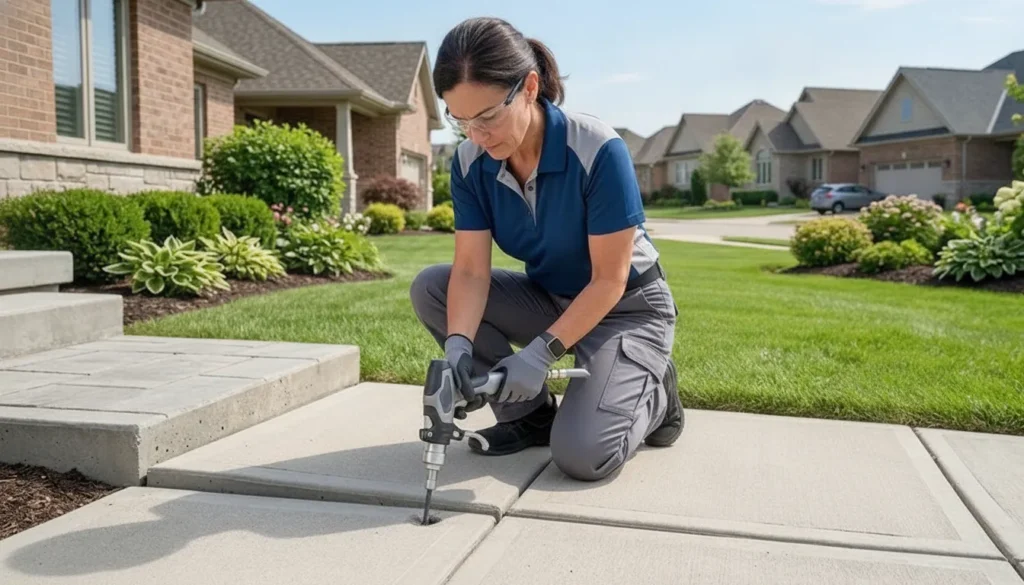
Water seeping through a concrete gap erodes the soil beneath, causing slabs to tilt and sink. When driveway slabs shift at different heights, they create dangerous trip hazards that simple patching cannot fix.
Your plan to repair cracks in concrete driveway surfaces must depend on whether the damage is cosmetic or structural. For thin hairline cracks under one-eighth of an inch wide, homeowners can apply a flexible polyurethane caulk or concrete filler after cleaning the gap. However, if a crack is wider than one-quarter of an inch or sits on a sunken slab, it signals a deeper soil issue under the concrete. Filling a wide, shifting crack with retail patch material is only a temporary fix. It will likely fail within a year because it does not stabilize the ground below. When concrete slabs shift, they require professional leveling with high-density polyurethane foam. This lifts the heavy driveway sections and fills underlying soil voids.
Before you choose a repair method, it helps to understand why your concrete slab split in the first place. You can find the root cause of these issues in Why Driveway Cracks Are Common in North Texas. The path begins with
Schedule a free foundation inspection in DFW with Solid Base Foundations at (940) 365-4221 by visiting our foundation repair services page.
Why Driveway Cracks Are Common in North Texas
Many homeowners in the Dallas area find cracks in their concrete driveway and worry. It can be stressful to watch your home change. But these issues are very common here because of our unique local soil. Let’s look at why our ground moves so much and what it means for your driveway.
The Blackland Prairie Clay Soil
Most of North Texas sits on a zone known as the blackland prairie. This area has a high amount of expansive clay soil. This unique clay acts like a sponge when it rains. It absorbs water and swells up, which pushes your concrete slabs upward. When the ground swells, it exerts thousands of pounds of pressure against your driveway.
But when hot summer dry spells hit the DFW market, the clay soil shrinks. As the water leaves, the ground sinks and pulls away from your driveway. This constant cycle of shrinking and swelling creates a lot of stress under the concrete. This movement causes both normal settling and foundation damage in our region. Over time, the heavy concrete slab cannot support its own weight over these shifting voids, causing it to crack.
Normal Settling vs. Structural Damage
Every driveway will see some minor shifts over the years. This is normal settling, and it often results in small hairline cracks. These tiny breaks do not mean your driveway is failing. But when cracks grow wider than one-quarter of an inch, they often point to structural issues. Slabs that sit at different heights are also a clear warning sign of deeper trouble.
Learning to tell these two types of damage apart is a key step for DFW homeowners. If you are concerned about your concrete, differentiating between surface and structural cracks can help you make the right choice. Knowing the difference keeps you from worrying about harmless surface lines or ignoring major structural threats.
Why Simple Patches Do Not Work
When homeowners spot a new crack, many run to the store for a quick patch. But a simple DIY patch only covers the surface. It does not stop the soil movement underneath. If you do not fix the root cause, the same slab will often crack again in a short time. You will end up spending more time and money on repeated repairs.
Federal studies show that surface concrete treatments only address the visible signs of wear. They do not fix the true causes of the damage, as noted in a report by the Federal Highway Administration. To get a lasting result, consider addressing the soil issues beneath the slab rather than just filling the gap.
Which Concrete Driveway Cracks You Can Fix Yourself
Not all driveway cracks are the same. Some cracks are small and easy to fix on your own, while others show deep damage. Before you start, you must look closely at each crack. Knowing which cracks you can handle yourself saves time and prevents future issues.
Evaluating crack width and movement
First, measure the width of the gap. Hairline cracks under one-eighth of an inch are often cosmetic. These small cracks do not go deep into the slab. You can repair cracks in concrete driveway slabs of this size with polyurethane caulk or concrete crack filler. These products are easy to apply and keep dirt out of the gap.
You can also fix cracks that are less than one-fourth of an inch wide if the edges are clean and stable. But if a crack is wider than that, it often shows structural movement. For larger cracks, standard fillers will not solve the soil issues below. When differentiating between surface and structural cracks, you must check for shifting or sinking.
The role of proper surface preparation
Proper surface prep is key for any repair job. If you do not clean and prep the area, the filler will not bond to the concrete. First, use a wire brush to remove loose dirt and debris. You can also wash the crack with water to clear away dust. Let the concrete dry fully before you add any sealant.
Be sure to wet the surface and apply a primer before you add the patching compound. This step helps the new filler stick to the old concrete. Skipping this prep can lead to a quick failure. A bad bond means the patch will peel up when cars drive over it.
It is vital to know that simple repairs only fix the symptoms of concrete damage. According to the Federal Highway Administration, these preservation steps do not address the true causes of concrete distress.
Preventative concrete sealing and maintenance
Once you fill the cracks, sealing the rest of the driveway is the next step. Applying a penetrating sealer every two to three years is a great choice for your driveway. This step is key to a good concrete driveway maintenance plan. This plan keeps water and weeds from growing inside the open gaps. It also blocks harmful sun rays and oil spills from staining the surface.
Sealing cracks prevents weeds, water, and ice from causing more harm. When water enters a crack, it can freeze and expand. This freeze and thaw cycle breaks the concrete apart from within. For long-term protection, experts use specialized sealants like NexusPro to keep water out.
When Driveway Cracks Signal a Bigger Problem
Not all driveway cracks are the same. Some are just minor surface marks, but others show serious damage beneath your slab. Knowing how to spot the difference can save you from a major headache. In North Texas, the soil under your driveway plays a huge role in how concrete behaves. If you see signs of slab movement, you are dealing with a soil issue, not just a concrete issue.
Red flags of structural concrete damage
When you check your concrete, look closely at the size and shape of the damage. Cracks wider than 1/4 inch are a clear warning sign. These wide gaps show active structural movement rather than simple surface shrinkage. It is also wise to watch for cracks that continue to grow or widen over time. Surface chipping and spalling near the edges of a crack can also point to deep movement. When slabs shift, they put pressure on each other, which causes the concrete to break and flake.
The most dangerous red flag is differential settlement. This happens when full-depth cracks allow two slab sections to shift at different heights. This shifting creates uneven lips and trip hazards across your driveway. It is wise to know about differentiating between surface and structural cracks so you can protect your property. When slabs are no longer level, they cannot support heavy trucks and can break further.
Why clay soil causes driveway movement
Sunken or heaving concrete driveways are almost always the result of shifting soil. North Texas is famous for its thick clay soil, which shrinks and swells with moisture changes. When the weather is dry, the clay shrinks and leaves empty voids under your driveway. Heavy rain then swells the soil, pushing the concrete upward. Over time, this constant movement cracks the slab and causes sections to sink.
Typical surface treatments and patches only cover up the clear signs of damage. They do not fix the underlying cause of the distress. As noted by the Federal Highway Administration, pavement treatments often fail to address the root causes of concrete wear. When you only patch the surface, the soil issues beneath the slab will keep causing movement. If you do not fix the soil problem, the same section will often re-crack within about a year.
The risk of failed DIY concrete patches
Trying to fix large structural cracks with retail filler can cause major problems. If you put a DIY patch over an active crack, the patch will soon crack and fail. When a DIY patch fails, it leaves behind old, loose material. This debris ruins the bond surface of the concrete. A ruined bond surface makes a professional repair much harder and costs more to fix later. To avoid this, let an expert look at the slab before you try any fixes.
Surface Crack vs. Structural Settlement: What’s the Difference?
Every concrete slab will show some wear over time. Before you repair cracks in concrete driveway surfaces, you must find out what type of damage you face. Some cracks are small and only affect how the slab looks, while others show that the soil underneath has shifted. Knowing this difference helps you choose the right fix and protects your home.
Common surface cracks
Tiny hairline cracks under 1/8 inch wide are common in driveways. According to a report on driveway repairs, surface cracks that are not growing are mostly cosmetic. These lines often form as concrete shrinks while it cures, or when dry air pulls moisture out too fast. Since they only sit on the top layer, you can fix them easily using a basic concrete filler or polyurethane caulk.
Even small surface cracks need attention to prevent future damage. Over time, open cracks allow weeds to grow and water to seep under the driveway. Applying a seal helps block water and stops freeze-thaw damage before winter. It is a smart step to keep minor lines from turning into major breaks.
Signs of structural settlement
When cracks grow wider than 1/4 inch, they usually point to structural movement in the soil. This constant soil shift causes concrete slabs to bend and break. If you fill a wide crack without fixing the soil issue, the driveway will often re-crack within a year. Reading about a concrete crack vs foundation crack can help you spot these deeper soil problems.
Worse damage happens when cracks go all the way through the slab. These full-depth cracks can let the two concrete sections shift to different heights. This uneven settlement creates a high trip hazard and shows that the slab has lost its support base. Simply putting a patch over a shifted slab will not stop the movement because the soil below is not solid.
Symptom relief versus root cause fixes
Many homeowners try to patch deep cracks on their own, but these quick fixes do not address why the slab cracked. Studies from the Federal Highway Administration show that surface treatments only address symptoms instead of root causes. If you ignore the soil problem, the damage can progress until you must replace the concrete. Expert leveling fixes the root issue by filling the empty space under the slab and lifting it back to a safe position.
| Crack type | Typical width | Primary cause | Elevation shift | Repair path |
|---|---|---|---|---|
| Surface | Under 1/8 inch | Concrete shrinkage or dry air | None | DIY filler or caulk |
| Moderate | Around 1/4 inch | Water and freeze-thaw cycles | Minor | DIY patch or monitor |
| Structural | Over 1/4 inch or full-depth | Expansive clay soil movement | Slab sections have shifted | Professional leveling |
How to Repair Cracks in a Concrete Driveway: A DIY Approach
When you spot a narrow gap in your driveway, a quick fix can stop water from soaking into the ground below. Taking the time to repair cracks in concrete driveway slabs can keep minor wear from spreading. While major driveway rebuilds need deep structural changes, small driveway cracks are well within the reach of a handy homeowner.
First Check and Surface Prep
Before you buy supplies, look closely at the damage. Cosmetic cracks are usually small, but wide gaps show that the slab is shifting. To ensure the patch sticks, clean out the crack and prime the area. Studies from the Federal Highway Administration note that surface repairs only fix signs of wear. They do not address deep soil distress, so check the crack width first.
If you do not clean and prep the area well, the new compound will peel off. Failed DIY patches can also spoil the bond surface. This makes future professional repairs much harder and more costly to finish.
How to Patch the Crack
For cosmetic repairs, choose a day when the air is dry and mild. Most concrete caulk products cure best when the weather stays between 50 and 100 degrees Fahrenheit. Follow these steps to fill the gaps in your slab.
- Check the crack size: Measure the width of the gap. Hairline cracks under 1/8 inch wide are cosmetic and easy to fill with polyurethane caulk or concrete crack filler.
- Clean the gap: Use a stiff wire brush to scrub away dirt, weeds, and old debris. Rinse the crack with water and let it dry fully before you apply any repair product.
- Prep the edges: Use a chisel and hammer to chip away loose concrete. Proper surface prep is critical for a strong bond.
- Use a backer rod: If the crack is deeper than 1/2 inch, press a foam backer rod into the gap first. This foam keeps you from wasting filler and supports the patch.
- Apply the filler: Squeeze the polyurethane caulk or concrete filler into the crack. Use a putty knife or trowel to smooth the surface flat with the driveway.
Driveway Care and Sealing
After the patch cures, protect the driveway from the elements. Water, weeds, and winter freeze cycles can easily break a fresh repair. Applying a quality penetrating sealer every two to three years is one of the best investments you can make to protect the concrete. Routine concrete driveway maintenance will extend the life of your slab and keep minor cracks from returning.
When It’s Time to Call a Professional: Concrete Leveling
Recognizing Sinking Slabs and Soil Movement
When a crack is more than a simple surface line, it often means the soil below has moved. If you find a crack that comes with a sunken or heaved slab, do not just patch the surface. Simple patching does not fix the uneven slope. This is a soil problem, not a concrete problem.
Heavy slabs sink when the soil underneath washes away or shrinks. This is common in North Texas, where the ground expands and contracts. If you try to fix these cracks without fixing the soil, the patch will fail. The slab will keep moving until you fill the void beneath it. To find the right fix, you can seek concrete repair services to check your driveway.
How Polyurethane Concrete Leveling Works
Modern repair methods use light, strong foams to solve soil problems. High-density polyurethane foam, known as PolyLevel, is an ideal choice for this work. Experts inject the liquid foam through small holes drilled into the slab. Once beneath the concrete, the foam expands to fill voids and lift the slab. This foam waterproofs the soil and cures in as little as 15 minutes.
This process is much faster and cleaner than old methods like mudjacking. You can learn more about these options by reading about PolyLevel vs mudjacking. Using foam improves your home’s curb appeal and removes tripping hazards. Best of all, the work is quick, and your driveway is ready for heavy cars to use within a day.
Leveling Versus Driveway Slab Replacement
Some homeowners think they must tear out and replace any broken concrete. But complete slab replacement is often a short-term fix. A California Department of Transportation guide notes that slab replacement is a strategy to preserve concrete. But if the soil is still weak, surrounding slabs are likely to continue failing. This means replacing one slab can lead to more work later on.
Replacing a whole slab is also slow, messy, and costly. It leaves your driveway out of service for days while the new concrete cures. In contrast, leveling the existing slab fixes the height and stabilizes the ground. It is a smart way to protect your drive without the waste and delay of new concrete. If you want a long-term solution, leveling is the preferred path for most concrete driveways.
Ready for a professional repair cracks in concrete driveway solution? Schedule a free foundation inspection in DFW with Solid Base Foundations at (940) 365-4221 by visiting our foundation repair services page.
Frequently Asked Questions
What is the best material to fill driveway cracks?
For small surface cracks under an eighth of an inch, a flexible polyurethane caulk or concrete filler works well. These soft sealers fill the gap and stretch when the slab moves. As shown by industry guides, cleaning the crack first is key to a strong bond. For lasting results, premium silicone sealants like NexusPro keep out water and weeds while holding up to hot Texas weather.
How do you fix a hairline crack across a concrete driveway?
To fix a hairline crack, you should first clean the gap with a stiff brush and water to clear out dirt. Once the concrete is dry, apply a liquid concrete filler or a thin bead of concrete caulk. Smooth the surface with a putty knife so it sits flush. Finally, consider coating the driveway with a penetrating sealer to shield it from future wear.
How much does it cost to repair concrete driveway cracks?
Simple DIY crack kits usually cost under fifty dollars at local hardware stores. However, if your driveway has sunken slabs or deep structural damage, a professional repair is a better long-term choice. The total price for professional work depends on the size of the driveway and the depth of the voids beneath the concrete. You can contact a local specialist to get a free, detailed estimate for your specific project.
Why do concrete driveway cracks get worse over time?
In North Texas, our expansive clay soil shrinks and swells as moisture levels change. This constant soil shifting puts deep stress on your driveway, causing small cracks to widen and slabs to sink. When water seeps into these cracks, it washes away the soil underneath and creates empty voids. Over time, these voids cause the heavy concrete to sag, crack further, and become uneven.
Get a Free Foundation and Driveway Assessment
Not every crack deserves a day of DIY work, and not every repair belongs in your hands. The right call comes down to one question: is this surface wear, or is the soil moving under your slab? An experienced inspection answers that quickly and gives you a clear plan that matches the real cause.
If your driveway has wide cracks, a sunken slab, or a shifting trip hazard, the smartest next step is a professional assessment before you patch over the problem. A free estimate from a local specialist tells you whether a simple seal will do, or whether the ground needs proper stabilization.