
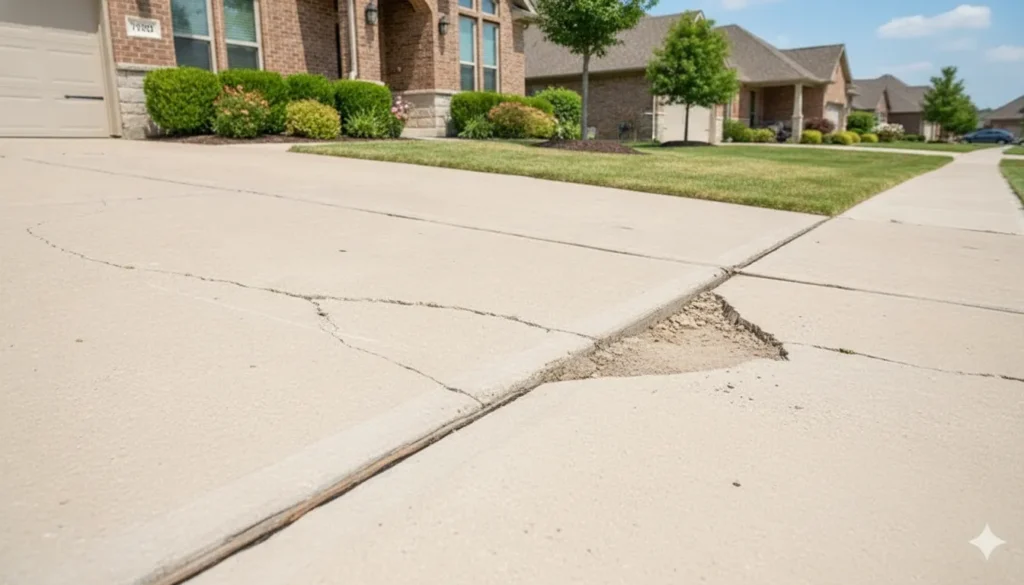
An uneven concrete joint that catches your toe is a warning about the soil below. When slabs sink, they create dangerous trip hazards and trap pooling water around your property.
Call Today for a Free Quote
The professionals at Solid Base Foundations have been providing expert concrete leveling services in the Dallas-Fort Worth area since 1993. Call (940) 365-4221 for your free estimate today!
Sinking concrete is mainly caused by shifting soil beneath heavy slabs, and this happens when loose dirt compresses or poor drainage washes support away. In North Texas, this soil issue is often much worse because our local expansive clay soils swell with moisture and shrink during dry weather. According to an academic study published on MIT, these volume-changing clay subsoils are a major hazard for shallow concrete structures. This constant ground movement causes heavy slabs to drop and crack, which creates dangerous trip hazards and pools dirty water around your property. Spotting these warning signs early allows you to level your concrete with polyurethane foam, which restores your driveway or patio safely and quickly.
If you notice your walkways or patio beginning to sag, you might wonder why this damage happens on your property. To help you protect your home, we must look at the actual ground supporting your slabs. The Soil Problem Behind Sinking Concrete explains exactly how North Texas dirt causes these issues, and here is how.
Schedule a free concrete leveling estimate with Solid Base Foundations today at (940) 365-4221
The Soil Problem Behind Sinking Concrete
When you notice a driveway slab or a sidewalk segment starting to drop, you might worry that the concrete is failing. But in almost every case, a sinking walkway is really a soil problem, not a concrete problem. The slab itself is strong, tough, and solid. The issue lies in the dirt beneath it, which has lost the strength to support the heavy weight on top.
Loose soil and backfill compaction
When builders build a new home, they dig up a lot of earth to pour the foundation. Once the foundation is set, they push the loose soil back into the empty spaces. This backfilled soil often does not get compacted as tightly as undisturbed ground.
Over time, that loose soil packs down and settles under its own weight. As the soil packs down and shrinks, it creates a void under the slab. Without solid support, the heavy concrete block starts to sink into the gap.
This kind of settling is common around patios, driveways, and sidewalks that sit next to the house. When the subsoil drops, the concrete must drop with it. To fix this, it is helpful to look at the true source of the problem. Simply putting new concrete on top of loose soil will lead to more sinking later on.
Expansive clay and moisture changes
In North Texas, our unique geology makes soil issues even more common and severe. The region sits on deep layers of expansive clay soil, which acts like a giant sponge. When we get heavy rains, this clay absorbs water and swells up with great force.
But during our hot, dry summer months, the clay loses moisture and shrinks back down. This constant movement puts a lot of stress on any slab poured on top of it. According to a study on moisture on foundation soils, these volume changes directly affect the strength and volume of the soil. As the dirt swells and shrinks, it creates uneven support zones.
This cycle is a major cause of foundation settlement causes in North Texas, which can impact both your home and your outdoor concrete slabs. Knowing how these earth shifts happen is the first step toward finding a lasting fix.
Slab voids and structural support
When the clay shrinks, it leaves empty pockets or voids under your concrete. Since concrete cannot bend, it will in time crack and sink into these voids. This is why a slab can fail even if the concrete itself is in perfect shape.
To prevent this, it is vital to keep the moisture levels in your soil as steady as you can. You can do this by using good drainage systems and keeping downspouts away from the slab. If you do not manage water, the cycle of swelling and shrinking will continue to damage your concrete.
7 Visible Signs Your Driveway, Patio, or Sidewalk Is Sinking
It is stressful to watch your outdoor concrete settle and slope. When your paths or seating spots shift, you may worry about safety and repair costs. Spotting the early signs of sinking concrete is the first step to protect your home. In North Texas, our local expansive clay soil shrinks and swells with the weather, which makes slabs move. Watch for these seven common warning signs:
- Uneven joints and lippage where two slabs meet.
- Widening cracks or steps forming across a slab.
- Low spots that hold ponding water after rain.
- Slabs pulling away from the house along the foundation.
- A garage door that no longer seals or scrapes the floor.
- Edges sinking right next to your home’s foundation.
- Soft, washed-out turf along the slab edges.
Uneven Joints and Surface Cracks
Uneven joints between your concrete slabs are a common sign of trouble. When soil shifts below, one slab often sinks faster than the next, creating sudden sharp drops or lippage where they meet. Sinking concrete slabs often create major trip hazards, even with minor height gaps of 1/2 to 1 inch. These small drops are easy to miss but can catch a toe and cause a fall.
You should also look for cracks that widen or form steps over time. Hairline cracks are normal as concrete ages, but growing gaps show that the base is moving. When one side of a crack sinks lower than the other, the slab has lost its soil support. If you notice these issues, seeking professional concrete leveling services will restore your slabs.
Water Ponding and Separation Gaps
Low spots that hold ponding water are another key warning sign. After a heavy Texas rain, your driveway or patio should shed water quickly. If you see puddles sitting on the concrete hours after a storm, that section has likely sunk. This standing water is not just a nuisance; it can seep into the soil under the slabs and cause more settlement.
You may notice concrete slabs pulling away from your house, leaving a gap that lets water pour down. This water can wash out base soil or seep under your home. Research shows that volume-changing clay subsoils are a major hazard for shallow structures. These soils shrink during dry times and swell with rain, which moves concrete bases.
Garage Door Seals and Soft Turf Edges
A garage door that no longer seals or scrapes against the floor is a classic sign of sinking concrete. If the driveway slab in front of your garage drops, the door will not meet the concrete flat. This gap lets in pests, water, and drafty air. Sometimes, the slab sinks right next to your home’s foundation and directs rain toward your house.
Last, check for soft or washed-out turf along your slab edges. When soil washes away, it leaves grass roots bare and creates a hollow space under the concrete. Over time, the lack of support causes the slab edges to sink and crack. To protect your outside slabs, regular concrete driveway maintenance is vital to keep water from washing the soil.
Sinking Concrete vs. a Foundation Problem: How to Tell Them Apart
It is easy to worry when you see cracked or uneven slabs on your property. You might wonder if a sinking driveway or a cracked patio means your entire home has structural damage. But in most cases, these two issues are distinct. When outdoor slabs drop, they create uneven joints. These uneven slabs form dangerous trip hazards even with minor height shifts of half an inch to one inch. While this looks bad and poses safety risks, it does not mean your home is about to fall.
| Issue Type | Typical Signs | Affected Scope | Typical Cause | Who to Call |
|---|---|---|---|---|
| Sinking Concrete | Uneven walkway joints and sunken pavement slabs. | Isolated exterior slabs like driveways and patios. | Localized loss of soil support right below the slab. | A concrete leveling professional. |
| Foundation Problem | Drywall cracks, sloped floors, and stuck windows. | The structural framing and walls of the entire home. | Deep soil movement within expansive clay subsoils. | A specialized foundation repair contractor. |
Understanding the difference in scope
To know which issue you face, you must look at where the damage occurs. Sinking concrete is localized. It only affects slabs that sit on top of the ground, such as your driveway, patio, or sidewalk. These slabs drop when water washes out the dirt underneath, leaving empty spaces. You can solve this quickly with concrete leveling services to raise the slab back to its original height.
A foundation problem is far more serious. It affects the core structure that supports your entire home. In North Texas, volume-changing clay subsoils can threaten any building on a shallow foundation. As these clays shrink and swell, the movement causes the footings of your home to shift. This deep soil movement leads to sloped floors, cracked drywall, and doors that will not close.
When to call a concrete leveling specialist
If the issue is limited to your outdoor slabs, you do not need structural piers. Instead, you can contact a leveling expert to fix the uneven pavement. Modern techniques use foam injection to lift the slab back into place. This method is much faster and cleaner than tearing out and replacing the old concrete.
If you notice cracks in your brick walls, uneven floors, or stuck windows, you should contact a foundation repair expert. A specialist can inspect the entire structure to find the root cause of the shift. This inspection will tell you if the subsoil movement has damaged your home’s support system. Catching these problems early can help you avoid costly repairs in the future.
Expansive Clay and Soil Settlement: Why North Texas Concrete Drops
Seeing your driveway or patio crack and sink is stressful. You might worry about your home’s value or safety. But the true cause of this sinking concrete is not the slab itself. Instead, the blame lies with the unique soil beneath your property.
The North Texas clay cycle
North Texas soil contains highly active clay. This clay shrinks and swells with changes in weather. These volume-changing clay subsoils are a major natural hazard for shallow concrete slabs. The clay has minerals like montmorillonite that expand when wet and shrink when dry. According to a building guide from Massachusetts Institute of Technology, a high hazard exists when clay content exceeds 25 percent. This is especially true when the plasticity index is greater than 30 percent. DFW soils easily exceed these limits.
How shifting soil sinks concrete
This movement is a critical factor for anyone managing concrete driveway maintenance. During hot Texas summers, the clay loses moisture and shrinks. This drying opens wide cracks. When sudden heavy storms hit, water flows deep into these open spaces. The clay absorbs the moisture and swells. As research from Missouri University of Science and Technology shows, this excess water can cause the clay to swell and push up. On the other hand, water can also wash out the supporting soil and base, causing the concrete above to settle.
Climate swings and drainage
DFW weather swings are extreme. Long periods of dry heat often end with sudden, heavy downpours. This intense wet-and-dry cycle puts constant stress on the soil beneath your walkways and driveways. When the ground shifts, it loses its strength. Soon, empty voids form under the slabs, causing the heavy concrete to crack and drop. To avoid major structural issues, consider addressing these changes before they worsen.
You cannot change the clay under your home, but you can control how water flows. Keeping a stable moisture level is key. Be sure to keep your gutters clean and extend downspouts far from your concrete. Proper drainage stops water from washing out the supporting dirt. If you notice uneven areas, professional concrete leveling services can lift the slabs and fill the voids underneath.
Water, Drainage, and Voids: The Hidden Culprits of Settlement
Water is the most common cause of sinking concrete. While a concrete slab seems solid and strong, the soil beneath it is not. When water flows too close to your home, it changes the ground that supports your paved surfaces. Poor water management can turn a flat driveway or patio into a major trip hazard.
How poor drainage washes soil away
Poor water runoff is a main reason why concrete slabs sink. When downspouts dump rain next to your sidewalk, the water washes the soil out from under the slab. Slopes that tilt toward your house also guide water under your concrete instead of away from it. This runoff forms empty pockets under the surface of the slab. Once the soil is gone, the concrete loses its support and drops under its own heavy weight.
Studies from Missouri S&T show that excess water washes out the base soil under a slab. This wash-out causes major sidewalk and driveway settlement over time. As the water flows, it sweeps away sand and dirt, which leaves a hollow space beneath the heavy concrete.
Buried debris and underground voids
Not all voids are caused by water alone. Sometimes builders leave wood scraps or trash under the concrete during construction, which decay and rot away over the years. As the material rots, it leaves an empty space under the slab. Without solid ground to support its weight, the heavy concrete drops into the empty space.
Pests and small animals can also dig tunnels through these soft underground spots. Their digging sweeps more dirt away, which makes the empty spaces even larger and causes more sinking. To fill these spaces and lift the slab, polyurethane foam concrete lifting provides a lightweight, lasting solution.
Water management for stable concrete
To stop your concrete from sinking, you must control where water goes. Setting up proper gutters and keeping downspouts clear are key steps in concrete driveway maintenance. Consider extending your downspouts so they carry water at least five feet away from any concrete slabs. It is also important to grade your yard so that rainwater drains away from your paths and driveways.
In the Dallas-Fort Worth area, our expansive clay soil makes water management even more critical. During dry summer weeks, the clay soil shrinks and cracks. When heavy rains return, water quickly pours deep into these cracks, washing away soil and causing slabs to settle. Keeping moisture levels stable around your concrete is the best way to prevent future damage.
By fixing your drainage today, you can protect your walkways and keep your property safe. Simple changes to your gutters can save you from costly repairs down the road.
Why Concrete Leveling Beats Replacing a Sunken Slab
When you deal with sinking concrete, you might think you must tear out the old slab and pour a new one. But full replacement is often a slow and messy choice that does not fix the real issue. Concrete leveling offers a faster, cleaner, and low-cost path to restore your property. The process lifts your slabs back to their old height while saving you both time and money.
The limits of slab replacement
Tearing out old concrete is loud, dirty, and wasteful. Heavy machines can ruin your grass and yard. A new pour also takes days or weeks to cure before you can walk or drive on it. During this curing time, you cannot use your driveway or patio, which causes major stress.
Most of all, replacing the slab does not fix the weak soil underneath. If you pour heavy new concrete on the same weak ground, it will likely sink again. In Texas, moisture changes in expansive soils are a major factor in subgrade design. Changes in moisture directly affect soil volume and strength under slabs, as shown in a study hosted by Missouri S&T.
The advantages of polyurethane foam leveling
Concrete leveling lifts your existing slab back into place without the mess of tearing things down. This process works by injecting foam through small holes to fill the empty spaces below. It fills the void directly and creates a stable base. This means you can keep your original concrete and avoid the high cost of a new pour.
You can choose between polyurethane foam and older mudjacking. Foam is much lighter than the heavy slurry used in mudjacking. This light weight means it does not put extra stress on the weak clay soil. It also cures in minutes rather than days. It is helpful to read a guide on PolyLevel vs mudjacking to see how modern foam works better than old mud mixtures.
Leveling is also much better for the environment. It keeps old slabs out of local landfills. By choosing to level your driveway or walkway, you save time, money, and soil strength. When you maintain your slabs, you also prevent water from pooling near your home. It is important to look at concrete leveling as a long-term fix for your property.
Frequently Asked Questions About Sinking Concrete
Can you fix sinking concrete?
Yes, you can fix sinking concrete without pouring a new slab. The proven way to lift it is with polyurethane foam. Local experts inject this light foam through small holes in the slab. According to industry studies, the foam expands to fill empty spaces and lift the slab back to its original level. This process is clean, fast, and lasts for years.
Why is sinking concrete so common in North Texas?
Sinking concrete is common here due to the active clay soils in the Dallas area. These clay soils swell when wet and shrink when dry. According to academic research published by Missouri S&T, moisture changes in Texas soils cause constant movement that damages shallow structures. As the ground shifts and washes away under your heavy driveway or patio, the slab loses its base support and drops.
Is mudjacking or foam better for repairing sinking concrete?
Lightweight polyurethane foam is much better than old-fashioned mudjacking. Mudjacking uses a heavy slurry of sand and water that adds tons of extra weight to the soil. According to concrete repair experts, this heavy slurry can cause the slab to sink again later. Polyurethane foam is light, waterproof, and cures in minutes. It does not wash away or add stress to the weak clay beneath your slab.
How can I prevent sinking concrete around my home?
The best way to prevent sinking concrete is to control water around your slabs. You should direct your downspouts away from driveways and walkways. It is also important to seal any cracks as soon as they appear. According to soil research studies, keeping water out stops the clay soil under your concrete from swelling or washing away. Consistent moisture levels keep the ground stable.
Ready to schedule a free concrete leveling estimate?
Leaving your sinking concrete slabs alone will only cause more damage as North Texas clay soils shift and shrink throughout the year. Water will pool in the low spots, quickly washing out the supporting soil beneath your driveway, patio, or sidewalk. It is much easier, faster, and cheaper to fix these trip hazards right now before the concrete cracks and requires a complete replacement.
Ready to protect your property and family? Schedule a free concrete leveling estimate with Solid Base Foundations. Reach us today at (940) 365-4221 to protect your investment.