
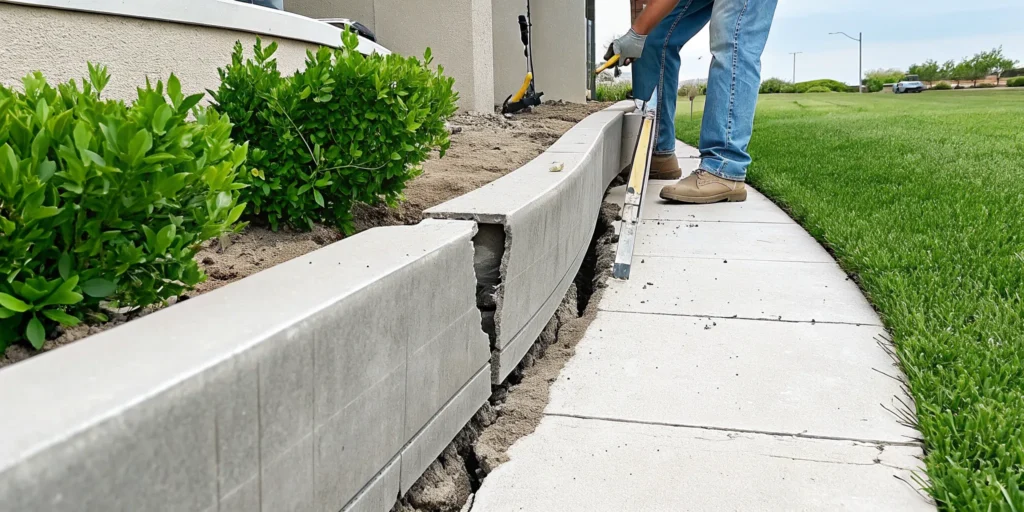
A retaining wall can look like a landscaping feature until cracks, bulges, or a slight lean signal that the soil behind it is moving. In North Texas, expansive clay adds another variable: it swells when wet and shrinks as it dries, changing pressure around both the wall and nearby foundation. That movement can be unsettling, especially when the wall sits close to your home.
Call Today for a Free Quote
The professionals at Solid Base Foundations have been providing expert foundation repair services in the Dallas-Fort Worth area since 1993. Call (940) 365-4221 for your free estimate today!
Professional retaining wall repair can help restore stability before shifting soil contributes to foundation settlement or leaning. The right solution may combine structural bracing, drainage improvements, and foundation evaluation, depending on whether water pressure, expansive clay, or lost soil support is driving the movement.
Understanding how pressure travels from a failing wall to your foundation makes the warning signs easier to recognize. It also clarifies why addressing drainage and soil movement matters before the damage spreads.
Get a Free Foundation Inspection in Dallas to see whether shifting soil or a failing retaining wall is threatening your home.
How a Failing Retaining Wall Puts Pressure on Your Foundation
If a retaining wall near your home begins to move, it is understandable to worry about what that movement means for the house. The wall is more than a landscape feature. It holds back soil and manages the sideways force that soil places on nearby structures. When the wall cracks, bows, or gives way, the soil it supported can shift toward the foundation. In North Texas, expansive clay can make that movement more difficult to predict because the soil swells and shrinks as moisture conditions change.
How pressure transfers from the wall to the house
A stable wall separates the house from moving soil and helps maintain consistent lateral support. A failing wall can lose that function in stages. Excessive lateral earth pressure may first cause the wall to tilt or crack, then allow backfill to move as the wall loses its ability to resist the load. The resulting change in soil support can affect the foundation unevenly, creating differential settlement, where one area settles or shifts more than another.
- Wall movement: Cracks, bowing, or rotation show that soil pressure is exceeding the wall’s ability to hold the slope in place.
- Soil displacement: As the wall moves or collapses, supported soil can slide, settle, or press toward the house foundation.
- Foundation response: Uneven soil movement can remove lateral support on one side of the home, causing leaning, cracking, or differential settlement.
The wall material and construction method also influence how it handles these forces. Reviewing options such as a concrete retaining wall can help you understand why design, reinforcement, and site conditions matter. A professional assessment can determine whether the visible distress is limited to the wall or has begun affecting the foundation. Acting when movement is first noticed gives you a clearer path to stabilizing the soil and protecting the structure.
Why Retaining Walls Fail on North Texas Clay Soil
If your retaining wall has started to lean or crack, it is understandable to wonder whether the wall itself is the problem. In North Texas, the soil behind it often plays a decisive role. Much of the region sits on expansive blackland-prairie clay, which changes volume as its moisture content changes. That local geology creates repeated movement that a wall must manage season after season.
Moisture changes increase pressure behind the wall
Clay soil swells when it absorbs water and shrinks as it dries. During wet periods, that expansion pushes laterally against the wall instead of only pressing downward. As the soil dries, it contracts, creating space that can later refill unevenly when rain returns. This cycle can gradually change the way the backfill bears against the wall and its footing.
The effect becomes more severe when water remains trapped behind the structure. Saturated backfill can cause lateral earth pressure to increase dramatically, placing loads on the wall that exceed its original design assumptions. The Wisconsin Department of Transportation identifies saturation as a factor that can produce unanticipated wall movement. North Texas soil behavior makes those moisture swings especially relevant here: review the research on saturated backfill pressure.
Backfill weight adds another source of force. A heavier or poorly compacted soil mass raises the pressure against the wall, and horizontal movement or rotation can transfer movement into nearby ground. Research from Virginia Tech connects retaining-wall movement with the weight of backfill, reinforcing why the soil profile matters as much as the visible wall surface: see the retaining-wall movement study.
That is why a surface patch alone may not address the underlying problem. An evaluation should consider the wall’s construction, the clay soil, moisture conditions, and how the surrounding ground is moving. Identifying those forces early helps distinguish ordinary seasonal changes from structural distress and guides the right next step for your property.
Warning Signs Your Retaining Wall Needs Professional Repair
Noticing movement in a retaining wall can be unsettling, especially when it sits near your home or supports a frequently used part of your property. A single mark does not always mean the wall is about to fail, but a changing pattern deserves attention. Watch for these signs and consider a free inspection before movement affects the surrounding soil or foundation.
- Bowing or bulging along the wall face. A wall that curves outward is responding to pressure behind it, which may increase as backfill becomes saturated or North Texas clay expands during wet conditions. Document where the movement appears and whether it changes after rainfall.
- Horizontal step cracks. Small horizontal cracks can be an early warning that lateral soil pressure is exceeding what the wall can safely resist. Cracks that lengthen, widen, or appear in a stair-step pattern should receive a professional assessment rather than a cosmetic patch.
- Tilting away from the slope it supports. A top edge that leans away from the retained soil may indicate that the wall is rotating under pressure or losing stable support at its base. This movement can reduce the soil support available to nearby structures.
- Crumbling masonry or soil pushing through joints. Spalling, loose masonry, and soil emerging through joints indicate that moisture, pressure, or deterioration is affecting the wall assembly. Chronic saturation can weaken older concrete and accelerate surface breakdown, so look for damp areas and recurring debris.
- One section settling more than another. Differential settlement occurs when part of the wall sinks farther than the rest, often leaving a dip, uneven top line, or stepped separation. Uneven support beneath the wall can worsen as soil moisture fluctuates and should be evaluated before the movement spreads.
- Water pooling behind the wall. Standing water suggests that drainage is not moving runoff away effectively. Trapped water creates hydrostatic pressure that can push the wall outward, while saturated expansive clay can add further pressure. Check for blocked outlets, missing drainage paths, or runoff collecting at the top.
These warning signs can overlap with broader property movement. For context, review our guide to early signs of foundation problems, then request a free inspection if you see progressive movement, new cracking, or drainage concerns.
How Can Retaining Wall Repair Protect Your Foundation?
If you see movement near your home, it is understandable to worry that a leaning wall could become a foundation problem. A retaining wall does more than shape a slope. It holds soil in place and helps maintain the lateral support around nearby structures. When the wall shifts or fails, that support can change, allowing adjacent soil to move and contributing to foundation leaning or differential settlement. Foundation settlement repair may be part of the solution when movement has already affected the house.
Stabilization, drainage, and foundation support work together
A professional repair plan addresses the condition of the wall and the forces pushing against it. For a leaning or bowing wall, helical anchors or tie-backs can brace the structure against deeper, more stable soil. These systems restore resistance to lateral movement instead of simply covering visible cracks. Helical anchors are frequently used to stabilize residential retaining walls experiencing pressure-related movement. retaining wall repair services can determine whether anchoring fits the wall’s material, height, and damage pattern.
Water management is equally important. Trapped water behind a wall creates hydrostatic pressure that can exceed its intended capacity. Weep holes, perforated drainage pipe, and grading that directs runoff away from the wall can relieve that pressure and help protect the repair. This matters especially in North Texas, where expansive clay changes volume as moisture levels fluctuate and can add pressure to both walls and foundations.
If soil movement has already reached the house, stabilizing the wall alone may not restore the foundation. Helical or push piers can transfer foundation loads to competent bearing soil, while underpinning can provide additional support to shifted foundation components. An evaluation helps separate normal settling from structural distress and identifies whether the priority is wall stabilization, drainage, foundation support, or a coordinated plan.
| Challenge | Repair Approach | What It Addresses |
|---|---|---|
| Leaning or bowing wall | Helical anchors or tie-backs | Bracing the wall against deeper, stable soil to restore lateral resistance |
| Hydrostatic water pressure | Weep holes, drainage pipe, grading | Relieving trapped water behind the wall before it builds force |
| Foundation settlement from lost soil support | Helical or push piers, underpinning | Transferring foundation loads to bearing soil and restoring support |
Drainage and Soil Stabilization: Fixing the Root Cause
If your retaining wall is leaning or cracking, it is understandable to focus on the visible damage. The pressure behind the wall may be the larger concern. When water becomes trapped in the backfill, it creates hydrostatic pressure that can exceed what the wall was designed to carry. Saturated soil also increases lateral pressure, making movement more likely. In North Texas, seasonal moisture changes can be especially hard on expansive clay, which swells when wet and adds pressure to nearby structures.
How drainage reduces pressure behind the wall
A durable repair should address both the wall and the water moving through the site. Depending on the wall’s design and condition, a professional may use weep holes near the base to give water a controlled exit. Perforated drainage pipe behind the wall can collect and carry groundwater away from the backfill before it accumulates. These measures help relieve hydrostatic pressure rather than simply covering the cracks it caused. Proper drainage installation, including weep holes or perforated pipe, is identified as a critical way to reduce pressure against retaining walls by Solid Base Foundations.
Surface water matters too. Grading the soil so runoff flows away from the wall limits how much water reaches the backfill. Downspouts, swales, and other drainage features should discharge far enough away that they do not saturate the soil behind the structure. In a clay-heavy environment, controlling these moisture swings helps reduce repeated expansion and contraction.
Drainage alone cannot correct soil that has already shifted. Stabilizing expansive backfill, improving compaction where appropriate, and reinforcing the wall can restore a more reliable support system. Long-term repair commonly pairs structural stabilization with proactive drainage management, because solving only the visible movement leaves the original pressure pathway in place. A site-specific assessment can determine whether the wall, its foundation, the surrounding soil, or all three require attention.
When to Call a Professional for Retaining Wall Inspection
If your retaining wall has started to move, it is understandable to wonder whether the change is harmless settling or a sign of a larger problem. In North Texas, expansive clay soil shifts as moisture levels change, so visual symptoms can have more than one cause. A trained structural professional can evaluate the wall, the soil behind it, drainage conditions, and any nearby foundation movement instead of relying on a surface-level guess.
Some movement requires immediate attention
Contact a professional promptly if the wall is moving suddenly or more quickly than before. Sudden or accelerated movement calls for immediate structural evaluation because the wall could be approaching a more serious failure. Do not stand near a visibly unstable wall or attempt to push it back into position. Keep children and vehicles away from the affected area until it has been assessed.
- Call for an inspection after visible movement: Bowing, tilting, bulging, widening cracks, or soil pushing through joints can indicate that pressure is exceeding the wall’s ability to remain stable.
- Request an evaluation when your home shows related symptoms: New settlement, sloping floors, or cracks near the wall may indicate that shifting soil has reduced the lateral support around your foundation. See these early signs of foundation problems for context.
- Do not treat a load-bearing wall as a DIY project: Excavating, removing soil, or adding weight behind the wall can change pressure and destabilize the structure. The appropriate response may involve stabilization, drainage improvements, or additional support, depending on the wall’s condition.
Early attention helps prevent a small, diagnosable issue from progressing into broader structural damage. A professional can explain whether monitoring is reasonable or whether the wall and surrounding soil require action. If you are concerned, call Solid Base Foundations at (940) 365-4221 or review our retaining wall repair services to arrange the next step.
Request Your Free Estimate from Solid Base Foundations before soil pressure spreads to your foundation.
Frequently Asked Questions
How do you tell if a retaining wall needs repair?
Look for horizontal or stair-step cracks, bowing, bulging, tilting, crumbling masonry, or soil pushing through joints. Also watch for new gaps, uneven ground, or foundation movement nearby. In North Texas, expansive clay can swell when wet and add pressure to an already stressed wall. Sudden movement or rapidly widening cracks deserve prompt professional evaluation.
Why do retaining walls fail?
Common causes include excessive lateral soil pressure, poor drainage, inadequate reinforcement, and construction that does not match site conditions. Trapped water creates hydrostatic pressure behind the wall, while saturated expansive clay can increase the load on both the wall and nearby foundation. A lasting repair should address drainage and soil movement, not only the visible crack or lean.
Is retaining wall repair something I can do myself?
Minor surface repairs may seem manageable, but a leaning, bowing, or settling wall can involve significant soil loads and hidden foundation risks. Avoid excavating or bracing a distressed wall without a professional plan. An experienced specialist can assess stability, drainage, and nearby settlement before recommending anchors, tie-backs, drainage work, or other repairs.
What happens if I ignore retaining wall damage?
Damage can progress from cracking or leaning to partial or complete wall failure. As the wall loses its ability to hold soil, pressure and soil movement can affect adjacent slabs or foundations, contributing to differential settlement. Water problems may worsen the movement, especially in expansive North Texas clay. Early assessment helps identify the cause and determine whether stabilization and drainage should be completed together.
Ready to Protect Your Foundation?
A retaining wall that is shifting, cracking, or allowing soil to move deserves a closer look, especially on moisture-sensitive North Texas clay. Solid Base Foundations can assess the wall and nearby foundation, then explain practical next steps for stabilization and drainage. Get started with a free estimate or inspection by visiting the foundation repair service page. You can also call (940) 365-4221 for help from the team.