
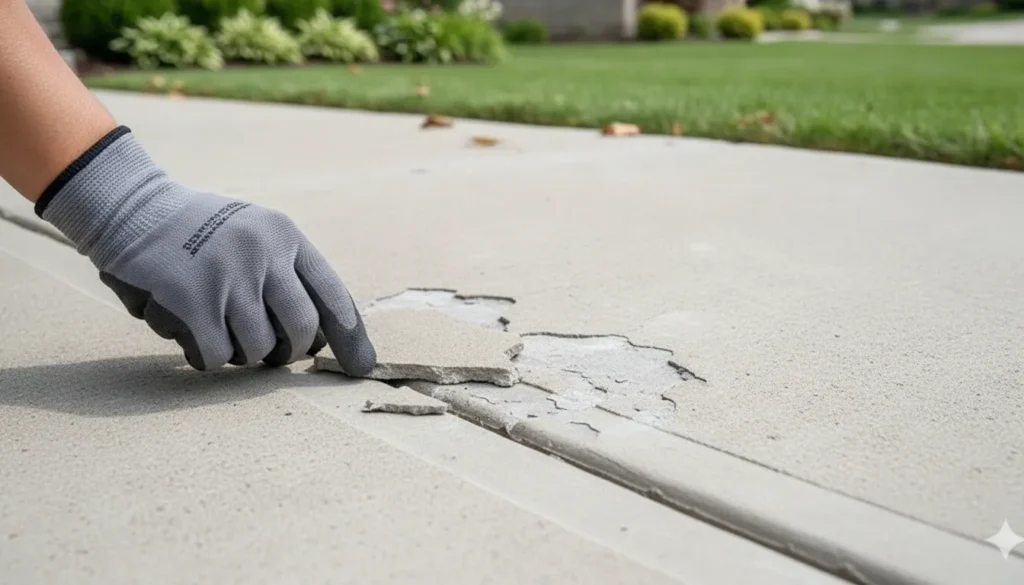
Thin flakes of concrete peeling off your walkway are clear signs of a process called spalling. This scaling leaves your patios and driveways rough, pitted, and open to deeper damage. Finding the root cause is the key to keeping your property safe.
A proper plan to repair spalling concrete starts with clearing all loose debris and dust to reach a sound, solid concrete base. Next, you apply a liquid bonding agent or a thin cement slurry to glue the old concrete to your new patch mix. You then use a strong polymer-modified mortar to fill the low spots and restore a smooth, safe surface to your worn driveway, patio, or walkway. For deep, severe damage that exposes steel rebar, the American Concrete Institute advises getting a professional structural inspection. Fixing these flaking areas now keeps rainwater from soaking deep into your concrete slab, which prevents seasonal freeze damage and avoids costly foundation repairs later.
To stop this surface peeling for good, you must first find the main forces that are breaking down your concrete slabs. We explore these regional weather and soil triggers in What Causes Spalling Concrete in North Texas? To help you keep your home’s outdoor walkways and patios safe, the path begins with
Schedule a free foundation inspection in the Dallas-Fort Worth area and call (940) 365-4221 for a free quote today.
What Causes Spalling Concrete in North Texas?
Concrete looks solid and tough, but it has tiny pores that soak up water. When water gets inside your driveway, patio, or walkway, local weather changes can cause the surface to flake and peel. This flaking is called concrete spalling, and it is a common sight across the Dallas-Fort Worth area. It is best to find the root cause of this surface wear before you search for maintenance tips to prevent spalling concrete.
The physics of freeze-thaw damage
The main driver behind this damage is the freeze-thaw cycle. When rain or melting ice soaks into the slab, it fills the tiny spaces inside the concrete. When the air drops below freezing, that trapped water turns to ice and expands by about 9% in volume. This expansion builds up high pressure inside the tiny pores of your concrete.
This pressure is strong and pushes against the solid walls of the cement. Reports from the California Department of Transportation show that too much pressure creates tiny cracks in the cement. Over time, these small cracks grow and connect with each other. This causes a weak surface layer to separate from the sound base within one to five years.
The role of deicing salts
Many homeowners use deicing salts to clear winter ice from their driveways and walkways. While these salts make walking safer, they cause great harm to the concrete below. The American Concrete Institute reports that deicing salts can increase surface damage by five to ten times. By keeping liquid on your slab longer, these salts allow more water to sink deep into the pores.
Salty water creates high pressure when it freezes inside the concrete. This rapid change leads to flaking on your driveway or patio. When differentiating concrete cracks from foundation issues, keep in mind that spalling is a surface problem. Deicing salts are one of the fastest ways to trigger this surface damage.
Local climate and soil triggers
The unique climate of North Texas plays a huge role in concrete wear. In places like Dallas and Denton, we do not face months of deep winter snow. Instead, we have sudden overnight freezes that can hit rain-soaked slabs. When the air drops fast after sunset, the wet concrete is hit with sudden ice expansion.
Local soil also makes this issue worse because the Dallas area sits on expansive clay. When this clay swells and shrinks with moisture, it puts stress on walkways and driveways. This constant movement, paired with overnight freezes, weakens the concrete over time. Knowing these triggers helps you take the right steps to prevent surface damage.
Spalling Concrete: Cosmetic Problem or Structural Concern?
Finding spalling concrete on your patio, walkway, or driveway can cause real worry. You might wonder if the peeling surface is just ugly or if your slab is failing. Knowing these signs helps you plan your next step. Some surface wear is easy to fix, but deep damage needs professional care. In North Texas, our weather and soil can turn minor surface issues into major structural concerns if you leave them alone.
Evaluating the depth of damage
To judge your concrete issue, you must check how deep the flaking goes. Light spalling is mostly a cosmetic issue. This level of damage features small flaked spots that are less than one-quarter inch deep. Even small spots can let moisture seep into the slab, but they do not hurt its strength. You can easily patch these spots to protect your slab from future winter freezes.
Moderate damage goes deeper, reaching between one-quarter and one-half inch below the slab surface. At this stage, the concrete is losing its outer seal. Water can soak in more easily, which speeds up freeze-thaw wear. It is wise to repair spalling concrete at this point before it turns into a structural risk. If you ignore moderate flaking, the concrete will continue to break apart. What starts as a simple cosmetic fix will soon need a much larger repair effort.
Spotting structural warning signs
Deep damage is a big concern that goes beyond looks. If the flaking is deeper than one-half inch, it often exposes coarse stones or steel rebar. When steel is exposed to air and water, it starts to rust. Rusting steel expands, which pushes the concrete apart from within. This process ruins the strength of your slab and can cause major failure. Slabs with deep pits cannot safely hold heavy vehicles or support structural weight.
According to concrete repair guides from the California Department of Transportation, deep spalls need quick attention because they can lower structural strength. This is true if you also see shifting, sinking, or cracking. To learn how to tell these issues apart, consider differentiating concrete cracks from foundation issues on your property. If the slab is tilting or sinking into the local clay soil, the core of your structure may be weak. This type of movement means you need an expert to check your home.
You can use the table below to compare cosmetic and structural issues. It highlights key signs to look for when checking your outdoor concrete slabs.
| Feature. | Cosmetic Surface Spalling. | Structural Damage. |
|---|---|---|
| Surface appearance. | Small pits or shallow flaking. | Large cratered holes and deep chips. |
| Depth of damage. | Less than 1/4 inch deep. | Over 1/2 inch deep. |
| Internal exposure. | No coarse aggregate or rebar visible. | Exposed gravel, stone, or steel rebar. |
| Underlying movement. | Slab remains stable and level. | Slab is settling, shifting, or tilting. |
| Recommended path. | DIY patch or surface resurfacing. | Professional structural assessment. |
How to Repair Spalling Concrete
Cosmetic concrete spalling is a common issue for homeowners in North Texas. It makes slabs look bad, but you can fix minor flaking on your own. When you catch surface wear early, a simple DIY patch can stop water from getting deep into the slab. This simple repair will save you time and keep your walkway or patio looking clean. Taking care of small pits now prevents deep cracks from forming later.
Steps for DIY concrete repair
Before you begin, make sure the damage is only on the surface. Standard repair guides from the California Department of Transportation highlight the need for a solid base. You must remove all weak concrete down to a sound layer to get a strong bond. If the slab is sound underneath, you can follow these steps to repair spalling concrete yourself.
- Remove loose concrete. Use a hammer and a chisel to chip away all flaking or damaged areas. Tap the slab to find hollow spots and clear them out until you reach hard, solid concrete.
- Clean the surface. Sweep away all dust, sand, and gravel from the work area. Use a stiff wire brush to scrub the concrete and loosen any remaining dirt or small particles.
- Wash and rinse. Spray the concrete with a hose to wash away all fine dust. Let the area dry until the surface is damp but has no standing water.
- Apply a slurry base. Mix equal parts of water, cement, and an acrylic fortifier to make a thin cement slurry. Brush this wet mixture onto the damp concrete to help the new patch bond.
- Apply the repair mortar. Mix one part water, one part cement, and two parts sand, or use a pre-mixed patch mortar. Add water slowly until the mix looks like peanut butter. Press this wet mix into the spalled area and smooth it with a flat trowel.
- Cure the patch. Cover the wet patch with plastic wrap to keep the moisture in. Let the concrete cure for at least 24 hours before you walk or drive on the new surface.
Prevention tips for lasting concrete
After you fix the surface, you should take steps to protect it from future wear. Seal your concrete every two to three years to block out rain and winter moisture. Be sure to avoid using chemical de-icing salts during cold snaps, as these can make flaking five to ten times worse.
It is also vital to keep water from pooling on your slabs. Ensure your yard slopes away from concrete areas so rainwater runs off quickly. Read our maintenance tips to prevent spalling concrete to keep your driveway and walkways in good shape for years.
When to Call a Professional for a Concrete Repair
You can fix minor surface wear on your own. But some concrete problems go too deep for a quick DIY patch. If you see signs of deep damage, it is wise to get an expert check. Shifting soil and heavy weight can ruin your slabs if you wait.
When surface flaking goes too deep
You must look past the surface to find real danger. When you try to repair spalling concrete, check how deep the pits go. If the flaking goes down more than half an inch, a DIY patch will not hold. Deep flaking often exposes coarse gravel or steel bars inside the slab. If you see rusted steel or loose rocks, the concrete has lost its strength.
Exposed steel will rust when water hits it. As the steel rusts, it swells up to ten times its first size. This swelling forces the concrete around it to crack and pop off. State concrete repair standards warn that rusted steel ruins the slab. You cannot fix this with a simple store-bought mix. A pro must clean the steel and apply a special coating to stop the damage.
Shifting clay soil and sinking slabs
In North Texas, our local soil plays a major role in concrete damage. The ground is made of thick clay that swells when wet and shrinks when dry. This constant moving can sink your driveway or sidewalk. When a slab sinks, it cracks and peels. You can check for this by looking at the joints and edges of your concrete paths.
If one side of a concrete slab sits lower than the other, you have a settlement issue. If you try to fix this with just a surface patch, the new layer will soon break apart. You must lift and level the slab first. A pro can help by leveling sunken concrete surfaces with light polyurethane foam. This lifts the heavy slab back to its first spot and seals out moisture from the soil below.
Repeating water and moisture leaks
Water is the main enemy of strong concrete. If your patio or walk stays wet, moisture will seep deep into the pores. When cold nights hit North Texas, this water turns to ice and expands. This freeze-thaw cycle happens over and over. If you do not fix the drainage issues around your slabs, the flaking will return every year.
An expert team can find out why water is pooling on your slabs. They can design a plan to divert water away from your concrete. Solid Base Foundations handles both concrete and foundation repair, which means they can look at the whole picture. They can fix the surface flaking and also solve the deeper structural issues at the same time.
Before you try a complex repair on your own, consider getting an expert opinion. Our team is ready to inspect your property and give you a free estimate.
Ready to stop concrete flaking for good? Request your free foundation and concrete inspection and call (940) 365-4221 to get started.
Frequently Asked Questions
What is the best way to repair spalling concrete?
To repair spalling concrete, first remove all loose debris down to sound concrete. Then, clean the area, apply a bonding slurry, and patch it with a repair mortar. According to the American Concrete Institute, preparing a clean, sound surface is the most critical step for a lasting bond. Once patched, seal the surface to keep water out.
Can you repair spalling concrete on a driveway?
Yes, you can patch or resurface a spalled driveway if the damage is only on the surface. Be sure to clean the slab completely and use a high-strength resurfacer designed for vehicle traffic. However, if the slab has deep structural cracks or is settling, a full replacement or a professional lift is often needed.
Is spalling concrete a structural issue?
Usually, spalling is a cosmetic problem that does not threaten the safety of the structure. However, if the flaking is deeper than half an inch or exposes the steel reinforcing bars, it becomes a structural concern. According to the National Ready Mixed Concrete Association, deep scaling allows water to rust the steel inside, which can lead to major structural failure.
What causes concrete to spall?
Concrete spalls when water gets into its pores and freezes. Because water expands by about nine percent when it turns to ice, it creates internal pressure that pops off the surface layer. This damage is worse in North Texas due to rapid freeze-thaw cycles and the use of harsh deicing salts.
Ready to Schedule a Free Concrete Inspection?
Moisture and North Texas winter weather will continue to damage your flaking concrete walkways, patios, and drives. If you wait to fix this spalling, water can seep deep into the slab, rot the steel mesh, and cause structural cracks. Fixing these small surface issues now stops the damage from spreading, protects your home, and saves you from a costly concrete replacement later.
Ready to repair your concrete? The expert team at Solid Base Foundations is here to help you protect your home and restore your peace of mind. You can schedule a free foundation and concrete inspection online today. You can also call us at (940) 365-4221 to speak with our local team about your concrete repair options.