
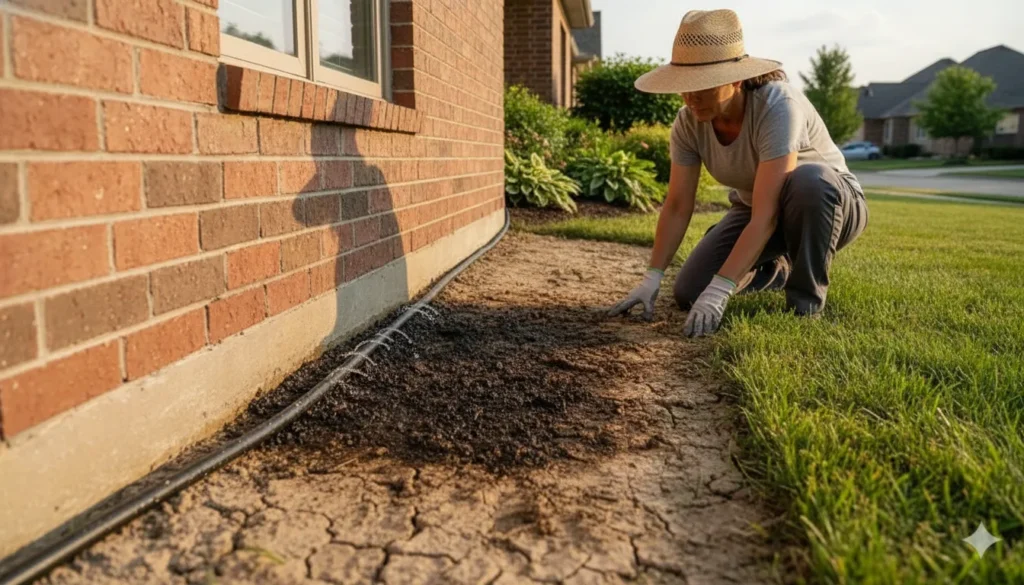
When a North Texas summer turns hot and dry, the soil beneath your home can change before a crack becomes obvious. Expansive clay loses moisture, shrinks, and pulls away from parts of the foundation. Uneven watering can intensify that movement by leaving some areas dry while others swell.
Effective summer foundation maintenance keeps soil moisture around your foundation as consistent as possible. Use measured, deep watering during prolonged dry weather, avoid saturating one area, and check for new cracks or gaps where soil has pulled away. These steps cannot prevent every foundation problem, but they can help you spot movement early and reduce stress caused by rapid moisture changes.
Understanding why the soil moves is the first step toward protecting your home. North Texas heat affects more than the surface landscape, and the clay beneath your foundation responds in ways that can widen existing weaknesses.
Protect your North Texas home this summer. Schedule a free foundation inspection at (940) 365-4221.
Why Summer Heat Stresses North Texas Foundations
If your home develops a new crack during a long North Texas heat wave, the soil beneath it may be part of the story. The region’s expansive clay changes volume as its moisture level changes. Prolonged summer heat dries the upper soil, causing the clay to shrink and pull away from the foundation perimeter. As support changes beneath a slab, the foundation can settle unevenly, while existing cracks may open or widen.
This is the defining challenge of North Texas expansive clay soil. It is not simply hard, dry dirt. Its mineral structure allows it to absorb water and swell, then contract when that moisture leaves. The movement can repeat through seasonal wet and dry cycles, placing stress on shallow foundations. The MIT and National Research Council Canada building digest identifies volume-changing clay subsoils as the most costly natural hazard for buildings on shallow foundations. That risk applies across the United States and Canada: research on volume-changing clay subsoils.
What happens beneath the slab
During a hot, dry stretch, evaporation removes moisture from the soil near the surface. The clay contracts, and a visible gap can form between the soil and the foundation edge. That gap reduces uniform contact and can change how the slab bears on the supporting soil. If one area dries more quickly than another, the resulting movement may be uneven rather than a simple, uniform drop.
That uneven movement explains why summer symptoms can appear in several places at once. You may notice diagonal wall cracks, separations around doors or windows, or cracks that become more pronounced during the driest part of the season. Dry clay soils are capable of shifting buildings, as documented by NDSU Agriculture Extension. The change does not automatically confirm a structural failure, but it does warrant careful observation, especially when the pattern is new or worsening.
Why the North Texas setting matters
Expansive clay with high shrinkage potential creates a regional foundation concern because shallow structures respond to moisture changes close to the surface. MIT’s building research separates troublesome clay deposits into shrinkable and expansive groups, with expansive soils capable of significant volume change as moisture varies: MIT guidance on expansive clay behavior. In North Texas, extreme heat accelerates the dry phase of that cycle.
A practical summer foundation maintenance plan starts with watching the soil and the structure together. Look for:
- New or widening cracks in interior walls, brick, or the foundation itself
- Visible separation between dry soil and the foundation edge
- Doors or windows that begin sticking at the same time cracks change
- Areas around the home that dry faster than the rest of the perimeter
These observations help you distinguish a seasonal soil response from a pattern that deserves professional evaluation. Consistent moisture management can reduce excessive shrinkage, but the goal is balance, not flooding. The next step is learning how uneven or excessive watering can create another kind of stress in the same expansive clay.
Does Inconsistent Watering Make Clay Shrinkage Worse?
Yes. In North Texas, the problem is not simply that clay soil gets dry. The greater concern is rapid, repeated movement between very dry and very wet conditions. Expansive clay changes volume as its moisture content changes, so a foundation can be exposed to shrinking soil one week and swelling soil the next. That uneven support creates a more stressful environment than a steady moisture level.
During a hot, dry spell, the soil around the foundation loses moisture and contracts. Rapidly drying soil can shrink faster and more aggressively, allowing gaps to form between the soil and the foundation perimeter. As the supporting soil pulls away, portions of the foundation may settle or shift differently from adjacent areas. This is one reason consistent soil moisture is a central part of summer foundation maintenance, not an occasional response after cracks appear.
How under-watering creates movement
Under-watering does not mean that every part of the yard must remain wet. It means the soil immediately around the foundation becomes excessively dry, particularly during extended North Texas heat. When expansive clay dries, it shrinks. If one side of a home loses moisture faster than another, the foundation may experience uneven support around its perimeter. New cracks, separations, or doors that begin sticking can signal that the structure is responding to this movement.
Regularly monitoring the perimeter during dry weather helps you spot soil pulling away before the gap becomes pronounced. The goal is to avoid extreme drying, not to saturate the ground. If drainage concerns are contributing to uneven moisture, review these foundation drainage problems before adding more water.
Why over-watering can be just as disruptive
Adding too much water creates the opposite risk. Expansive clay swells as it absorbs moisture, and that expansion can press against foundation walls. The soil’s pressure may be especially uneven when water collects in one area while another section remains dry. A leaking hose, poorly directed downspout, or standing water beside the home can therefore undermine the same moisture balance that dry weather disrupts.
A steady approach avoids both extremes. Water during prolonged dry spells, but do so in a controlled way that supports even moisture around the perimeter. Avoid alternating between long periods of neglect and heavy soaking. Your objective is stable soil conditions, not a permanently wet foundation line. When moisture remains more consistent, North Texas clay has less opportunity to undergo sharp shrink-and-swell cycles that can contribute to foundation movement.
| Under-watering | Over-watering | |
|---|---|---|
| Effect on clay | Soil dries and shrinks | Soil swells with excess moisture |
| Movement created | Soil pulls away, slab can settle unevenly | Soil expands and presses against foundation walls |
| Visible clue | Gap or separation between soil and foundation edge | Standing water, pooling, or a saturated foundation line |
| Seasonal trigger | Prolonged dry spells and summer heat | Leaks, poor drainage, or heavy concentrated watering |
A Simple Summer Watering Routine for Your Foundation
In North Texas, summer foundation maintenance works best when watering is steady and controlled. Expansive clay soil can shrink as it dries, pulling away from the foundation perimeter. The goal is not to keep the ground muddy or wet at all times. Aim for deep, even moisture that reduces rapid shrinkage without creating new swelling pressure.
-
Walk the perimeter and check conditions
Start by checking the soil around your foundation during an extended dry spell. Look for visible gaps where soil has pulled away from the wall, unusually hard or dusty ground, or areas that dry faster than the rest of the perimeter. Also check whether gutters and downspouts are directing concentrated water toward one section. A watering routine should correct broad drying, not mask a drainage problem.
-
Place the soaker hose at the correct distance
Lay a soaker hose approximately 12 to 18 inches from the foundation perimeter. Keep it as continuous as practical around the areas where the soil is drying. This position helps distribute water into the surrounding soil instead of concentrating it directly against the wall. A soaker hose also provides slower, more even watering than a handheld spray, helping maintain consistent moisture around the foundation.
-
Water deeply during cool hours
Run the hose long enough to encourage moisture below the surface rather than creating a brief damp layer that disappears in the heat. Water in the early evening or at night, when cooler conditions reduce rapid evaporation. Check the soil after watering to confirm that moisture has penetrated beyond the top layer. Deep saturation is the objective, not surface dampness.
-
Keep the schedule consistent through dry spells
Continue monitoring the perimeter during hot, rainless weather and repeat the routine as conditions require. Consistency matters more than a single heavy watering session. When expansive clay repeatedly dries and rehydrates in uneven cycles, its volume changes can place stress on the structure. Regular moisture helps limit excessive shrinkage and reduces the chance that the soil pulls away from the foundation.
-
Stop before the soil becomes saturated
Do not flood the base of the foundation or leave standing water beside the wall. Too much water can cause expansive clay to swell, creating pressure against foundation walls. If water pools, flows toward the house, or remains wet long after the hose is turned off, pause watering and address the drainage pattern. Balanced moisture is the target: neither severely dry nor oversaturated.
Record where you watered and note any areas that keep drying, pooling, or separating from the foundation. That simple record can help you adjust the routine and spot changes early, before a seasonal moisture problem becomes a larger structural concern.
What Warning Signs Should You Look For This Summer?
Summer inspection is less about searching for a single dramatic defect and more about noticing changes. In North Texas, expansive clay responds to moisture loss by shrinking. During a hot, dry stretch, that movement can affect the way your foundation, walls, floors, doors, and trim fit together. Dry clay soils can shift buildings, a risk documented by the NDSU Agriculture Extension.
Walk the inside and outside of your home every couple of months, with extra attention during peak summer heat. Compare what you see with earlier inspections, photographs, or notes. A new hairline crack may not indicate immediate structural damage, but a crack that is widening, recurring, or appearing alongside other changes deserves a closer look.
- New or widening cracks: Check drywall, plaster, brick, masonry, the foundation perimeter, and areas around doors or windows. Note the location and approximate width so you can track whether it changes.
- Soil pulling away from the foundation: Look for a visible gap or separation between the ground and the foundation wall, especially along dry, exposed sides of the home. This can signal that the soil has shrunk away from the structure.
- Sticking doors or windows: Doors that drag, latch differently, or develop uneven gaps may reflect movement in the surrounding frame. Windows that suddenly become difficult to open or close are worth recording.
- Uneven or sloping floors: Pay attention to new changes underfoot, furniture that rocks, or flooring that separates or buckles. These observations become more useful when they are documented over time.
- Gaps around trim: Inspect baseboards, crown molding, door casings, and window trim for new separations from walls or ceilings.
Exterior checks should include corners, brick joints, patios, porches, and the visible foundation line. Interior checks should cover rooms on every side of the house, not only the areas where you already noticed a problem. Several small changes occurring together can provide more useful information than one isolated mark.
Keep the inspection calm and methodical. Photograph each concern from the same angle, record the date, and note recent weather or watering conditions. If the pattern continues or multiple warning signs appear, consider arranging a professional evaluation. Early documentation helps an inspector distinguish seasonal movement from a developing structural concern and gives you a clearer basis for deciding what to do next.
How Summer Foundation Maintenance Prevents Costly Repairs
Summer foundation maintenance works best before a visible crack gives you a reason to worry. In North Texas, foundation movement often begins below grade, where changing moisture levels alter the soil supporting your home. A consistent maintenance routine helps you manage that process instead of waiting for the first sign of distress.
North Texas clay responds to moisture in different ways. Shrinkable clay contracts as it loses moisture, while expansive clay can both shrink when dry and swell when wet. That volume change is central to many foundation problems. The MIT Canadian Building Digest describes shrinkable and expansive clays as distinct groups of troublesome subsoils and notes that volume-changing clay can pose a serious hazard to buildings with shallow foundations: MIT’s overview of expansive and shrinkable clay.
That distinction matters during a North Texas summer. Prolonged heat can dry the soil near the foundation, allowing it to shrink and pull away from the structure. Then, a sudden heavy rain or concentrated watering can make the same soil swell. These moisture-driven shifts can place uneven pressure beneath or against the foundation. The goal is not to keep the ground constantly wet. It is to avoid the extremes of rapid drying and excessive saturation.
Consistent watering around the perimeter is one part of that balance. Monitor the soil during dry spells and use a soaker hose to provide gradual, even moisture rather than flooding one area. Keep drainage paths clear so roof runoff does not collect beside the foundation. Small differences in moisture across the perimeter can create uneven soil movement, so consistency matters more than a single heavy watering session.
Routine inspections add another layer of protection. Walk the exterior every couple of months, with closer attention during peak summer heat. Look for new wall or foundation cracks, doors that begin sticking, and visible separation between the soil and foundation wall. A change does not automatically mean severe structural damage, but it gives you a reason to document the location and monitor whether it grows.
Early attention can keep a manageable change from becoming a larger repair concern. For more practical steps, see how to prevent foundation damage. A proactive routine gives you clearer information, steadier soil conditions, and a better opportunity to respond while an issue is still limited.
Frequently Asked Questions
Why is summer foundation maintenance important in North Texas?
North Texas expansive clay dries and shrinks during extreme heat. As the soil pulls away from the foundation, the supporting ground can settle unevenly and widen existing cracks. Keeping moisture more consistent around the perimeter helps reduce those rapid soil movements.
Should I water my foundation in the summer?
Water the surrounding soil during extended dry spells, but aim for deep, even moisture rather than a constantly wet surface. A soaker hose can help prevent the clay from drying too quickly and pulling away from the foundation. Adjust the routine after rain or when drainage carries water toward the structure.
How far from the foundation should I place a soaker hose?
Place the hose approximately 12 to 18 inches from the foundation perimeter for gradual, even watering. This position moistens the adjacent clay without directing concentrated water against the foundation wall. Follow local watering restrictions and monitor the soil rather than relying on a fixed schedule.
Can overwatering affect my foundation?
Yes. Expansive clay swells when it absorbs excessive water, which can create pressure against foundation walls and contribute to movement. The goal is balance: avoid both severely dry soil and saturated areas caused by leaks, poor drainage, or prolonged irrigation.
What foundation warning signs should I check for in summer?
Walk the exterior and interior every couple of months, with extra attention during peak summer heat. Look for new or widening cracks, visible separation between soil and the foundation, sticking doors, or windows that change in operation. A pattern that worsens during dry conditions merits a professional inspection.
Ready to Schedule Your Free Foundation Inspection?
Consistent summer foundation maintenance can help you spot moisture-related movement before a small change becomes a larger concern. A professional inspection gives you a clearer view of how North Texas clay is affecting your property and which next steps make sense. Schedule a free foundation inspection with Solid Base Foundations, or call (940) 365-4221 for a free estimate.