
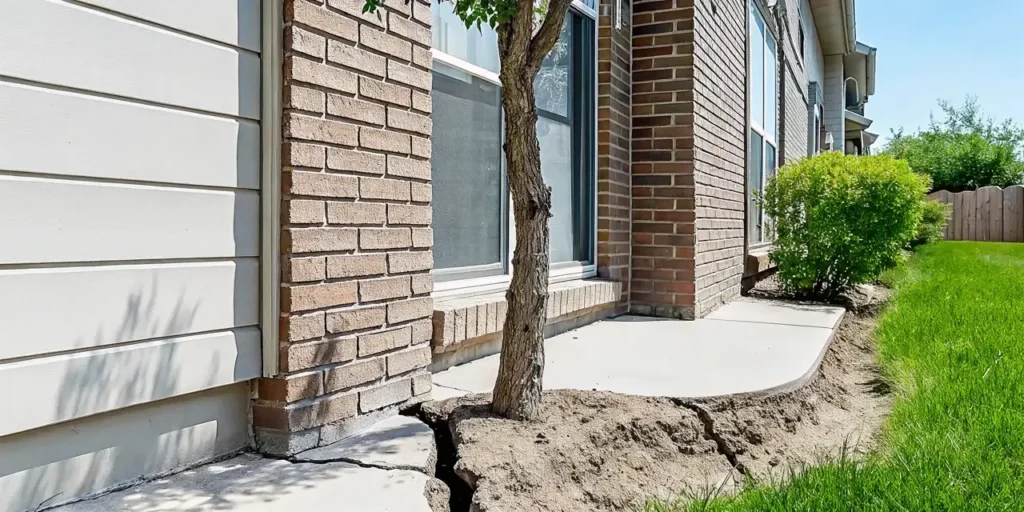
Large oak trees can pull significant moisture from the soil near your house during a dry North Texas summer. This water loss can cause heavy clay soil to shrink and leave part of a foundation with less support. You might notice sticking doors or growing wall cracks.
Can tree roots damage foundation systems in North Texas by pulling out the water in the ground that keeps our local clay soil stable, firm, and solid? Yes, tree roots can cause severe harm because they quickly seek water from the underground soil, which leads to soil shrinking, foundation settling, and deep home cracks. During dry spells, large trees pull water from deep under the home where the soil stays damp, causing the ground to sink and leaving the slab without support. According to research from the Canadian Building Digests, the deep drying effect of tree roots is a primary cause of many settling problems found in heavy clay soil.
Finding the right moisture balance around your home is a common challenge for many North Texas property owners. You need to understand how trees and soil work together to avoid costly repair bills. This brings us to a critical question: Can tree roots damage foundation systems in North Texas? To help you protect your investment, we should look at how local trees interact with our soil. The process works like this.
Can tree roots damage foundation systems in North Texas?
Many homeowners worry that roots will grow through their concrete. In North Texas, the risk is real, but it does not work how most people think. Tree roots rarely drill through solid concrete slabs. Instead, they cause harm by changing the ground under your home.
Direct vs indirect root damage
Roots are always looking for water to stay alive. In dry times, they grow deep into the soil to find it. This can lead to foundation damage caused by tree roots as the soil loses its moisture. When roots pull water from the ground, the soil shrinks. This leaves a gap where the foundation used to sit. The heavy house then sinks into that void.
Research from the University of Houston shows that trees are a factor in over half of sites with building distress. While a root might push against a weak spot or a pipe, the drying effect is much more common. This drying process is the main way that large plants hurt house structures in urban areas.
A single mature tree can pull hundreds of gallons of water out of the ground each day. This creates a cone of dry soil that spreads out from the trunk. If the tree is too close to your house, that dry cone will reach under your slab. This causes the edges of your home to drop or settle unevenly.
The role of expansive clay soil
North Texas is known for its expansive clay soil. This type of dirt acts like a sponge. It grows when it is wet and shrinks when it is dry. These volume changes put huge stress on slabs and piers. Some studies say that soils with high clay content have a very high risk for shrinkage.
When a large tree sits near a home, it speeds up this shrinking process. This is why many local homes see movement during hot Dallas summers. The annual cost of damage from these soils in North America is about $15 billion. Proper moisture changes and soil expansion plans are needed to keep the ground stable. Without a good plan, the clay will continue to shift as the seasons change.
During a drought, the clay pulls away from the concrete. This leaves the structure with less support. This problem is very common in cities like Dallas and Plano where the soil is thick with clay. Homeowners should watch their trees during the hot months to make sure the soil stays at a safe moisture level.
Signs of tree root foundation damage
You can often spot the signs of root issues before the damage gets too big. Common signs include cracks in the inside walls or on the outside brick. You might also notice that your doors and windows start to stick. These issues happen because the frame of the house is no longer level.
Uneven floors and gaps in the trim are other red flags. If you see these signs, it is wise to check the trees near your home. Large, fast-growing trees like oaks or elms need a lot of water. If they are too close to the slab, they will take that water from the soil your home relies on for support.
If you find cracks that seem to grow during dry spells, roots may be the cause. You can also look for roots that are seen on the surface near the foundation. While surface roots are a trip hazard, the hidden roots beneath them are often the ones doing the most harm to your slab.
How roots, clay soil, and moisture changes interact
The soil around your home is not a static base. In North Texas, the ground consists mostly of expansive clay. This type of soil acts much like a sponge. When the clay gets wet, it swells and grows in volume. During dry spells, it loses moisture and shrinks. These moisture changes and soil expansion put constant stress on your home. If the movement is not even, your foundation can crack or shift. Learning how tree roots join this cycle is the first step to protecting your house.
The power of expansive clay
Clay soil is made of very tiny particles that hold onto water. In our area, this soil often has a high plasticity index. This means the soil can change shape and size a lot when the water level shifts. In fact, experts say that soil with more than 25 percent clay content has a high risk for volume changes. You can read more about these soil properties and foundation risk through research from known building science groups. When the ground shrinks away from your slab, it leaves a gap. Without the help of the soil, the heavy concrete can drop or settle into the void.
This cycle of swelling and shrinking happens every season. In the spring, heavy rains cause the soil to push up against the slab. This is known as heave. In the hot summer, the sun bakes the earth and causes it to pull back. This constant back-and-forth motion weakens the structure over time. While the weather plays a big role, tree roots often speed up the drying process. They take water out of the ground much faster than the sun can on its own.
Why roots seek your foundation
Trees need a lot of water to stay healthy, even during a Texas drought. Their roots can spread out two or three times as wide as the tree’s branches. As the surface soil dries out, roots grow deeper to find a steady water source. The area beneath your home often stays damp because the slab blocks the sun. This makes your foundation a prime target for thirsty roots. So, can tree roots damage foundation slabs? Yes, but not always by pushing against the concrete. Instead, they act like a straw that sucks the ground dry.
When roots pull water from the clay beneath your home, the soil shrinks. This drying is called desiccation. Since roots don’t grow in a perfect circle, they often dry out one side of the house more than the other. This uneven drying leads to differential settlement. One part of the house stays level while another part sinks. This tilt is what causes the most severe structural issues. It creates torque that can snap a foundation beam or pull walls apart.
The cost of uneven moisture
Uneven moisture is the main threat to a slab foundation. If you water your lawn on one side but have a large oak tree on the other, the soil moves at different rates. Research shows that tree roots are a top factor in more than half of all cases of building distress in clay-heavy areas. The money impact of this damage is huge. In North America, the yearly cost of repairs due to expansive clay is about 15 billion dollars. Stopping these issues often starts with handling how much water is in the ground around your home.
You can see the signs of this movement in your daily life. You might find that your front door sticks in the summer but works fine in the winter. You could see small cracks in the brick that seem to open and close with the seasons. These are clues that the clay is moving. Keeping the moisture level steady around the entire house can help. If you don’t control the water, the roots will continue to drain the soil, leading to costly repairs down the road.
Warning signs of root-related foundation movement
Trees bring shade and beauty to your yard, but their roots can hide a big risk for your home. Many people ask, “can tree roots damage foundation?” when they see new cracks. In the Dallas area, homeowners often find foundation damage caused by tree roots after a dry spell. Finding these signs early helps you act before the repair bill grows too large.
Visible cracks in walls and floors
One of the first signs of trouble is the look of cracks in your home. These often show up around door frames, window corners, or along the floor. While some small hairline cracks are common as a house ages, deep or wide cracks often point to a shifting base. When roots suck water from the clay, the foundation settlement from soil shifts can cause your walls to pull apart.
You may also see cracks on the outside of your home. Look for these red flags:
- Stair-step cracks in brick mortar
- Gaps between the siding and the frame
- Gaps around the chimney
If you see roots growing near the base of your home, they could be the cause of the gap. Research shows that trees are a major factor in more than half of building distress cases in urban areas.
Doors and windows that stick
Does your front door catch on the frame, or are your windows hard to slide open? These changes often happen because the frame is no longer level. When roots pull moisture out of the ground, the soil shrinks. This movement causes the house to sink in one spot, which puts stress on your doors and windows.
If you notice that several doors in one area of the house stick at the same time, it is a clear warning sign. This type of movement is a top cause of shrinkage settlement in homes built on clay soil. It is more than just an old house settling. It is a sign that your soil is losing its power to support your home.
Uneven or sloping floors
Walk across your rooms and feel for any change in the floor level. You might feel a slight dip or a slope that was not there before. In some cases, tiles may crack or wood planks might gap because the soil beneath that part of the slab is too dry. Large trees can drink hundreds of gallons of water a day, which leaves the soil brittle and weak.
Checking for these signs can help you catch a problem before it gets worse. If you see these red flags, you should have an expert look at your home. A professional can find out if the tree is the real cause or if it is just a small issue. Most companies offer free quotes to help you understand what is happening under your house.
Is the tree really causing the foundation problem?
Owners in the Dallas area often ask if a close oak or elm is the cause of their cracked walls. While roots rarely drill into a slab on their own, they can and do pull moisture from the ground. These roots drink hundreds of gallons of water each day to stay alive during hot Texas summers.
This drying effect can shrink the clay soil that holds up your home. Many people want to know more about foundation damage caused by tree roots in North Texas. The answer often lies in how trees change the water levels in the soil.
How roots dry out Dallas clay
North Texas is known for its heavy clay. This soil acts like a sponge. It grows when it is wet and shrinks when it is dry. During a hot summer, a large tree needs hundreds of gallons of water each day to live. If it cannot get water from rain, it takes it from the soil under your house. This leads to sinking as the dirt pulls away from the slab.
When the soil shrinks, the weight of the house can cause the foundation to drop or crack. This process is common in areas with very high clay content. Studies show that tree roots are a factor in more than half of sites with building distress. But trees are not always the only cause of these shifts.
Checking the causes of foundation shifts
It is hard to tell the gap between root damage and other soil problems without a pro. Each issue moves the house in a slightly different way. For example, a plumbing leak might cause the soil to swell and lift the slab. But a tree will often cause the slab to sink as the soil dries out and shrinks. This creates crooked floors and cracks in your walls.
| Cause of Shift | Soil Effect | Visual Signs | Often Fixed By |
|---|---|---|---|
| Tree Roots | Moisture loss | Sinking near trees | Root barriers |
| Poor Drainage | Soil swelling | Heaving floors | French drains |
| Plumbing Leaks | Local growth | High water bills | Leak repair |
| Seasonal Weather | Cycle of shifts | Sticking doors | Slab watering |
Why you need a professional check
Fixing the wrong problem can be a costly mistake. If you cut down a tree but the real issue is a broken pipe, the damage will keep getting worse. A professional check finds the root cause before you spend money on repairs. We use special tools to see how the soil moves and why. Our team looks at your whole yard to find the best plan for your home.
Knowing the truth about your foundation helps you save time and money. Do not guess about trees or soil. A free estimate can give you the facts you need to keep your home safe and stable for years to come.
How to reduce the risk from nearby trees
You can protect your home by managing how trees interact with the soil. In North Texas, tree roots often seek water beneath your house during dry spells. This can cause the clay to shrink and lead to settlement. You do not always have to remove a tree to save your slab. Instead, you can follow a plan to keep the soil stable and the roots in check.
Keep soil moisture steady
Steady moisture is the best way to stop soil from shifting. Clay soils in Dallas and Collin counties swell when wet and shrink when dry. If the ground around your home stays moist, roots will not need to dig as deep for water. You can use a soaker hose system to keep the area around your house even. This helps prevent foundation settlement from soil shifts caused by thirsty roots.
Use root barriers for protection
If a tree is already close to your house, a root barrier can help. These barriers are made of thick plastic or metal and are buried in the ground. They block roots from growing toward your slab while letting the tree stay healthy. This is a great way to handle the foundation damage caused by tree roots without cutting the tree down. Barriers should be deep enough to stop the most active roots near the surface.
- Choose the right trees: When you plant new trees, pick ones with less thirsty root systems. Avoid species like willow or silver maple near your house. Look for trees that can handle North Texas heat and do not grow huge root networks quickly.
- Watch for soil gaps: During a drought, look for gaps between the soil and your slab. This is a sign of moisture changes and soil expansion or shrinkage. If you see gaps, it is time to water the ground to stop the soil from pulling away.
- Install a root barrier: Hire a pro to put in a root barrier if a large tree is within 10 to 15 feet of your home. This blocks roots from taking water from under your slab. It protects the soil while keeping the tree alive.
- Water with soaker hoses: Set up soaker hoses about 12 to 18 inches away from your house. Run them often enough to keep the soil from cracking. This helps keep moisture levels even so roots do not search for water under your floors.
- Consult an arborist: Talk to a tree expert before you cut any major roots. Cutting large roots can kill a tree or make it fall over. An arborist can tell you how to trim roots safely to protect your home.
- Plan your landscape: Place new trees at a distance equal to their full height. This keeps the root zone far from your slab. Good planning now stops big costs later.
Homeowners often worry when they see a tree near their house. While roots can be a threat, you can manage the risk with care. Keeping the ground wet and using barriers are smart ways to avoid a foundation repair. If you see signs like cracks or sticking doors, it is best to get a free estimate from a pro. Research shows that tree roots play a role in over half of building distress cases in some clay soil areas. Taking these steps today can keep your slab safe for years.
When should you schedule a foundation inspection?
You may wonder if those small cracks in your walls are normal or signs of a big problem. In North Texas, the clay soil can shift fast. If you see foundation damage caused by tree roots, such as sticking doors or windows, it is time to act. Finding these issues early can save you from high repair costs later.
Signs you need a professional look
Many homeowners wait too long to call for help. You should look for clear signs of trouble in your home. These include cracks in your brick, gaps around door frames, or floors that do not feel level. These signs often show that your foundation is moving because of moisture changes and soil expansion in the clay beneath your house.
Research shows that trees near a building are a top cause of structural stress. In fact, tree roots are a main factor in damage for more than half of sites with home distress. If you see roots growing close to your slab, you might ask, can tree roots damage foundation? The answer is often yes, as they pull water from the soil. This causes the ground to shrink and settle.
Documenting evidence of damage
Before you call an expert, take photos of any new cracks or gaps. Note if they get wider during dry weeks or after a big rain. This history helps a pro see how your home reacts to North Texas weather. Since expansive clay causes about $15 billion in annual damages across North America, having good records is a smart move.
Talk to an expert before cutting roots
It may be tempting to cut roots or remove a tree to protect your home. But you should talk to a tree expert first. Cutting big roots can kill a tree or make it fall over. A pro can tell you if a root barrier or better watering is a better fix. If the tree is the cause of shrinkage settlements, they will help you make a safe plan for your yard.
What should homeowners avoid doing?
Many people ask, can tree roots damage foundation? The answer is yes, but your own actions matter just as much. Making the wrong move can lead to costly repairs. If you worry about how trees affect your slab, you must be careful. Some steps that seem helpful can actually make the ground move more. This is because our clay soil is prone to water changes.
Don’t remove mature trees too fast
Homeowners often think removing a tree will stop foundation shifts. But taking out a large, old tree can cause new problems. These trees drink a lot of water every day to stay alive. If you cut the tree down, the water stays in the soil. This moisture makes our North Texas clay swell. This can push your home up and lead to a state called foundation heave. You should talk to a pro before you remove any big trees near your house.
Quick removal can lead to a rapid rise in moisture. This shift can be just as bad as a drought. The soil under your house will expand as it fills with water. This pressure can crack your slab or move your walls. Always get an expert to look at the site first. They can tell you if a tree needs to go or if it should stay.
Avoid cutting large roots alone
You might want to cut roots that grow near your slab. This is a risky move to do by yourself. Cutting a major root can kill the tree or make it fall. It also changes how much water the tree takes from the ground. This shift can lead to foundation damage caused by tree roots as the soil dries out or swells in a strange way. Instead of cutting, you might need a root barrier to keep the home safe.
Roots act like a pump for the soil. When you remove a part of that pump, the soil moisture changes fast. This can cause the ground to settle or heave in a small area. This local movement is a common cause of cracks in North Texas homes. Expert help is the best way to keep your trees and your home in good shape.
Keep soil moisture steady
Do not water only one part of your yard. Many people water the grass near a thirsty tree but leave the rest dry. This makes the soil under your home move at different rates. One side might swell while the other side shrinks. Studies show that soil shrinkage settlements often happen because roots dry out the clay too much in one spot. You must keep your soil moisture steady around the whole house to prevent cracks.
You might see a crack and think a tree is the only cause. But roots are just one factor in how a slab moves. Leaks in your pipes or poor yard drainage can also hurt your foundation. Do not try to fix these issues with DIY tricks. It is best to get a free estimate from a pro. They can find the real cause of the damage and build a plan to fix it for good.
Frequently Asked Questions
What trees are most likely to cause foundation damage?
Fast-growing trees that need lots of water pose the most risk to a home. In North Texas, trees like oaks and elms are risky because they seek water deep in the soil. These roots pull moisture from the clay. This causes the soil to shrink and the house to settle. Research from the Canadian Building Digests shows that this drying effect is a main cause of foundation shifts. Owners should avoid planting these large trees too close to a slab.
Does homeowners insurance cover tree root foundation damage?
Most home insurance plans do not cover foundation damage caused by tree roots. Insurance firms often see this as a care issue or a result of normal ground shifts. They mostly only pay for damage that happens from a sudden event, like a burst pipe. Because root damage happens slowly over many years, it falls under the owner’s care. It is wise to check your plan or talk to your agent to see what your own policy will cover.
Can shrub roots damage a house foundation?
Yes, large shrubs and bushes can cause foundation issues if they are too close to the house. Their roots are smaller than tree roots, but they still take water from the soil. In areas with North Texas clay, even a small drop in moisture can lead to soil shrinkage. This creates gaps under your concrete slab and can cause it to sink. To stay safe, place large shrubs at least five feet away and keep the ground damp.
How do you remove tree roots from under a foundation?
You should never try to remove large roots from under a home on your own. Cutting major roots can kill the tree or make it unsafe. It can also cause the soil to shift suddenly, which may lead to more cracks. A foundation expert or a tree pro should check the site first. They can install a root barrier to block growth or find a safe way to trim the roots. Getting a free estimate is the best first step.
Ready to Stop Foundation Damage from Soil and Tree Roots?
Soil shifts and thirsty tree roots do not take a break in North Texas. If you see cracks in your walls or floors, your home may need help soon. Waiting can lead to more damage and much higher costs later on. You should act fast to keep your house stable and safe. A small fix now is much better than a big repair next year. Our team knows how to find the real source of your foundation shifts. We use the best tools to fix it for good and stop the movement. We can check your home and give you a clear plan to end the risk. Do not let your home lose worth due to the local clay soil. Schedule a time for a pro to look at your slab or pier and beam home now.
Ready to contact an expert? Call +1 (940) 465-1662 or contact Solid Base Foundations online to schedule a free foundation estimate.