
Plumbing Leak Foundation Damage in Dallas Homes
A hidden leak beneath a slab can create more than a plumbing problem. In North Texas, a steady supply of water can change the moisture level in expansive clay soil and contribute to uneven support beneath a home. That connection makes plumbing leak foundation damage a concern worth investigating promptly, especially when water-use changes appear alongside cracks, sticking doors, or sloping floors.
Get a free foundation estimate if a suspected leak appears alongside cracks, sticking doors, or uneven floors.
A leak does not automatically mean a foundation has moved, and visible foundation symptoms do not prove that plumbing is the cause. The right response is coordinated diagnosis. A qualified plumbing professional can investigate the suspected leak, while a foundation specialist can measure the structure and evaluate patterns of movement. This guide explains the connection, the warning signs, and the next steps for Dallas-area homeowners without trying to diagnose a plumbing issue from symptoms alone.
How plumbing leak foundation damage develops in Dallas soil
Direct answer: Persistent under-slab moisture can make expansive Dallas clay swell, soften, or support a slab unevenly. Whether movement occurs depends on the leak location, duration, soil conditions, drainage, and foundation design. A confirmed leak and measured structural changes should be evaluated together.
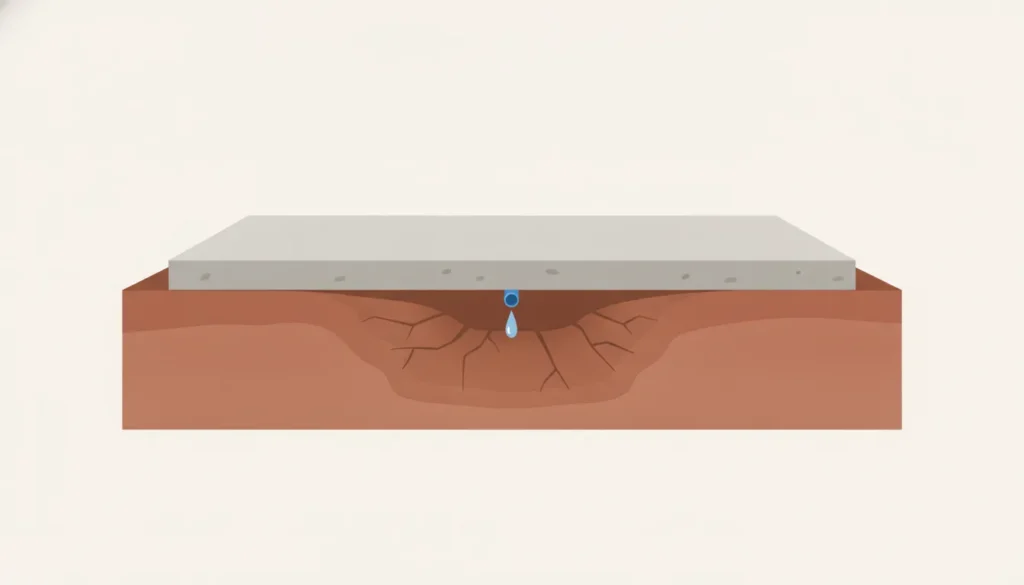
Many Dallas-area homes sit on expansive clay soil. This soil changes volume as its moisture content changes. It can swell when it absorbs water and shrink as it dries. A well-performing foundation depends on reasonably consistent support, so a concentrated wet zone beneath or beside part of the slab can create conditions different from the surrounding soil.
An under-slab supply-line or drain-line leak may introduce persistent moisture into one location. The affected soil may swell, soften, or lose some of its ability to support the slab evenly. At the same time, nearby soil may remain comparatively dry. That imbalance can contribute to movement, including localized upward movement or settlement, depending on the soil, leak location, foundation design, drainage, and other site conditions.
Why persistent moisture matters more than one wet day
A brief rainstorm and a continuous hidden leak are different exposures. A leak can keep feeding the same area after the weather has dried. That persistent source may prevent the soil from returning to its typical moisture condition. The longer an unexplained moisture source remains, the more important it becomes to identify its origin and assess the surrounding structure.
Why the leak may not be the only factor
Foundation movement rarely has a single simple explanation. Seasonal drying, poor surface drainage, tree roots, plumbing leaks, and prior movement can interact. A leak may contribute to an existing imbalance rather than act as the only cause. Professional measurements help distinguish a plausible connection from a guess.
Warning signs a leak may be affecting the foundation
Direct answer: Warning signs may include unexplained water use, damp or warm flooring, running-water sounds, new cracks, sticking doors, and uneven floors. No single symptom proves a leak caused foundation movement, but plumbing and structural signs appearing together justify prompt professional evaluations.
Homeowners often first notice a plumbing clue, a structural clue, or both. No single sign confirms plumbing leak foundation damage. A pattern of changes, however, is a good reason to arrange appropriate evaluations instead of waiting for damage to become more obvious.
Possible signs of an under-slab plumbing issue
- An unexplained increase in water use or a water meter that continues to register use when fixtures are off
- Warm, damp, or unusually cool areas on a floor
- Sounds of running water when no fixture is operating
- Persistent dampness, musty odors, or flooring changes in one area
- Water appearing near the slab edge without a clear weather-related source
These observations deserve attention from a qualified plumber or leak-detection professional. They are not enough to identify the pipe, location, or necessary repair.
Possible signs of foundation movement
- New or widening cracks in brick, drywall, tile, or concrete
- Doors or windows that begin sticking or no longer latch correctly
- Gaps around frames, trim, cabinets, or exterior openings
- Floors that feel uneven, slope, or develop a noticeable ridge
- Changes that appear concentrated near the suspected moisture source
Our guide to signs of foundation problems in Dallas homes explains other symptoms worth documenting. Take dated photos and note whether the changes are growing, stable, or seasonal.
What should you do if you suspect an under-slab leak?
Direct answer: Document the symptoms, contact a qualified plumbing professional to investigate the possible leak, and arrange a foundation evaluation when structural signs are present. Compare the plumbing findings with foundation measurements before deciding whether monitoring, moisture correction, or stabilization is appropriate.
Move quickly, but keep the process orderly. Treat the possible water source and the possible structural response as related questions that require different expertise.
- Document what you observe. Note unusual water use, damp areas, sounds, odors, cracks, sticking openings, and floor changes. Record dates and take photos. Do not open the slab or assume the leak location based on surface symptoms.
- Contact a qualified plumbing professional. Ask for an appropriate leak investigation. A plumber can determine whether a plumbing leak exists and recommend the plumbing-side response. Foundation contractors should not make unsupported claims about the condition of concealed pipes.
- Arrange a foundation evaluation. If structural signs are present, have a foundation professional measure elevations, inspect visible symptoms, and review site drainage and moisture conditions. Solid Base Foundations offers free on-site estimates for Dallas-area property owners.
- Compare the findings. The leak location, plumbing findings, elevation data, and visible movement pattern should be considered together. A measured low or high area near a moisture source can be meaningful, but correlation still needs professional interpretation.
- Plan repairs in a sensible sequence. Stop or control the moisture source as directed by the appropriate professional. Then determine whether the foundation needs stabilization, monitoring, drainage work, or no structural repair at that time.
A coordinated approach reduces the risk of treating only a visible symptom. It also gives each professional better information for developing a responsible recommendation.

Request a free on-site foundation estimate to compare visible warning signs with measured conditions.
Can a plumbing leak cause foundation heave or settlement?
Direct answer: A persistent plumbing leak can contribute to heave when expansive clay absorbs water and swells. It may contribute to settlement when overly wet soil softens or loses consistent support. Measurements and leak findings are needed because different parts of one home can respond differently.
Yes, persistent moisture can contribute to either type of movement, but the outcome depends on the conditions beneath the home. Expansive clay that becomes wetter may swell and exert upward pressure. Soil that becomes overly wet may also soften, erode, or provide less consistent support, contributing to settlement. Different areas of the same home can respond differently.
| Observed pattern | Possible soil response | Possible signs | Responsible next step |
|---|---|---|---|
| Localized upward movement | Expansive clay absorbs persistent moisture and swells | Raised floor area, compression cracks, doors shifting | Confirm leak and measure elevations |
| Localized downward movement | Wet soil softens, washes out, or loses consistent support | Sloping floor, separation, diagonal cracks | Investigate moisture source and structural support |
| Movement across several areas | Leak may combine with seasonal moisture and drainage issues | Mixed cracking and opening misalignment | Complete a whole-home foundation and drainage assessment |
Read more about foundation heave in North Texas and review our foundation settlement repair guide. Those resources explain why the direction of movement matters when evaluating repair options.
Repair considerations after a plumbing leak is found
Direct answer: Finding and repairing a leak does not automatically mean foundation stabilization is needed. A responsible repair decision considers plumbing test results, elevation measurements, visible damage, soil and drainage conditions, and whether the structure continues moving after the moisture source is addressed.
Finding a leak answers one question, but it does not establish that a foundation repair is necessary. The repair plan should reflect verified plumbing findings, measured structural movement, the condition of the soil, and visible damage. Some homes may need monitoring after the water source is corrected. Others may require stabilization because movement has already affected support.
Address the moisture source before judging the long-term response
The qualified plumbing professional should recommend how to address the leak. After that work, soil moisture may take time to change. Sudden attempts to dry or saturate one area can create another imbalance, so homeowners should follow professional guidance rather than improvising around the slab.
Base structural work on measurements
A foundation evaluation should include more than a quick look at cracks. Elevation readings, the location and direction of movement, exterior conditions, and a review of symptoms help establish whether stabilization is warranted. If repairs are recommended, ask how the proposed system addresses the measured problem and how performance will be monitored.
Consider drainage and long-term moisture control
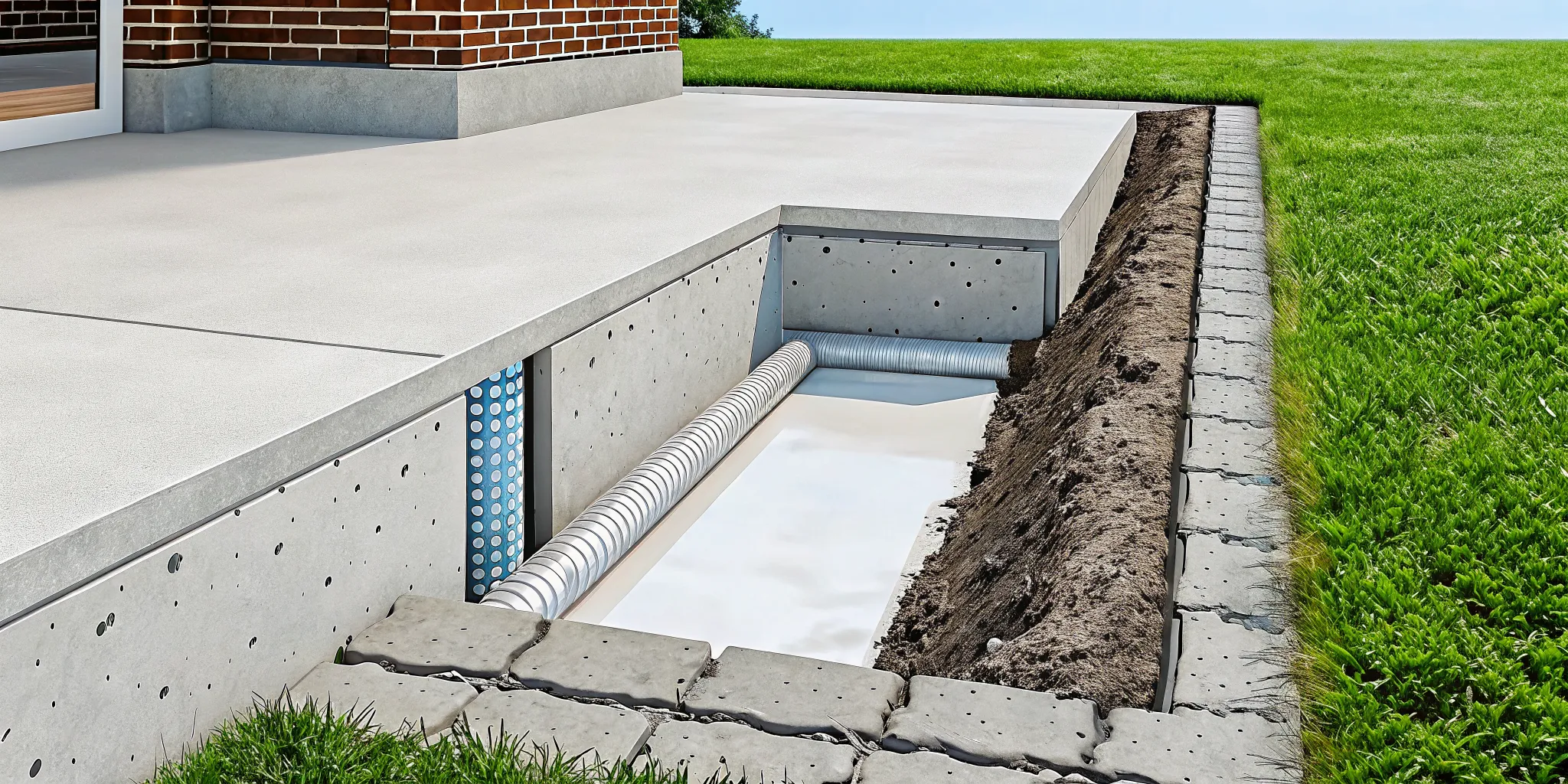
A repaired pipe does not correct poor grading, uncontrolled roof runoff, or other drainage problems. Consistent moisture management around the perimeter helps reduce avoidable stress in expansive soil. The goal is not to keep clay constantly wet. It is to avoid extreme, uneven changes around the structure.
Solid Base Foundations focuses on long-term structural solutions rather than cosmetic patching. Learn about our foundation repair services and the diagnostic process used to develop recommendations for Dallas-area homes.
How Dallas homeowners can reduce future moisture risk
Homeowners cannot eliminate every source of soil movement, but they can respond early and reduce preventable moisture extremes. Start by paying attention to changes in the home rather than waiting for several symptoms to become severe.
Watch for changes in water use and the structure
Review water bills for unexplained increases and investigate suspicious sounds, damp areas, or flooring changes. Walk through the home periodically and note new cracks, sticking openings, or floor changes. Dated photos create a useful record for plumbers and foundation specialists.
Maintain reasonable drainage around the home
Keep gutters and downspouts functioning, and direct runoff away from the foundation in a manner appropriate for the property. Watch for low areas where water repeatedly collects near the slab. If drainage changes are needed, use a professional who understands how water will move across the entire site.
Do not rely on cosmetic patches as a diagnosis
Filling a crack or adjusting a door may improve appearance, but it does not explain why the change occurred. If symptoms recur or expand, an evaluation can determine whether the foundation is stable or still moving. Early information usually provides more options than delayed action.
Foundation movement can affect more than walls and floors. As a slab changes position, concealed plumbing can also experience stress at joints or penetrations. That means the relationship can run in both directions: a leak may contribute to uneven soil moisture, while existing movement may place additional strain on plumbing components. This is another reason to avoid assumptions and coordinate the investigation.
Ask each professional to document findings in writing. Useful records include plumbing test results, the approximate location of a confirmed leak, foundation elevation readings, photographs, and repair recommendations. These records make it easier to compare changes over time and help future contractors understand what has already been investigated.
Questions to ask during an evaluation
A good evaluation should help you understand the evidence, not simply deliver a repair proposal. Ask the plumbing professional what testing was performed, what the results confirm, and whether any limitations remain. Ask the foundation specialist how the home’s elevations were measured, where movement is concentrated, and whether the pattern appears active or stable.
Also ask whether monitoring is a reasonable option. If movement is minor and the moisture source has been addressed, periodic measurements may show whether conditions stabilize. When structural work is recommended, ask what specific problem the system is intended to correct, where supports would be installed, and what follow-up is included.
Be cautious of anyone who claims to diagnose concealed plumbing from a crack pattern alone or promises that a single repair will solve every moisture and structural concern. Responsible recommendations explain uncertainty, define the scope of work, and identify which conditions require another qualified trade.
Finally, keep all reports, invoices, photos, and measurements together. If new symptoms appear later, this history can show whether they are truly new or part of an older pattern. Clear documentation supports better decisions and can prevent repeated, unnecessary work.
Frequently asked questions
Can a small plumbing leak damage a foundation?
A small leak can matter if it continues long enough to create a persistent, localized moisture difference beneath or beside the slab. Whether it causes movement depends on the soil, foundation, leak location, drainage, and duration. Have the leak investigated and arrange a structural evaluation if foundation signs are present.
How do I know whether a crack came from a plumbing leak?
A crack alone cannot identify its cause. Professionals need to compare the suspected leak location with elevation measurements, crack patterns, other symptoms, drainage, and plumbing findings. Avoid assuming causation based only on proximity.
Should I call a plumber or a foundation company first?
If you have signs of an active plumbing leak, contact a qualified plumbing professional promptly. If you also see cracks, sloping floors, or sticking doors, arrange a foundation evaluation as well. The two assessments can provide a more complete picture.
Does fixing the leak fix the foundation problem?
Fixing the leak stops the identified water source, but it does not automatically reverse structural movement or restore lost support. A foundation professional can determine whether monitoring or stabilization is appropriate after considering measured conditions.
Request a free foundation estimate
If a suspected leak appears alongside foundation warning signs, get clear measurements before the problem progresses. Solid Base Foundations serves homeowners throughout Greater Dallas with professional evaluations and long-term stabilization options.
Request your free foundation estimate to discuss the changes you have noticed and schedule an on-site assessment.