
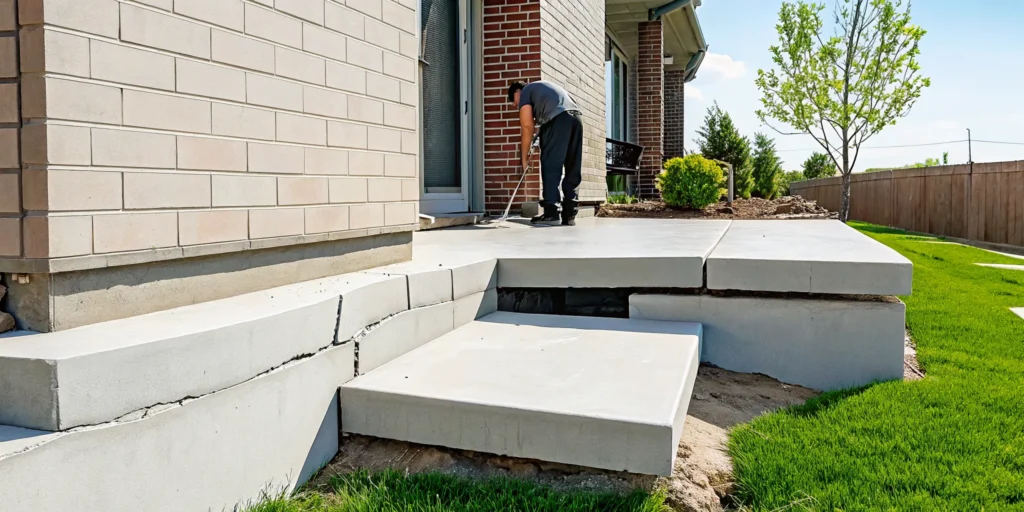
[callout]The professionals at Solid Base Foundations have been providing expert foundation settlement repair services in the Dallas-Fort Worth area since 2007. Our team uses engineered push piers, helical piers, and PolyLevel technology to stop settlement and restore your home’s stability. Call (940) 365-4221 for your free estimate today![/callout]
Stair-step cracks in your brick walls are more than just a surface flaw for Dallas homeowners. These signs usually mean the ground is shifting. You can protect your home by acting fast.
Professional foundation settlement repair is needed when the ground beneath your home shifts enough to cause uneven movement. In North Texas, the swelling clay soil grows when wet and shrinks when dry. This cycle puts stress on your concrete slab or pier and beam frame. While some light settling is normal as a new house finds its place, uneven settlement happens when one part sinks faster than the rest. This drop leads to clear signs like stuck doors, sloping floors, and gaps around windows. Fixing these issues early stops small cracks from turning into large structural breaks that hurt your home value. Using steel piers or foam can steady the soil and lift the house. A professional check can help you find if your home needs a lasting fix or just surface work.
You might wonder if the cracks in your walls are a sign of age or a serious structural problem. Learning the difference between normal shift and active damage is the first step. To find a fix, look at What Is Foundation Settlement? The guide begins with
What Is Foundation Settlement?
Every home shifts over time as it adjusts to the ground beneath it. Foundation settlement happens when the soil can no longer support the weight of a building. This leads to the home sinking into the earth. While some movement is normal, large shifts can cause major structural issues for property owners.
In the Greater Dallas area, this process is heavily driven by local soil. North Texas sits on expansive clay soils that change size based on how much water they hold. When these soils dry out, they shrink and leave gaps under your home. This makes the foundation drop.
Uniform versus differential settlement
Uniform settlement occurs when an entire building sinks at the same rate. This type of movement often causes very little damage because the house stays level. Most homes experience a small amount of uniform sinking shortly after construction as the weight of the building presses into the soil.
Differential settlement is far more dangerous. It happens when one part of a home sinks faster or deeper than the rest. This uneven movement puts stress on the foundation and frame. It often leads to visible foundation heave or cracks that need a professional fix.
The role of North Texas clay
The “blackland prairie” soil found in Dallas, Denton, and Plano has a high clay content. These clay particles have charges that allow them to pull in water. During wet seasons, the soil swells with force. In the hot Texas summer, the soil loses water and pulls away from the concrete slab.
This cycle of wetting and drying is the root cause of most local foundation damage. When the soil shrinks, the foundation loses its support and begins to settle into the empty space. Owners seeking a foundation repair in Dallas often find that their issues started during a long dry spell.
Signs of serious settlement
It is important to find the signs of movement early to avoid high repair costs. Common signs include cracks in brick, doors that stick in their frames, and uneven floors. If you spot a gap between the soil and your foundation, it is a clear sign that the ground is drying out and shrinking.
Because every property has unique soil, a custom check is the best way to find a fix. Experts use tools like pier systems to reach deep soil layers that stay stable all year. This provides a permanent way to stop the sinking and protect the health of the building.
Warning Signs Your Foundation Is Settling
North Texas homes sit on thick layers of clay. This soil acts like a sponge. It grows when wet and shrinks when dry. This change puts stress on your home. Over time, it can lead to foundation settlement repair needs. While some movement is normal, you should watch for signs of trouble.
The Texas Real Estate Commission (TREC) lists clues that a foundation may be failing. Finding these early can save you from big repair bills later. You do not need to be an expert to spot the first red flags in your own home.
Cracks in walls and brick
Look for cracks in your walls and outer brick. Stair-step cracks in the mortar between bricks are a clear sign of movement. Inside, you may see cracks starting at the corners of doors or windows. These gaps show that one part of your home is sinking faster than the rest.
Not all cracks mean you have a big issue. Small hairline cracks less than 1/16 of an inch are often just for looks. But wider cracks or ones that grow often point to a real shift. If you see these, you may want to learn more about foundation repair in Dallas to help your home.
Issues with doors and windows
When a foundation shifts, the frames for your doors and windows can go out of square. You might find that doors stick or no longer latch. Windows may become hard to open. You might also see gaps form between the window frame and the outer wall.
These issues often get worse during dry months when the clay soil shrinks. Poor water flow around your home makes this worse. Fixing foundation drainage problems is often the first step to stop this. Keeping soil moisture steady helps keep your home level.
Uneven floors and tilting walls
Sloping or uneven floors are a clear sign of movement. You might feel a dip when you walk, or notice that chairs sit at an angle. In some cases, you can see a gap where the wall meets the floor. This happens when the slab sinks into the soft soil.
On the outside, check your chimney. A tilting chimney that pulls away from the house is a bad sign. You should also look for cracked or sunken slabs in your garage or porch. These signs show that the earth beneath your home is no longer a solid base.
What Causes Foundation Settlement in North Texas?
Foundation settlement is a common issue for many North Texas homeowners. While some settling is normal, large shifts can lead to major structural damage. In our region, the main cause of this problem is the unique soil. North Texas sits on expansive clay soil, often called blackland prairie. This type of soil acts like a sponge, growing when wet and shrinking when dry. These changes in soil volume create constant stress on your home’s foundation.
The professionals at Solid Base Foundations have been providing expert foundation settlement repair services in the Dallas-Fort Worth area since 2011. Our team understands how local geology affects your home. Call (940) 365-4221 for your free estimate today!
Expansive clay soil and moisture changes
The high clay content in North Texas soil is the biggest factor in foundation settlement repair needs. When we have heavy rain or flooding, the clay swells and pushes upward on the concrete slab. During the long, hot Texas summers, the soil loses moisture and shrinks away from the foundation. According to Pinnacle Foundation Repair, this cycle of shrinking and swelling creates gaps under the slab. Without even support, the foundation can crack and sink into these voids.
Weather patterns in the Greater Dallas area make this cycle worse. We often see flash floods followed by months of drought. This extreme swing in moisture levels keeps the soil moving year-round. Over time, these small movements add up to significant structural shifts that require professional attention.
Poor drainage and plumbing leaks
While we cannot change the soil, we can manage the water around your home. Poor drainage is a leading cause of localized settlement. If water pools near your foundation, it oversaturates the clay in that one spot. This causes uneven swelling and pressure. Issues with foundation drainage problems are often the most preventable cause of structural damage.
Leaks in your home’s plumbing can also cause underground issues. A small leak in a pipe under the slab can wash away soil or cause the clay to swell in a hidden area. You might not see the leak, but you will see the cracks in your walls or floors. Even minor water leaks can lead to major waste and soil issues over time. Keeping your gutters clean and your plumbing in good repair is vital for foundation health.
Construction factors and tree roots
Sometimes the cause of settlement starts before the home is even built. If the soil was not packed down well during construction, it will sink as the weight of the house presses on it. This “settlement by compaction” usually happens in the first few years after a home is finished. Inadequate soil prep can lead to uneven sinking that mimics soil-related damage.
Large trees near your home can also drain moisture from the soil. During a drought, tree roots will pull every drop of water they can from under your foundation. This causes the clay to shrink faster and more deeply than it would on its own. This localized drying leads to the foundation sinking toward the tree. Understanding these various causes is the first step in finding the right solution for your property.
Engineered Solutions for Foundation Settlement Repair
When the clay soil under your home shifts, it causes foundation settlement. Fixing this needs tools that reach past the weak soil. Modern repair ways use deep piers or lifting foams to stop movement and level the house. These tools give homeowners a fix for sinking floors and cracked walls.
Steel push piers for heavy loads
Steel push piers are the top choice for foundation underpinning in North Texas. Crews drive these piers deep into the ground with oil-run pumps. They keep going until they hit a hard, firm layer of earth or rock. Because they use the weight of the house to drive them down, they provide a strong base for heavy brick homes. These piers stop more sinking by moving the load of your home to a solid base.
The use of steel piles makes sure the fix lasts for years. Solid Base Foundations sets these up with 25-year brand warranties. This way is often the best for deep settlement where the clay layer is thick. Once in place, the piers stay hidden under the dirt while holding your home steady.
Helical piers for light homes
Helical piers look like big screws. Crews twist them into the ground with a high-power motor. This makes them a good choice for many foundation repair options. They work well for both new jobs and old homes. Unlike push piers, they do not need the weight of the building to reach the right depth. This makes them best for porches, decks, or light slab floors where push piers might not work.
These screw piers cut through the North Texas clay to find firm support. They work in different soil types because the screw plates give extra lift. Solid Base Foundations uses helical piers to solve unique home problems. Like our steel piers, these come with long-term care to give you peace of mind.
PolyLevel foam for fast slab lifting
PolyLevel foam pump-ins offer a new way to fix sinking concrete slabs and paths. The work is much faster than old ways. A pro drills small holes about the size of a coin into the concrete. Then, they pump thick foam under the slab. The foam grows to fill gaps and lift the top back to its first height. It is a quick way to fix trip spots on driveways or pools.
This foam is about 95% lighter than concrete mix, so it does not add new weight to the soil. It also sets in just 15 minutes. This is much faster than old ways. The foam fights water and will not wash away over time. It is a clean, green choice for homeowners who want a fast fix with no mess. Using expandable resin technology gives a long-lasting lift for any flat concrete floor.
| Repair Method | Best Use Case | Depth | Installation Speed | Warranty |
|---|---|---|---|---|
| Steel Push Piers | Heavy brick homes | To bedrock | Medium | 25 Years |
| Helical Piers | Light slabs and porches | To firm soil | Fast | 25 Years |
| PolyLevel Foam | Concrete slab lifting | Under slab | Very Fast | 25 Years |
Why Early Intervention Saves You Money and Stress
Starting your foundation settlement repair early is the best way to protect your budget. In North Texas, the clay soil shifts and pulls at your home during every dry spell. If you wait to act, small cracks can grow into big gaps. This often leads to high repair costs that you could have missed with a quick checkup.
Stopping the Cycle of Damage
The cycle of wetting and drying in North Texas creates steady stress on your slab. When soil shrinks, it leaves voids that let your home settle in a way that is not even. Fixing expansive soil foundation problems early helps stop this movement. It keeps the shift from harming your brick walls or drywall. Small fixes now keep the damage from spreading to the rest of the house.
Preventing Other Major Issues
Waiting to fix a slab can lead to more than just cracks. As a house shifts, pipe lines can snap or leak behind your walls. These leaks often go unseen until they cause mold or rot. In the Dallas-Fort Worth area, the cost for most foundation repairs ranges from $3,300 to $7,000. Acting fast helps you stay on the lower end of that scale. It also avoids the mess of water damage.
Protecting Your Home Value
A damaged foundation is a big red flag for any home buyer. If you plan to sell your house, a stable slab is key for a high price. Most buyers will ask for a price cut if they find signs of settlement. You can remove the stress of the unknown by booking a free foundation inspection in Dallas. This onsite check lets you find issues before they make your house hard to sell.
Expansive soils across the United States cause billions of dollars in damage each year. You can read more about how moisture impacts soil volume in college studies. Getting an expert view early ensures your home stays on solid ground without high costs.
Frequently Asked Questions
Is mudjacking a lasting fix for foundation repair?
No, mudjacking is a short-term fix for sunken slabs or home bases. This method uses a heavy mix of water, dirt, and cement. The heavy slurry adds weight to the soil. Over time, the mix can sink or wash away in wet North Texas weather. As Solid Base Foundations shows, new tools like PolyLevel are light and last a long time. Picking a lasting fix stops you from needing more work in a few years.
How long does foundation sinking repair take?
Most home repair jobs take one to three days to finish. The time depends on the size of your house and the number of piers needed for support. Small jobs that use foam to level concrete can take just a few hours. Harder jobs with steel piers may take more time but usually stay under a week. Since these methods do not make a big mess, you can often stay in your home while the crew works outside or under the floor.
Can foundation repair be done without big machines?
Yes, many new repair tools do not need big machines that could hurt your yard. Modern tools like PolyLevel use small holes and light foam to lift sunken slabs. Structural pier systems also use small tools that fit into tight spots. As Solid Base Foundations says, these choices are fast and clean. You do not have to worry about large trucks or big dirt piles ruining your grass or garden during the fix.
What is the average cost of foundation settlement repair?
The cost of a fix varies based on how many piers your home needs. Every property has unique soil and damage patterns that change the final price. Because of this, most experts avoid giving a flat rate without seeing the home first. Solid Base Foundations offers a free check to find the root cause of your sinking. This on-site look ensures you only pay for the repairs your home truly needs to stay safe and level.
How does North Texas clay soil affect home foundations?
North Texas has clay soil that changes size based on moisture. This soil grows when wet and shrinks when dry. These shifts put heavy pressure on your home base. As research shows, clay soil is a hazard when it changes volume. This cycle leads to sinking and cracks that often need a professional fix. Steady care helps, but harsh weather cycles make sinking a common issue for local owners.
[callout]The professionals at Solid Base Foundations have been providing expert foundation settlement repair services in the Dallas-Fort Worth area since 2007. Our team uses engineered push piers, helical piers, and PolyLevel technology to stop settlement and restore your home’s stability. Call (940) 365-4221 for your free estimate today![/callout]
Ready To Address Foundation Settlement In Your Home?
If you have noticed cracks in your walls, doors that stick, or floors that feel uneven, do not wait. Foundation settlement does not fix itself. The longer it goes unaddressed, the more the damage can spread to framing, plumbing, and your home’s overall structure.
The first step is simple: schedule a free on-site inspection with Solid Base Foundations. Our team will assess your home, measure any movement, and explain exactly what is happening beneath your foundation. You will receive a clear repair plan with no obligation and no pressure.
Your home is your most valuable investment. Let us help you protect it with a repair solution built for North Texas soil conditions, backed by real warranties and over 18 years of local experience.
Call (940) 365-4221 to schedule your free foundation inspection and estimate today.